


If I had to pick one thing that brings people through our doors more than anything else, it would be background noise.
Not hearing loss as you might think where someone is constantly asking others to repeat. Not a sudden change. Not a medical scare. Just this slow, creeping frustration where noisy places have become harder than they used to be, and at some point you’ve started to wonder whether it’s you or not…
(It usually is you, by the way. But not in the way you think.)
Because here’s what’s odd about hearing loss and background noise. You can sit across from someone at the kitchen table and follow every word. No problem. Move that same conversation to a busy restaurant or a family birthday with everyone talking at once, and suddenly you’re lost. You can hear that people are talking. You just can’t make out what they’re saying. And it’s not like the restaurant got louder. It’s that your ears handle noise differently now.
I think this is one of the most misunderstood parts of hearing loss, and I want to explain why it happens, because once you understand it, a lot of other things start to make sense too. Including why hearing aids help some people brilliantly in noise, and why for others it’s more complicated than that.
Table of Contents
It’s not about volume

Most people assume hearing loss means everything is quieter, so turning it up should sort it. That’s a reasonable assumption. It’s also wrong.
The most common type of hearing loss, sensorineural, doesn’t just reduce how loud things are. It reduces how clearly your ear transmits sound to your brain. Particularly the fine detail in speech. The consonants. The bits that separate “time” from “dime” or “cat” from “cap.”
In a quiet room, that doesn’t matter much. The speech signal is sitting there on its own, nice and clean, and your brain can fill in whatever’s missing without you noticing. It’s clever like that.
But in a noisy place, the speech signal is competing with everything else. Other voices, background music, the coffee machine, cutlery, someone’s kid having a meltdown three tables over. And your brain, which was already working with an incomplete signal, now has to separate it from all of that other sound at the same time.
There’s a term for this: the signal-to-noise ratio. It just means how much louder the voice you want is compared to the noise around it. People with normal hearing can manage when that gap is quite small. People with hearing loss need a much bigger gap before speech becomes clear. And in most real-world noisy environments, that gap simply isn’t big enough.
This is why turning everything up doesn’t help. You make the voice louder, sure. But you make the background louder too. The gap stays the same. Nothing improves.
What’s actually changed inside your ear

I won’t go deep into anatomy here, but a bit of context helps.
Inside your inner ear are thousands of tiny hair cells. Their job is to pick up sound vibrations and convert them into electrical signals your brain can interpret. When these cells are healthy, they do this with incredible precision. When they’re damaged, which happens gradually with age and noise exposure, the signal they produce becomes less detailed. Less defined. Fuzzier.
I sometimes describe it to clients like watching a film in 4K versus watching the same film with the resolution dropped to about 360p. In a quiet scene with just two people talking, you can probably still follow the plot. But throw in an action sequence with explosions and twenty characters all shouting at once, and that low resolution really starts to show. You lose track of what’s going on. Not because you can’t see anything, but because you can’t see it clearly enough.
That’s what’s happening in your ear when you walk into a noisy room. The resolution of your hearing has dropped, and noisy environments are the action sequences.
Your brain is picking up the slack (until it can’t)
Your ears collect sound. Your brain does the hearing. I think people sometimes forget that.
What your brain does with incoming sound in a noisy room is extraordinary. It works out where different sounds are coming from by comparing what arrives at each ear. It identifies which sounds are speech and which aren’t. It locks onto the voice you’re trying to listen to and tries to suppress everything else. All of this is happening constantly, automatically, and you’re completely unaware of it until it stops working properly.
When hearing loss is involved, the raw material your brain is working with is already compromised. And when you add background noise, you’re asking it to do the hardest version of its job with the worst version of its input.
Some people manage this better than others, by the way. Two people can sit in my clinic with almost identical hearing test results and have completely different experiences in noise. One copes reasonably well. The other really struggles. That’s because the brain’s ability to process speech in noise varies from person to person, and it’s influenced by things like age, cognitive health, and how long the hearing loss has been left untreated.
This is one of the reasons I think hearing tests on their own don’t tell the full story. But I’ll come back to that.
The cocktail party problem
There’s a name for this, actually. Researchers have been calling it the cocktail party effect since the 1950s, when a British scientist called Colin Cherry first studied how people manage to follow one voice in a noisy room.
For most people with normal hearing, this just works. You can sit at a loud table in a pub and zero in on whoever is talking to you. Your brain filters out the rest. You don’t even think about it.
For people with hearing loss, the filtering breaks down. And some recent research has started to explain why in a way I find really interesting.
A study from Oregon Health and Science University looked at what happens when people with hearing loss receive different speech sounds in each ear at the same time. For people with normal hearing, the brain kept those sounds separate. For people with hearing loss, the brain fused them together into something that was neither one nor the other. Completely new sounds that weren’t actually played. The two signals got blended rather than separated.
That’s not a volume issue. It’s a processing issue. And it’s part of the reason why people say “I can hear you talking, I just can’t understand what you’re saying.” The sounds are reaching the brain. They’re just arriving garbled.
It’s tiring. Properly tiring.

This is something I feel quite strongly about, because I think it gets overlooked.
When hearing in noise requires your brain to constantly fill in gaps, lean on context, watch lips, guess at words, and filter competing sound all at the same time, that takes energy. Real cognitive energy. It’s not relaxed listening. It’s work.
I see this in clinic more often than I’d like. Someone comes in and says their hearing is fine. And then their partner, who has come along, quietly mentions that they don’t go out for meals anymore. Or they’ve gone quiet at family dos. Or they come home from work completely drained and can’t explain why.
That’s not someone who’s “fine.” That’s someone whose brain has been running at full capacity all day just to keep up with conversation, and by the evening there’s nothing left.
There’s a proper term for it: listening effort, or listening fatigue. And it’s one of the biggest impacts of hearing loss that nobody really talks about. People notice the mishearing. They notice asking others to repeat themselves. But the tiredness? That often just gets put down to getting older, or being a bit antisocial, or not being a “going out” person anymore. When actually, the listening is just costing them more than it should.
So do hearing aids fix it?
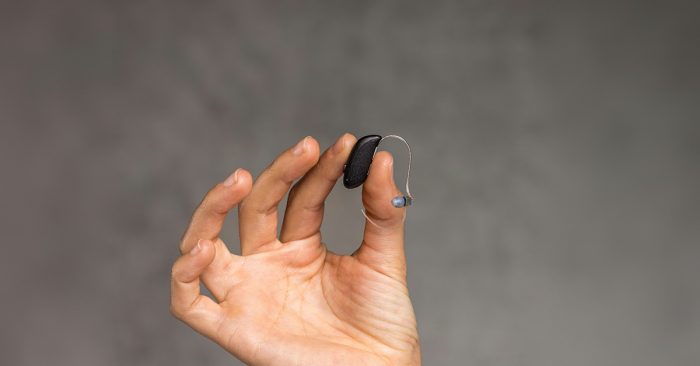
Yes and no. I want to be straight about this because I think people deserve an honest answer rather than a sales pitch.
Modern hearing aids have got significantly better at handling background noise. The technology has moved on a lot even in the last few years. Directional microphones that focus on the voice in front of you. Noise reduction that suppresses steady background sound without cutting into speech. Some devices now use deep neural networks to separate speech from noise in real time, which even five years ago would have sounded like science fiction.
And when hearing aids are fitted well, programmed properly, and matched to the right level of technology for that person’s life, they can make a big difference in noisy situations. Not a theoretical difference. A “we went out for dinner last week and I actually enjoyed it” difference.
But.
Hearing aids improve the signal that arrives at your brain. They can’t change how your brain processes that signal once it gets there. If auditory processing has been affected alongside the hearing loss, which is common, then even very good hearing aids won’t make a noisy pub feel the same as it did twenty years ago.
This is not a reason to avoid hearing aids. Not at all. It’s a reason to have proper expectations, and to make sure your hearing care includes the right tests so that everyone involved understands what the hearing aids can realistically achieve and what other tools might help fill the remaining gap.
Remote microphones, for example, are massively underused. A small microphone that sits near the person you want to hear and streams their voice directly to your hearing aids, cutting out the room noise almost entirely. For some of our clients, particularly in work meetings or restaurants, these have been transformative. More useful than the hearing aids alone, honestly.
Most hearing tests don’t even check for this
This bothers me, and it’s one of the reasons we built our hearing consultations at Alto the way we did.
A standard hearing test, the one with the beeps, tells you how loud sounds need to be before you can detect them. That’s useful information. But it tells you nothing about how well you can understand speech when background noise is present. Which is the thing you actually came in complaining about.
You can have two people with near-identical audiograms and completely different abilities in noise. If you don’t test for it, you don’t know. And if you don’t know, you can’t make good recommendations. You can’t set proper expectations. And you’re going to end up with someone who is disappointed in their hearing aids because nobody explained where the limits are.
At Alto, speech-in-noise testing is part of every Complete Hearing Assessment. It’s not an optional extra. It’s a basic part of understanding someone’s hearing properly. I think it should be standard everywhere, but it isn’t, and that’s a conversation the industry still needs to have.
A few things that actually make a difference
Technology matters, but it’s not the only thing.
Where you sit in a restaurant matters more than most people realise. Back to the wall, away from the kitchen, away from speakers. Let the noise be behind you and the people you want to hear in front of you. Corner tables are usually better than the middle of the room. It sounds basic, but it changes the signal-to-noise ratio before any technology gets involved.
Lighting matters too. When background noise is difficult, your brain leans more heavily on visual cues. Lip reading, facial expression, body language. A dimly lit restaurant takes all of that away, and you lose one of the most powerful tools your brain was using to keep up.
Smaller groups help. A table of four is always going to be easier than a table of fourteen. If you have the choice, take the smaller group. Nobody needs to know why.
And if you wear hearing aids, make sure they’ve been set up properly for noisy environments. Not just verified by Real Ear Measurements in the clinic, but checked against real-world experience. If you’re still struggling in noise after the first few weeks, go back and say so. A good audiologist will have things they can adjust. A great one will have already asked you about it.
Final thought
If you’ve been struggling with background noise and wondering whether it’s worth doing anything about, I would say it almost certainly is.
Not because you need hearing aids, necessarily. Maybe you do, maybe you don’t. But because understanding what’s going on makes a difference in itself. Knowing that the problem is real, that it’s measurable, that there are things that can help, and that you’re not just being difficult or getting old, that matters.
And if you do go down the route of getting your hearing checked, make sure whoever does it tests your hearing in noise, not just in quiet. That one test changes everything about the quality of the conversation that follows.
If you’d like to experience our approach, call 0800 246 1901 or book online here.
Some Frequently Asked Questions
Why can I hear fine at home but not in restaurants?
In quiet, your brain fills in the gaps left by hearing loss without you noticing. In a noisy room, those gaps become much harder to manage because your brain is also trying to separate speech from background noise at the same time.
Is struggling in background noise a sign of hearing loss?
Usually, yes. Difficulty hearing in noise is one of the earliest and most common signs of sensorineural hearing loss, even when hearing in quiet still seems fine.
Do hearing aids help with background noise?
Good hearing aids, fitted properly and verified using Real Ear Measurements, can make a significant difference in noisy situations. But they work best when your hearing has been properly assessed, including speech-in-noise testing, so the right technology and settings can be matched to your needs.
What is speech-in-noise testing?
It’s a test that measures how well you understand speech when background noise is present. A standard hearing test only checks how loud sounds need to be for you to detect them, which is a different thing entirely. Speech-in-noise testing gives a much better picture of how you’ll cope in real-world listening situations.
What else can I do to hear better in noisy places?
Sit with background noise behind you, choose well-lit spots, avoid sitting near kitchens or speakers, and keep group sizes small where you can. If you wear hearing aids, remote microphones can also make a significant difference in difficult listening environments.
The Latest
Hearing Loss and Hearing Aids: How to Choose the Right HelpThe Hearing Event: Education Before DecisionDamped ear hook: why there’s a mesh inside your hearing aidDiabetes and hearing loss: the overlooked link, early signs and when to get testedWhen healthcare is hard to hear, people get hurt