

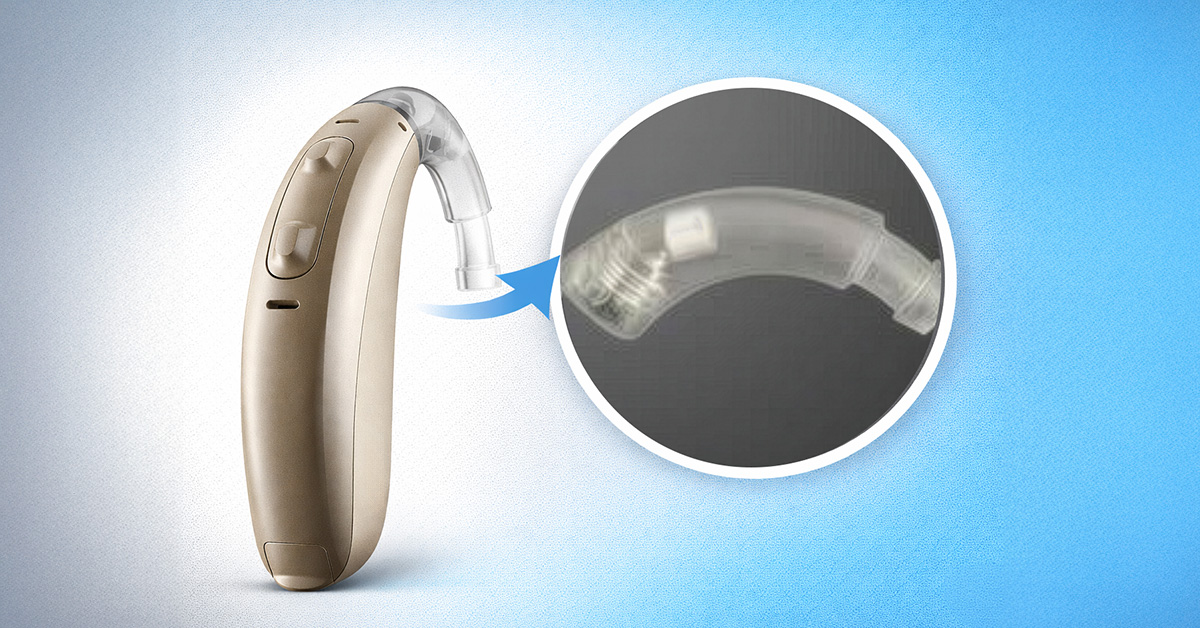
Every so often someone brings a behind-the-ear (BTE) hearing aid in and asks the same question.
“There’s something inside the ear hook. Is it supposed to be there?”
They are usually pointing at a small disc or mesh sitting neatly inside the hook. It almost looks like something has fallen off the hearing aid and got stuck inside.
What you are actually seeing though, is the damper in a damped ear hook. It is a normal component in many behind-the-ear fittings, and it has been chosen on purpose.
This article explains what a damped ear hook is, why audiologists use them, and how to tell the difference between a damper and something that actually needs attention.
Table of Contents
Is something stuck in my ear hook?
If the insert you can see is centred, uniform, and looks the same every time you check it, it is almost certainly the acoustic damper.
Dampers are designed to sit directly in the sound pathway. They are manufactured to be neat and consistent. They do not drift around and they do not suddenly appear overnight.
If your hearing aid still sounds normal, there is nothing to fix.
Where it is worth being cautious is when the sound changes. If volume drops suddenly, speech becomes dull, or the tubing looks cloudy or wet, that points towards moisture or wax elsewhere in the system rather than the damper itself.
What is an ear hook?

This applies to behind-the-ear hearing aids that use an ear hook and clear tubing running down to an earmould.
These types of hearing aids are still routinely used by NHS departments for moderate to severe hearing losses, and many private practices will also fit behind the ear hearing aids for suitable candidates when required.
If your hearing aids use a thin wire into the ear canal with a small dome, you will not have an ear hook in this sense. The sound pathway and the maintenance points are different.
That distinction is important, because damped ear hooks are specific to certain behind-the-ear fittings.
What is a damped ear hook?
A damped ear hook is an ear hook that contains an acoustic damper.
Sound travelling through a hook, tube, and earmould behaves like sound moving through any narrow channel. Certain frequencies can become emphasised. That can affect sound quality and increase the risk of whistling.
The damper adds controlled resistance to the sound pathway. In practical terms, it smooths the response and helps keep the fitting stable.
Audiologists often use damped hooks where more amplification is required, or where feedback needs to be carefully managed without compromising clarity.
Placing the damper in the ear hook also makes sense from a practical point of view. It keeps it away from the ear canal, where moisture and wax are more likely to cause problems.
What does a damper look like?
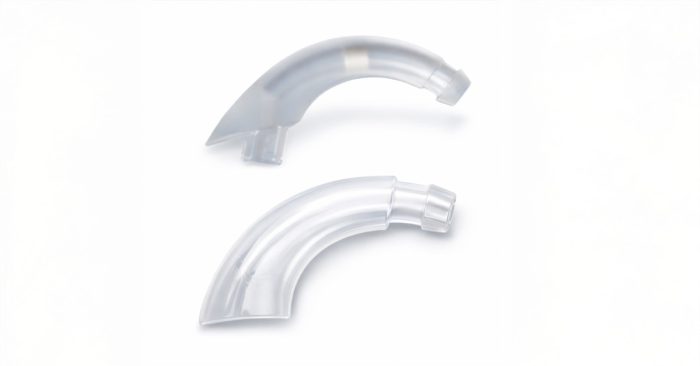
Most people describe seeing one of the following:
A small white or pale disc
A fine mesh across the inside of the hook
A clean insert that looks built in rather than accidental
Some dampers are separate components. Others are integrated into the hook itself. Either way, they tend to look precise and intentional.
That is usually the giveaway.
Why it often looks like a blockage.
Ear hooks and tubing are usually clear, so you can see straight into the sound pathway.
When something appears in that space, the natural assumption is that it should not be there.
The difference is consistency. A damper looks the same every day. A blockage rarely does.
Wax, moisture, and debris tend to look uneven. They cloud the tube. They move. They change how the aid sounds.
Damper or blockage? A simple check
It is likely to be the damper if it:
- Looks uniform and centred
- Appears fixed in place
- Has not changed over time
- Has not affected sound quality
It may be a blockage if you notice:
- A sudden drop in volume
- Cloudy or wet tubing
- Visible wax in the earmould bore
- Sound that comes and goes
Condensation in tubing is especially common with temperature changes and can significantly reduce sound, even though the hearing aid itself is working correctly.
Should you remove the damper?
No.
The damper is part of how the hearing aid has been set up. Removing it changes the acoustics of the entire system and can increase the risk of whistling.
Some dampers are also built into the hook and are not designed to be removed outside a clinic.
As a general rule, do not poke the ear hook with pins, wires, or improvised tools. If there is wax or moisture in the system, there are safer ways to deal with it.
What to do if your hearing aid suddenly sounds quieter
If sound drops noticeably, work through this order:
First, check the basics. Battery charged/new battery, aid switched on, correct programme.
Next, look at the tubing. Condensation often appears as small droplets or a cloudy section and can block sound surprisingly effectively.
If you have been shown how to detach tubing safely, you may be able to clear it. If not, leave it alone. Tubing can split easily if pulled incorrectly.
Then check the earmould bore for wax using the cleaning tool you were given.
If sound does not return, book a clean and check. At that point the issue is usually a blocked tube, a clogged damper, ageing tubing, or a fitting change that needs correcting.
Check out this RNID guide for basic maintenance advice on standard hearing aids.
How often should tubing and hooks be replaced?
There is no fixed rule, but many people benefit from tubing replacement every three to six months.
If tubing feels stiff, looks discoloured, or regularly collects moisture, replacement often improves sound immediately.
When to get it checked sooner
Do not wait if:
- Sound drops suddenly in one ear
- Whistling increases despite correct insertion
- Condensation keeps returning
- The earmould feels loose or uncomfortable
- You notice pain, discharge, or sudden hearing changes
Those last points need medical advice rather than routine maintenance.
Frequently Asked Questions
Is a damped ear hook the same as a wax filter?
No. A damped ear hook contains an acoustic damper used to shape sound in the tubing pathway. Wax filters sit much closer to the ear canal and serve a different purpose.
Can a damper get blocked?
It can, particularly if moisture builds up. That is why regular checks and tubing replacement matter.
Will removing the damper make my hearing aid louder?
It may change the sound, but louder is not better. Removing it often makes feedback more likely and sound less controlled.
Why did my audiologist choose a damped ear hook?
It is one of several tools used to manage sound quality and feedback in behind-the-ear fittings.
How can I reduce condensation in the tubing?
Regular checks, good drying routines, and timely tubing replacement make the biggest difference.
Short note
This article is for general education and does not replace personalised clinical advice. If you experience pain, discharge, dizziness, or sudden hearing changes, seek medical advice promptly.
The Latest
The Hearing Event: Education Before DecisionDiabetes and hearing loss: the overlooked link, early signs and when to get testedWhen healthcare is hard to hear, people get hurtHearing Aid Insurance: Do You Need It, and What Cover Actually Works?Auracast Explained: 5 Real-World Benefits for Hearing Aid Users