

If you’ve started looking into hearing loss and hearing aids, you’ve probably realised something fairly quickly.
For an industry that is supposed to help people hear more clearly, it does a very good job of making the decision feel muddled.
You start off with a simple enough thought. Hearing is getting harder than it used to be. The television volume is creeping up. Restaurants are more effort. Family conversations can be tiring. You look online hoping to get your bearings, and within half an hour you are swimming in cheap devices, premium promises, NHS advice, online providers, articles written by people who have clearly never sat in front of an actual patient, and the now-inevitable suggestion that a pair of AirPods might somehow solve the whole thing.
I made a short video about this recently called Why is Alto Hearing the best place for hearing care? because I see that confusion all the time (yes I am completely biased, but it’s worth a quick watch I promise!). People do not usually arrive at clinic short of options. They arrive with too many, and no reliable way of judging which bits matter and which bits are just marketing.
You can watch the reel here:
This article is the longer version. Not a transcript of the video. More the thinking behind it.
Because when people search for hearing loss and hearing aids, they are often not really looking for a list of products. They are trying to work out who to trust, what matters, and how to avoid making an expensive mistake.
Table of Contents
Most people start by comparing the hearing aids
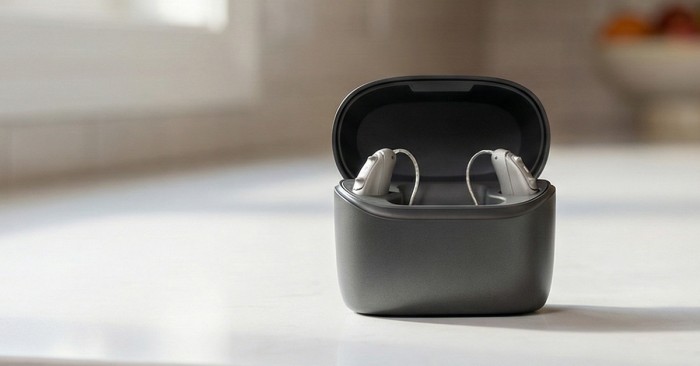
That is understandable. Hearing aids are the visible bit. They are the thing people can compare, price up, look at online and ask friends about. Smaller, more advanced, rechargeable, Bluetooth, nearly invisible, AI-powered, premium, entry-level, whatever label the industry has decided to attach this year.
But hearing aids on their own are only part of the picture.
A well-chosen pair of hearing aids, fitted properly and supported well afterwards, can make a huge difference. The same technology, handled badly, can end up being disappointing very quickly. That is why I think too many people are encouraged to compare products before they compare the quality of the care around them.
Because the result does not just come from the device. It comes from the assessment. It comes from the recommendation. It comes from whether the clinician has really understood the person in front of them. It comes from how well things are explained, how carefully the fitting is done, how well the fine tuning is handled, and what happens once the initial appointment is over.
That is the bit people often underestimate with hearing loss and hearing aids.
The hearing aid industry often makes this harder than it needs to be
One of the frustrations with hearing care is that it sits in an awkward space between healthcare, technology and retail. And when those three things combine, the public can end up being asked to make a fairly important decision without much help in understanding how to judge it.
Some providers lean heavily on technology. Some lean heavily on price. Some lean heavily on marketing language that sounds reassuring until you stop and ask what it actually means. Meanwhile, the person trying to make sense of it all is often left comparing the wrong things.
I have spent more than twenty years in hearing care, across the NHS, private practice, manufacturers and large national chains, and one thing becomes very obvious when you have seen the industry from that many angles. The difference between a good outcome and a poor one is very rarely explained properly in a brochure.
You can have good technology and poor care. You can have a decent clinician inside a weak process. You can have a nice-looking clinic that does not particularly improve the standard of recommendation. On the other hand, when the thinking is strong, the explanation is clear, and the aftercare is taken seriously, the results tend to be far better.
Cheap hearing aids can work out very expensive
People naturally focus on price. Of course they do. Hearing aids are a significant purchase and nobody sensible ignores cost.
But with hearing care, initial cost on its own is a poor way of judging value.
A cheap pair of hearing aids that are never really right for you is expensive. A rushed assessment is expensive. A weak recommendation is expensive. Being sold something that sounded good in theory but does not properly fit your lifestyle is expensive. So is ending up with a pair in a drawer because the process around them was not good enough.
That is why I think value is the better lens. Not cheap. Not expensive. Value.
Are you ending up with a solution that genuinely improves life? Are you being looked after by people who know what they are doing and care enough to get it right? Are you likely to keep wearing them, getting the best from them, and feeling supported as things evolve?
That is the real calculation.
NHS, private, online and over-the-counter all have their place
There is no point pretending there is only one valid route.
The NHS does a great deal of good and for many people it is absolutely the right option. Online and over-the-counter solutions may suit some people too, particularly where needs are simpler and expectations are realistic. Private care can make a lot of sense when someone wants more time, more choice, more continuity and a more tailored level of support.
The problem is when people assume these routes are all broadly the same apart from price. They are not.
The way the assessment is carried out, the way the recommendation is reached, the amount of time available, the level of explanation, the follow-up, and the consistency of long-term care can all differ enormously. So if you are comparing options, compare the process as much as the product.
That is usually where the real difference lies.
What we wanted Alto Hearing to be

When I started Alto Hearing, the ambition was fairly simple. I wanted to build the sort of place I would be comfortable sending my own family to.
That sounds obvious, but it is actually a demanding standard because it changes the way you think about almost everything. You stop asking whether something is good enough in a commercial sense and start asking whether it is genuinely good enough full stop.
That affects who you bring into the team. It affects how much time you allow. It affects the way you explain recommendations. It affects whether aftercare is treated as an afterthought or as part of the core service. It also affects what systems you build behind the scenes to support better decisions.
Because for me, hearing care should not feel like a transaction dressed up as healthcare. It should feel considered, structured and clear.
Why AltoMethod matters
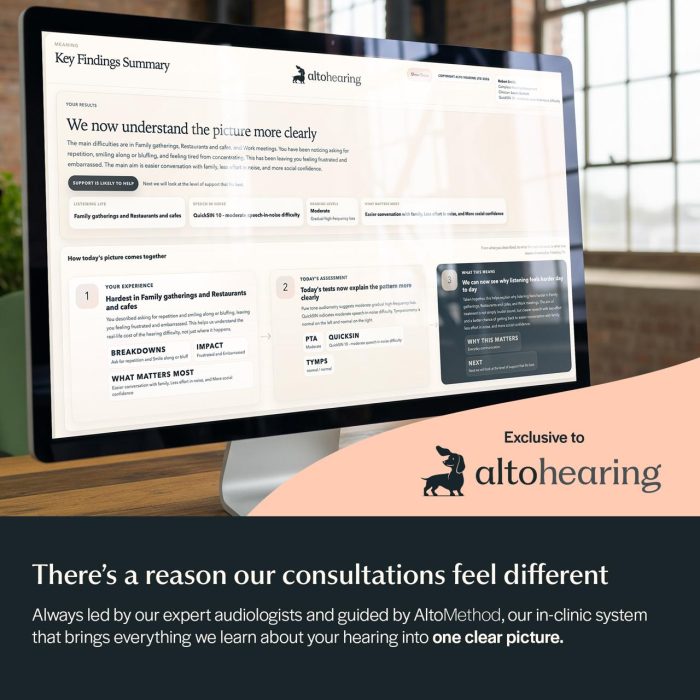
One of the things that really sets Alto apart is something we have built ourselves called AltoMethod.
In simple terms, AltoMethod is our in-clinic system for making better recommendations. It takes into account your lifestyle, the impact hearing loss is having on you, where it is affecting you most, your medical history, your hearing test results and your speech-in-noise results, then pulls it all together into a clearer picture. That matters because hearing care is not just about collecting data. It is about interpreting it properly and relating it to your actual life.
What I like about AltoMethod is that it supports both sides of the appointment. It helps the audiologist take you on that journey properly, and it helps you understand what is going on without feeling buried in jargon. It gives structure to the conversation, helps explain how hearing works, makes the tests easier to follow, and makes the recommendation feel logical rather than mysterious.
That is important because a lot of people have had experiences elsewhere where they have been shown a graph, told a few technical things, and then presented with options before they really understand what any of it means. AltoMethod helps us do that part better. It helps us turn a collection of findings into something coherent, useful and easy to understand.
Plenty of places can carry out a hearing test. The bigger question is what they do with the information once they have it.
Good clinicians do more than know the science





Technical ability matters. Obviously it does. But in hearing care, technical ability on its own is not enough.
The best clinicians are usually the ones who combine expertise with judgement, patience and clarity. They know their field. They notice detail. They think carefully. They ask better questions. They explain things properly. And they know how to guide someone without overwhelming them.
That combination is more valuable than people realise.
At Alto, we are very selective about who joins the team for exactly that reason. We are not just looking for people who are smart. We are looking for people who can turn that knowledge into a better experience for the patient. That means being warm, thoughtful, clinically strong and good at explaining complex things in a way that feels straightforward.
Because a hearing assessment should not leave you more confused than when you walked in.
What a good hearing assessment should actually give you

A good hearing assessment should do more than confirm that hearing loss exists.
It should help you understand what kind of hearing loss you have, where it is likely to be affecting you most, whether hearing aids are the right next step, what level of technology is likely to suit your life, and what happens after that. It should answer the questions people are often carrying around in their heads but do not always know how to ask clearly. Is this bad enough to act on? Have I left it too long? Will hearing aids genuinely help? What happens if I do nothing for now?
Most importantly, it should leave you understanding why a recommendation has been made.
That sounds basic, but it is where a lot of hearing care falls down. If the explanation is vague, overcomplicated or feels like a polished sales routine, that is usually a sign that something is off. A good recommendation should feel well reasoned. It should feel tailored. And it should make sense to the person it is for.
If you are comparing providers, ask better questions
A lot of people ask who has the best hearing aids. I think there are more useful questions than that.
Who is actually carrying out the assessment? How much time are they giving you? How are recommendations made? What follow-up is included? Are they looking at your real-world listening needs as well as your test results? If things need adjusting later, which they often do, what support is available?
And perhaps the simplest question of all, did that provider make the whole subject feel clearer, or did they somehow manage to make it feel even more muddled?
That instinct is usually worth paying attention to.
Final thought
If you are trying to make sense of hearing loss and hearing aids, I would be careful about judging your options purely by product, price or branding. Those things all have a place, but they do not tell the full story.
The better approach is to look at the standard of care around the decision. The quality of assessment. The thinking behind the recommendation. The clarity of explanation. The follow-up. The long-term support. Get those things right, and the chances of a good result increase enormously. Get them wrong, and even good technology can fall flat.
If you want the short version of my view on all this, you can watch the reel here:
Why is Alto Hearing the best place for hearing care?
And if you would like to experience our approach for yourself, call 0800 246 1901 or book online here.
FAQs about hearing loss and hearing aids
What are the early signs of hearing loss?
Some of the most common early signs include struggling more in background noise, asking people to repeat themselves, turning the television up more than others would like, and feeling that conversation takes more effort than it used to.
Are hearing aids always the answer for hearing loss?
No. Sometimes earwax, medical issues or other factors need to be dealt with first. A proper assessment helps establish what is causing the problem and what the right next step is.
Are more expensive hearing aids always better?
No. More expensive hearing aids are not automatically the best choice. The right option depends on your hearing, your lifestyle, and the quality of the assessment, fitting and aftercare around them.
Is private hearing care better than NHS hearing care?
Not in every case. The NHS is the right route for many people. Private care can offer more choice, more time and greater continuity. What matters is choosing the route that best fits your needs.
How do I choose the right hearing care provider?
Look beyond the price of the hearing aids. Focus on the quality of the assessment, the clarity of explanation, the reasoning behind the recommendation and the level of aftercare included.
The Latest
The Hearing Event: Education Before DecisionDamped ear hook: why there’s a mesh inside your hearing aidDiabetes and hearing loss: the overlooked link, early signs and when to get testedWhen healthcare is hard to hear, people get hurtHearing Aid Insurance: Do You Need It, and What Cover Actually Works?