

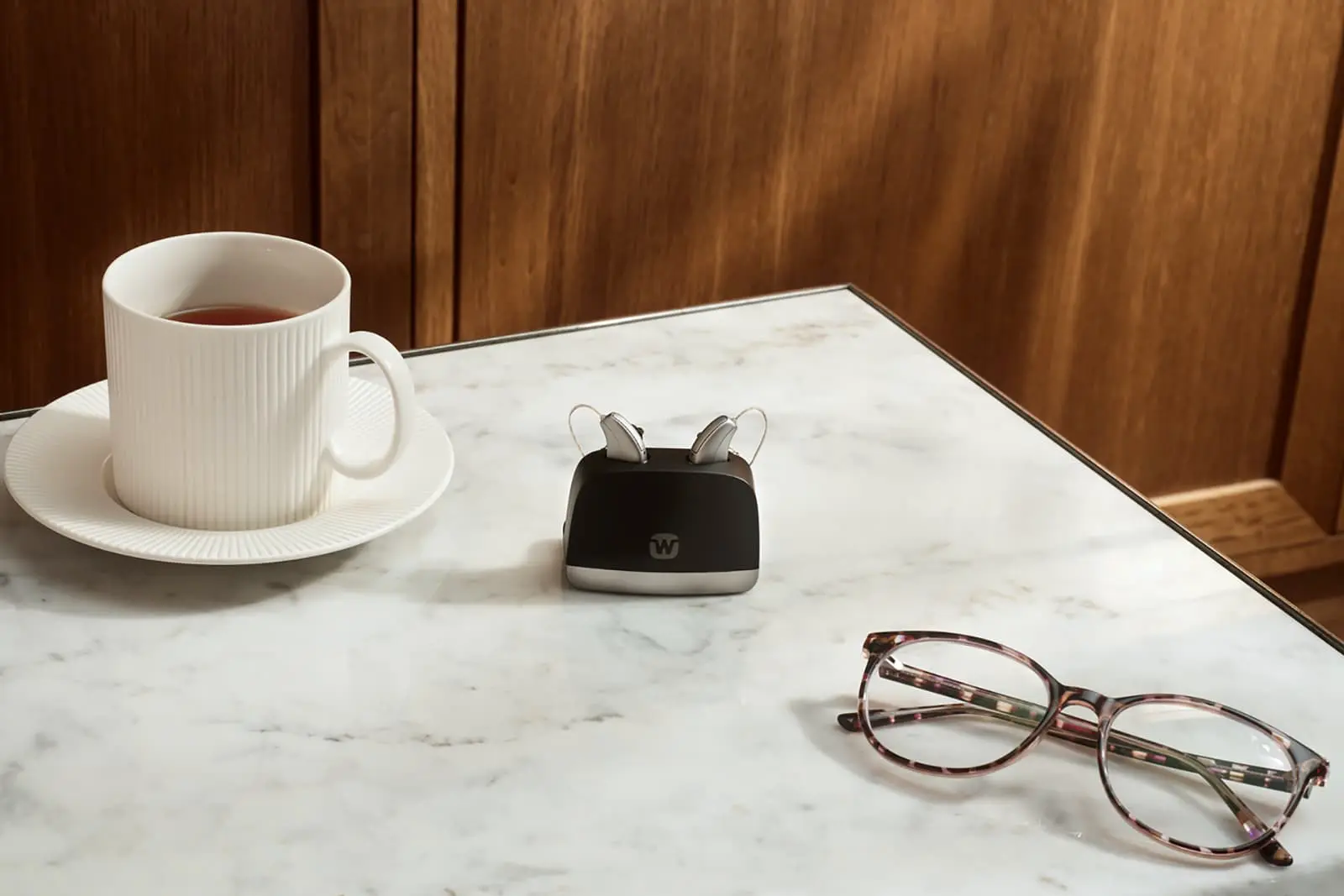
New hearing aids often sound weird at first. Tinny. Echoey. As if the sound is slightly “off”.
That reaction is normal, but it has clear technical and neurological reasons. Once you understand what is going on, it is easier to see where technologies like Widex PureSound actually help, and who they are really for.
This guide includes:
A quick overview
- New hearing aids sound odd because your brain is adjusting to more sound and because digital hearing aids introduce a small processing delay.
- In open and vented fittings, that delay can cause a comb‑filter effect, where direct and amplified sound clash and create a hollow or artificial quality.
- Widex PureSound uses ZeroDelay processing with a latency of around 0.5 ms, much lower than the 5–8 ms often quoted for standard digital processing, which reduces this clash.
- Widex positions PureSound very clearly for mild to moderate hearing loss with open or vented fittings and research and independent reviews back that up.
- For more significant hearing loss that requires more closed fittings and stronger processing, the Universal or similar programmes tend to be more appropriate.
Who this guide is for
This article will help if you:
- Have just been fitted with hearing aids and think they sound “wrong”
- Tried hearing aids before and did not like the sound
- Are looking at Widex and keep seeing PureSound mentioned
- Are wondering if your degree of hearing loss is right for this programme
If you are at the stage of comparing brands and models across the board, your broader Best Hearing Aids This Year guide can sit alongside this as the more general piece.
Why new hearing aids sound weird
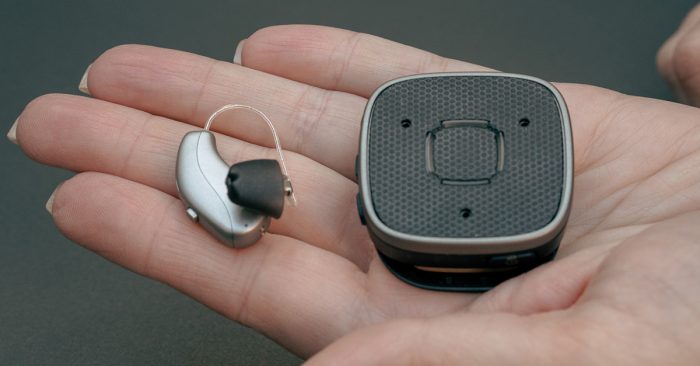
There are two main reasons: one in your head, one in the signal chain.
1. Your brain is adjusting to more information
Most age‑related hearing loss comes in gradually. Over years, your hearing thresholds creep up, and your brain quietly adjusts, lowering its expectation of detail.
When you add amplification, you are not just “making things louder”. You are re‑introducing:
- High‑frequency consonants
- Softer background detail in rooms and outside
- The full tone of your own voice
Your attention system treats that as a change and flags it as important. People often say:
- “Everything sounds too sharp.”
- “My footsteps are ridiculous.”
- “My voice sounds huge.”
That early over‑awareness is your brain doing its job. With consistent use, it starts to file these sounds under “normal”.
2. The hidden delay inside digital hearing aids
The second factor is the one PureSound targets.
With unaided hearing, sound:
- Reaches the eardrum
- Passes through the middle ear
- Is converted into nerve signals in the cochlea
- Travels up the auditory pathway
With digital hearing aids, we add:
- Microphones pick up sound
- The signal is converted into digital data
- A chip processes and shapes the sound
- The processed sound goes to a miniature loudspeaker
- The loudspeaker sends it into the ear canal
Even very fast chips need time. In typical modern hearing aids, processing delay is on the order of a few milliseconds, often quoted in the 5–8 ms region for standard pathways.
On its own that sounds tiny. The problem appears when you combine it with open or vented fittings.
The comb‑filter effect in open and vented fits
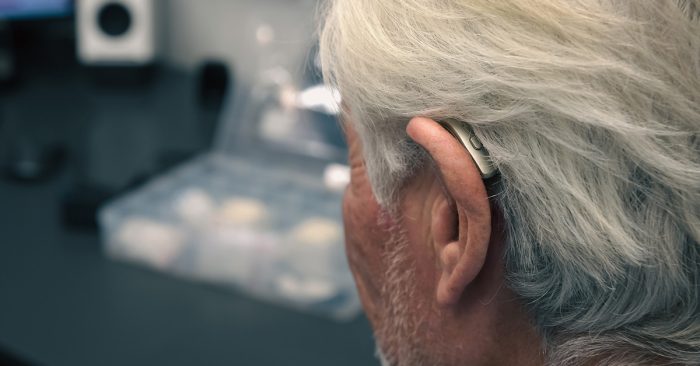
Open and vented RIC fittings are widely used in mild to moderate hearing loss because they help avoid occlusion and keep your own voice feeling more natural.
However, they create a very particular acoustic situation. Every sound has two paths:
- The direct path: sound going around or through the vent into the ear
- The amplified path: sound that has been through the chip first
Because the amplified path is slightly delayed, the two versions of the same sound arrive out of sync and interfere with each other. This creates a pattern of peaks and dips in the frequency response known as a comb‑filter effect.
To a listener this often comes across as:
- Hollow or “tubey”
- Slightly metallic
- “Like listening through a shell”
A key point: the comb‑filter problem is worst for exactly the group who use open fits most. Open and vented fittings are standard for many mild to moderate losses, so this group are the ones most likely to notice the delay as “hearing‑aid sound”.
This is the niche Widex wanted to solve with PureSound.
What Widex PureSound actually changes
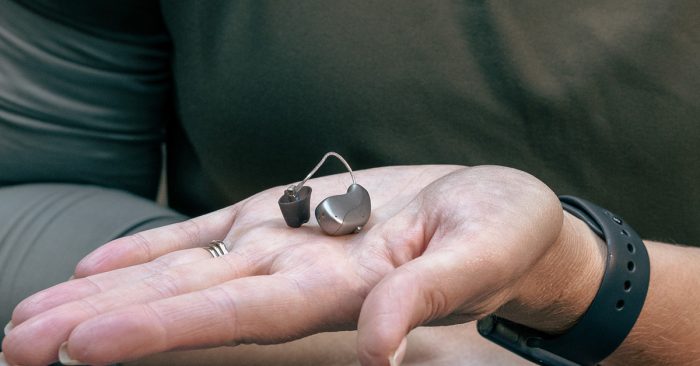
Widex Moment introduced a second processing pathway, branded PureSound, built around the ZeroDelay sound engine. Instead of processing over several milliseconds, PureSound runs with a system delay of around 0.5 ms.
Widex explicitly describes PureSound as:
- “PureSound for mild‑to‑moderate hearing loss”
- Designed for open and vented fittings where delay‑based distortion is an issue
PureSound processing is ideal for individuals with mild‑to‑moderate hearing losses, and that it addresses objections that hearing aids can sound “tinny” or unnatural.
In real terms, the shorter delay means:
- The amplified sound arrives at the eardrum much closer in time to the direct sound
- The comb‑filter effect is heavily reduced in open fits
- The spectrum at the eardrum is smoother and closer to the original acoustic signal
Listener studies using “sound walks” in realistic environments found that around 85% of people with mild to moderate hearing loss preferred PureSound overall compared to standard‑delay processing.
Which types of hearing loss benefit most from PureSound?
Widex’s own positioning, the peer‑reviewed work they reference and independent reviews all tell a consistent story.
This is the core target group.
Widex describes PureSound as “for mild‑to‑moderate hearing loss” and “optimised for mild‑to‑moderate hearing loss” across multiple professional materials and product sheets.
These are typically:
- Age‑related, gently sloping sensorineural losses
- Mild to moderate across key speech frequencies
- Fitted with open or vented RIC domes where a lot of natural sound is still entering the canal
For this group:
- The comb‑filter effect is most noticeable, because they still have enough natural hearing for the delayed amplified path to clash with the direct path
- The 0.5 ms delay in PureSound sits below the threshold where these wearers notice delay‑based colouration, according to Widex’s own write‑ups of the Stiefenhofer 2022 work on delay audibility.
So for a classic “mild to moderate, open‑fit RIC” PureSound is directly in its lane.
Hearing Review highlights PureSound as an option for patients with milder hearing loss, including those whose main complaint is tinnitus, where sound quality often makes or breaks acceptance.
PureSound’s cleaner timing:
- Reduces the “digital sheen” that puts some mild‑loss, tinnitus‑led patients off amplification
- Pairs neatly with Widex’s own tinnitus and sound therapy tools for those cases where you are essentially fitting for comfort and sound enrichment as much as for speech audibility
While not a “hearing loss type”, there is a clear behavioural segment: people who are sensitive to sound character.
Audiologists and experienced users often comment that PureSound feels particularly good for:
- Live music
- Ensemble work (choirs, small groups)
- Acoustically rich environments
Because timing cues and overtones are preserved with less delay‑related artefact, these users tend to notice and value the difference more than average wearers.
Evidence and expert commentary are also clear that PureSound is not designed as the primary programme for more significant hearing loss.
- Widex’s own technical evidence states that while PureSound is ideal for mild‑to‑moderate losses, the overall Moment and Allure platforms support a wider range of losses with other pathways.
- Best‑practice reviewers summarise PureSound as “really only intended for individuals with mild to moderate hearing loss who are using more of an open‑fit dome”, advising that those with more significant loss will typically get more benefit from the Universal programme with fuller processing.
In practice, PureSound is less central when:
- Low‑frequency thresholds are poorer, so you need more closed fittings
- There is moderate‑to‑severe or severe‑to‑profound sensorineural loss across key speech frequencies
- You require more aggressive noise reduction or complex features that sit in other programmes
In those cases, the comb‑filter effect is reduced simply because less direct sound reaches the eardrum. The advantages of ultra‑low delay are smaller, and other factors matter more.
How PureSound feels day to day
Bringing this back to real life, when you match the technology to the right hearing loss profile, several things usually improve.
Your own voice feels closer to “you”
People commonly complain that their voice sounds:
- Boomy
- Hollow
- “Too big”
That is often the comb‑filter effect at work in open fittings. By lining up direct and amplified sound more closely in time, PureSound tends to:
- Remove the “talking in a barrel” character
- Make your voice feel more like you remember, just clearer
New hearing aids are easier to live with in the first weeks
You still have an adaptation curve, because your brain is adjusting to more information. But when:
- The signal is cleaner
- There are fewer delay‑related artefacts
you have less to fight against. For many new wearers in the mild to moderate range, the “these sound wrong” reaction fades faster when the delay piece is handled well.
Sound sits more naturally in the room
Ultra‑low delay preserves the tiny timing differences between your two ears that help you locate where sound is coming from. Users often report that with PureSound, voices and sound sources feel more external and correctly placed around them, rather than stuck on the aids.
This is subtle but matters for listening comfort over the course of a day.
The audiologist’s role: matching PureSound to the right ears

PureSound is a tool, not a short cut. It works well when:
- The hearing loss is in the mild to moderate range
- An open or vented fit is clinically appropriate
- The user cares about natural sound and is likely to notice comb‑filter issues
To get that right, your audiologist should:
- Take a thorough case history and full diagnostic audiogram
- Decide whether an open, vented or more closed fitting makes sense for your loss
- Use real‑ear measurements to verify the fitting, whether in PureSound or Universal pathways
- Set up a sensible programme structure, for example:
- PureSound as the default for everyday listening in quieter to moderate environments
- Universal or directional‑focused programmes for more demanding noise
- Review and fine‑tune as your brain adapts and as you give feedback
On the Widex Moment and Allure platforms, PureSound sits alongside these other options, which makes it flexible within a proper treatment plan rather than an “all or nothing” choice.
Should you choose Widex PureSound?
A useful way to frame it in clinic:
- Perfect candidate profile
- Mild to moderate sensorineural hearing loss
- Suitable for open or vented RIC fittings
- Sensitive to sound character, or has tried aids before and found them “too digital”
- Possibly with tinnitus where sound quality is a key acceptance factor
- Borderline profile
- Mild to moderate loss but with more complex patterns or asymmetry
- Some need for stronger noise management, where a balance between PureSound and Universal is required
- Poor fit as primary programme
- Moderate to severe and above across the speech range
- Low‑frequency loss that demands a closed fit
- Situations where speech intelligibility in heavy noise takes clear priority over sound character
For those more advanced losses, you are usually better served by Universal or other main programmes on the Widex platform, with PureSound available as an additional option if it still adds something specific.
FAQs about hearing aids sounding weird and Widex PureSound
Why do my new hearing aids sound weird?
Two reasons. Your brain is suddenly getting more sound than it is used to, so it pays extra attention. At the same time, digital processing introduces a small delay. In open‑fit devices the delayed amplified sound collides with the natural sound in your ear canal, which can create a hollow or tinny character.
Who is Widex PureSound actually for?
Widex and independent evidence consistently describe PureSound as being optimised for mild to moderate hearing loss with open or vented fittings. That group experiences the worst of the comb‑filter problem, and the ultra‑low delay of PureSound is designed to reduce it.
Will PureSound help if I have more severe hearing loss?
You can still wear Widex hearing aids with more advanced loss, but PureSound is unlikely to be the main programme. Once you move into more closed fittings and need more gain, the benefits of ultra‑low delay shrink, and you usually get more from the Universal or similar programmes that provide stronger processing for speech in noise.
Does PureSound replace other Widex programmes?
No. On platforms like Widex Moment, Moment Sheer and Allure, PureSound sits alongside Universal and other listening programmes. Your audiologist can set these up so you can switch between them via the buttons or app depending on where you are and what you are doing.
How do I know if my hearing aids are set up with PureSound?
PureSound is a specific programme in Widex software. Your audiologist has to add it and configure it in the Widex Compass GPS fitting system. You can then select it on the aids or in the app. If you are unsure, ask your audiologist to show you exactly which programme is active and when.
What to do next
If your hearing aids sound weird and you are not sure whether that is just normal adaptation or a sign that the fitting or programme choice is off, the next step is a proper review.
At Alto Hearing’s clinics in Kenilworth, Lutterworth, Market Bosworth and Clitheroe, a Complete Hearing Assessment or hearing aid review appointment can:
- Check your current hearing in detail
- Measure how your existing hearing aids are performing in your ear
- Explain whether a change in settings, fitting style or technology, including options like Widex PureSound for mild to moderate loss, would genuinely help
You can start with your usual entry route, such as SoundCheck, then plan a clear path from there.
The Latest
Why Background Noise Makes Hearing So Much HarderHearing Loss and Hearing Aids: How to Choose the Right HelpThe Hearing Event: Education Before DecisionDamped ear hook: why there’s a mesh inside your hearing aidDiabetes and hearing loss: the overlooked link, early signs and when to get tested