

I’m an audiologist. This is the most common mistake people make when their hearing starts to change
One of the most common early signs of hearing loss is not silence. It is asking someone else to fill in the gaps.
By Andrew Holmes, audiologist at Alto Hearing.
If these signs of hearing loss sound familiar, it is usually worth booking a proper hearing test before the little workarounds become normal.
His coat is still on. Not just the scarf, not a cardigan. The coat.
His wife sits beside him with her handbag on her knees and a folded envelope tucked under one thumb. She says she has not brought a list. The envelope suggests otherwise.
I ask what he has noticed about his hearing.
“Nothing much,” he says.
She gives me the laugh I hear before the list begins.
“The grandchildren. The doorbell. The butcher. The satnav. Last Christmas during charades. He says I mumble. He turns the news up so loud I know what is happening in Westminster before I have put the kettle on.”
He turns to her, wounded.
“Well,” he says, “you do mumble.”
The mistake: people recruit help before they get help
The mistake is simple. People do not get help. They recruit help. Usually without asking.
At home, the person closest to them starts catching the missed bits. A word here, a name there, the end of a sentence from the hallway. Nobody sits down and agrees to it. It begins with small favours.
A waiter reads out the specials and leaves. One person turns slightly to the other.
“What did he say?”
“The fish. The pie’s gone.”
In the kitchen, a sentence disappears under the extractor fan. In the car, the person in the back seat might as well be calling from a ferry. At a garden centre cafe, the table beside the coffee machine is abandoned before the tray is down.
Signs of hearing loss people explain away
They say the restaurant was loud. The phone line was bad. The room had an echo. The children speak too quickly. The speaker at the retirement dinner should have used the microphone.
Fair enough. Britain has produced many rooms where speech goes to die.
But when the problem follows you from the restaurant to the family table, from the car to the GP surgery, the room may not be carrying all the blame.
Early hearing loss can feel oddly specific. You hear the voice. You miss the words. Names disappear. The end of a sentence smudges. You follow a story until someone turns away, then the thread goes.
A useful clue: if you can hear that someone is speaking, but often miss what they said, volume may not be the whole problem. Speech clarity, background noise and listening effort may be the real issue.
The workarounds start small
People work around it.
They pick the corner seat. They avoid the long table. They let someone else talk to reception. They stop booking the noisy place. They laugh when the group laughs, then ask what was funny on the way home.
Work can disguise all of this for longer than people realise. Same colleagues, same rooms, same vocabulary. Even meetings become easier when you already know who says what.
Change the room, the voice, the accent, the distance, the background noise or the amount of context, and the effort becomes harder to hide.
Partners often notice the pattern first
By the time couples sit down in clinic, they know their parts.
“I hear perfectly well when people speak clearly.”
“He hears me if I am standing in front of him and there is no kettle, radio, dishwasher or grandchild.”
“I do not want to make a fuss.”
“You are making a fuss. You are just making it in the living room.”
Partners bring detail. Tuesday in the butcher’s. The GP surgery tannoy. The table by the speaker at the pub. The bank security question he guessed at. Every episode of Antiques Roadshow since 2019.
I do admire the accuracy. Partners remember the lot.
“I do not mind repeating things. I mind being his ears.”
Something a patient once told me in clinic
Her husband gave a small nod. He did not argue.
He had got used to using her ears because she was there and it worked.
The excuses are often understandable
I have met the man who hears “perfectly well when people speak properly”. The woman who hears her husband because “he knows how to talk”. The retired solicitor who told me the issue was not his ears, but “modern diction”.
Someone else once said, “I hear all right. I just do not hear nonsense.”
Young people get blamed. So do waiters, daughters-in-law, tannoys, anyone speaking from another room, anyone with the nerve to turn away while finishing a sentence.
The BBC sound department receives a great deal of blame in my consulting room.
Occasionally deserved. Not every drama needs to sound as if the cast are speaking through a sock.
Some people are still remembering their father’s hearing aids. Beige plastic. Whistling through Sunday lunch. The beige box by the bed, beside boiled sweets and small coins.
For others, the first hard part is saying the sentence aloud. The room may be noisy. Some restaurants seem built entirely from tile, glass and poor decisions. The television may well be badly mixed. A grandchild talking through toast is not helping.
Still, at some point, “I am missing things” is the honest version.
A hearing test changes the conversation
A man once told me he had bought a new television before booking a hearing test. The television, apparently, had been “getting worse” for years. His wife was sitting next to him when he said this. She looked at me for longer than was strictly necessary.
Sometimes the arrangement is obvious. The partner answers before the patient has finished not answering. Sometimes it is in a pause. Sometimes it is written on a folded envelope. And sometimes it comes out sideways, in a sentence about soup.
A patient once told me, “I only ask her because I trust her.”
His wife said, “Yes, but I would like to eat my soup while it is hot.”
I wrote it down.
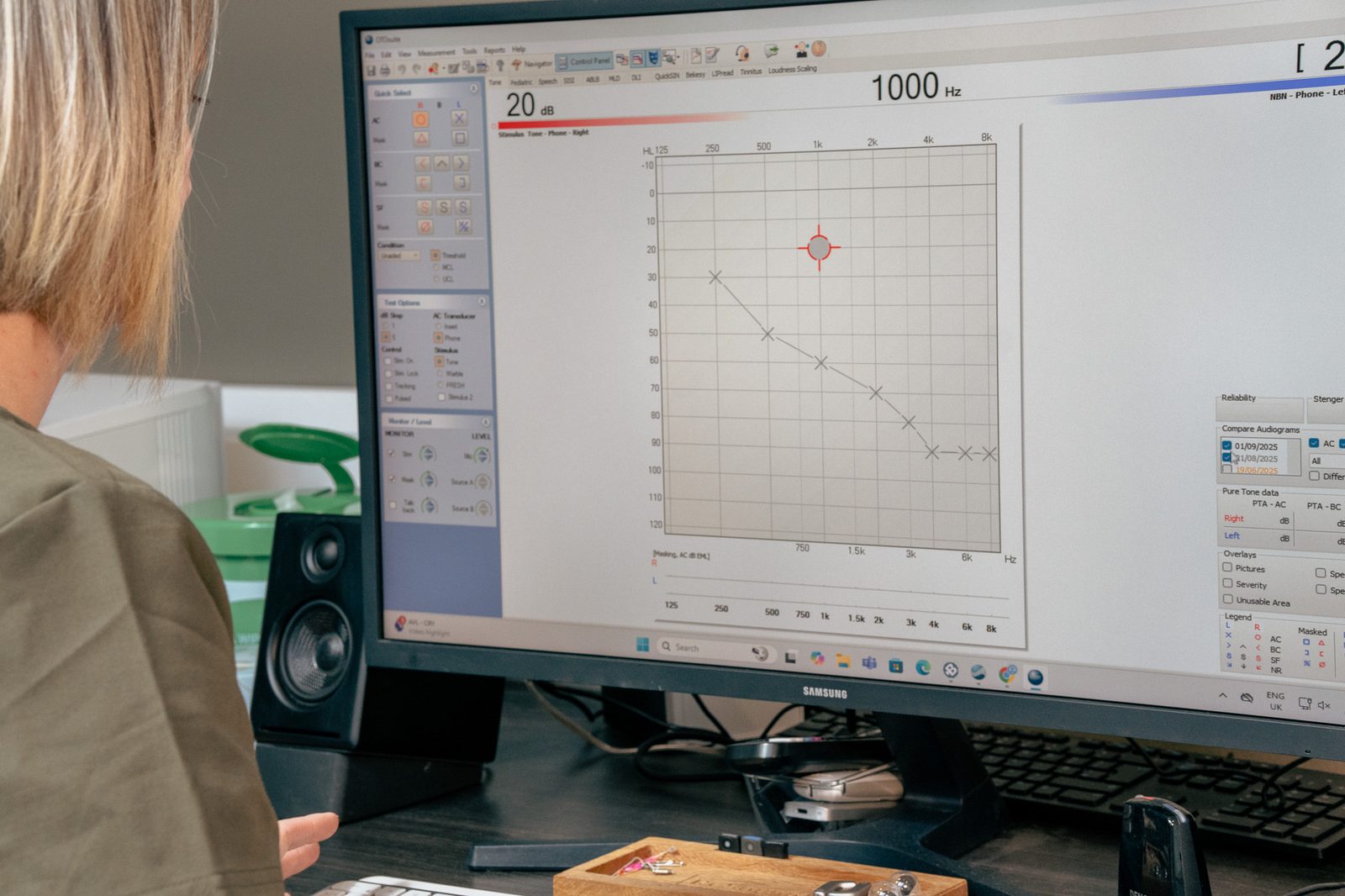
A hearing test gives us something better than a family cross-examination over the remote control.
In clinic, I ask where it goes wrong. The chart helps. So does: “I dread family meals.” So does: “I cannot hear from the back seat.” So does: “I nod at the wrong point when my granddaughter talks to me.”
That is why a good assessment should not stop at soft beeps in a quiet room. The standard hearing test matters, but real life adds background noise, distance, movement, competing voices and fatigue. At Alto, we can also use speech-in-noise testing where it is useful, because restaurants and family tables often tell a different story from the audiogram alone.
Sometimes the answer is not hearing aids
Sometimes we talk about hearing aids. Sometimes we talk about wax, ear health, doors, dishwashers, seating and the habit of beginning important sentences from the hall while someone else is frying onions.
Sometimes the answer is reassurance. Sometimes it is monitoring. Sometimes it is a pair of hearing aids, fitted carefully, then adjusted once real life has had a vote.
Modern hearing aids are much better than their old reputation. Smaller, smarter, easier to live with. Still, the care around them matters. A poor fitting can turn good technology into something left in a drawer. A good fitting takes time, follow-up and a clinician willing to ask what happens outside the clinic.
What to change at home
In the kitchen, say the person’s name first. Face them. Turn the extractor off. I have watched couples realise, with some irritation, that half their arguments began with someone shouting from the hall.
At the shop counter, let them answer, even if the pause feels a shade too long. At the restaurant, do not translate the waiter before the waiter has finished speaking. On the landing, do not shout three rooms away and then diagnose deafness because the answer has not arrived.
Listening is partly manners, partly physics. A dishwasher with a full cutlery basket is not a neutral object.
If you are the person repeating everything
The interpreter may have to stop. Kindly. Not in a huff. Just: “I am not going to repeat every sentence across the table. We need a better plan.”
This can sound harsh until you have watched someone do it for years.
What a better plan can look like
No device makes every noisy restaurant easy. Anyone promising effortless hearing in a tiled room with 70 diners and a party upstairs has been spared some of our local restaurants.
But a better plan can still make a noticeable difference.
SoundCheck
A SoundCheck is a useful first step if you are not sure whether anything has changed and want clear advice without overcomplicating it.
Complete Hearing Assessment
A Complete Hearing Assessment is the better route if family meals, restaurants, the television or everyday conversation are already causing strain.
The follow-up appointments I like best are quite boring.
“I heard my granddaughter from the back seat.”
“I heard my name at the chemist.”
One man told me his wife had stopped answering for him in shops.
She was sitting beside him.
“Because I no longer have to,” she said.
He looked pleased. She looked less tired.
If this sounds familiar
If you are asking someone else to fill in the gaps, or if you have become the person doing the filling in, book a hearing check. The answer may be wax, reassurance, monitoring, communication advice or hearing aids. The useful part is knowing.
Frequently Asked Questions
What are the early signs of hearing loss?
Common early signs include asking people to repeat themselves, turning the television up, missing words in background noise, struggling with speech from another room, feeling that people mumble, or relying on a partner to fill in missed details.
Why can I hear people talking but not understand the words?
Hearing speech is not the same as understanding it clearly. Hearing loss can reduce access to softer speech details, especially consonants. Background noise, distance, fatigue and room acoustics can make the problem more noticeable.
Is asking my partner to repeat things a sign of hearing loss?
It can be. Everyone misses things occasionally, but if your partner is regularly repeating conversations, translating waiters, answering for you in shops or filling in details after social events, a hearing check is sensible.
Should I book a hearing test or start with SoundCheck?
SoundCheck is a good first step if you are mildly curious or unsure whether anything has changed. A Complete Hearing Assessment is better if you already struggle with conversations, restaurants, television, family meals or listening in noise.
Will I definitely need hearing aids?
No. A hearing check may show wax, normal hearing, a mild change that needs monitoring, or a hearing loss where hearing aids could help. The purpose of the appointment is to understand what is happening before deciding what to do.
Can hearing aids fix noisy restaurants?
Hearing aids can help many people hear speech more clearly in noise, but they do not make every noisy restaurant easy. The fitting, technology, hearing loss, speech-in-noise ability, expectations and follow-up all affect the result.
Further reading
- Complete Hearing Assessment at Alto Hearing
- Free SoundCheck hearing check
- Speech-in-noise testing
- Hearing aid fitting and verification
Health information cross-check: RNID signs of hearing loss and NHS hearing tests. If you have sudden hearing loss, severe pain, discharge, dizziness or one-sided sudden symptoms, seek urgent medical advice.