


Your first hearing aid fitting is where the prescription becomes something you can actually wear. You should leave knowing how to put the hearing aids in, how to look after them, what may sound unfamiliar and who to call if something isn’t right.
New hearing aids shouldn’t be handed over with a quick volume check. The appointment should cover measurement, comfort, handling and a clear plan for the first week.
In this article
Watch: what to expect at your fitting and afterwards
Adam Bostock explains what should happen when your hearing aids are fitted, the sounds people notice first and when to ask for an adjustment.
What to bring to your hearing aid fitting
You don’t need to prepare extensively, but a few things can make the appointment more useful.
Bring with you
- the glasses you wear most often
- your mobile phone and its unlock code
- any questions you’ve already written down
- a partner or family member, if you’d find that helpful
Think about
- the voices you most want to hear clearly
- where listening is usually hardest
- whether you use Bluetooth calls, television audio or an app
- anything that worries you about wearing or handling the hearing aids
What should happen at a first hearing aid fitting?
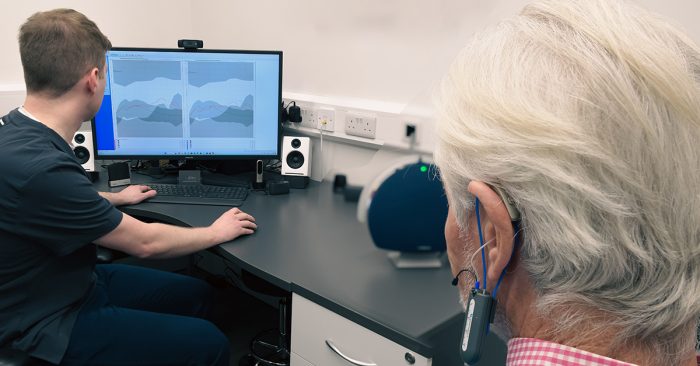
A first hearing aid fitting should be based on your hearing assessment rather than general settings. Your audiologist should also check how the hearing aids sit, how they sound and what they are actually delivering in your ears.
- The physical fit is checked. A hearing aid shouldn’t dig in, rub against your glasses or feel as though it may fall out. The part in your ear should feel secure without making the ear sore.
- The hearing aids are programmed for you. Your hearing results provide the starting point for the prescription in each ear.
- The fitting is measured. Hearing aid verification checks what the devices are delivering in your ears instead of relying only on the manufacturer’s software.
- Comfort and speech are checked. Your audiologist should ask about your own voice, the loudness of speech and whether louder sounds remain comfortable.
- Your audiologist shows you how everything works. That includes insertion, removal, charging, cleaning and any controls you’ll use at home.
Before you leave, check that you can:
- put both hearing aids in correctly
- take them out without pulling the wrong part
- tell the left and right hearing aid apart
- charge them or change their batteries
- clean the parts you’ll look after at home
- contact the clinic if you need help
It can feel fiddly. Most people become quicker after a few days. If you’ve forgotten an instruction before you reach reception, ask again. We expect to repeat things.
For receiver-in-canal (RIC) hearing aids, watch our insertion and removal demonstration.
What might sound different when they’re first switched on?
People often notice their own voice, cutlery and running water first. Paper, footsteps and a car indicator may also seem much more obvious than expected.
Most people have been missing some of these sounds for years. The brain has got used to receiving less of them. When hearing aids put that detail back, it takes time to sort the useful sounds from those that can sit in the background.
Your own voice may sound louder, hollow, echoey or slightly blocked. Some of that can become less noticeable with use. The earpiece and programming can affect it too, so tell your audiologist if it remains distracting.
Unfamiliar or in need of adjustment?
The hearing aids may sound different without being wrong. They shouldn’t hurt or produce sound that you can’t tolerate.
Common at first
- your own voice sounds unfamiliar
- paper, footsteps or water stand out
- the room sounds busier than expected
- the hearing aids feel noticeable on your ears
Call the clinic if
- the hearing aid or earpiece is sore
- sound is painfully loud, harsh or piercing
- whistling keeps happening
- one hearing aid suddenly becomes much softer
- you can’t wear them long enough to practise
We have a separate guide explaining why new hearing aids can sound strange and which fitting changes may help.
Your first week: give your audiologist useful information
Don’t save new hearing aids for a restaurant, wedding or large family meal. Those are difficult places to listen even with a good fitting, and they’re a poor introduction to sound you’re still getting used to.
Start with ordinary situations: conversation at home, television, a trip to the shops or a familiar drive. Some people wear their hearing aids throughout the day from the start. Others build up over several days. Follow the advice from your fitting and use them consistently enough to find out what is working.
For an independent overview, RNID has practical guidance on getting used to hearing aids and listening to everyday sounds.
A useful note takes 20 seconds
Write down the place, the sound and what was wrong. For example:
- “At breakfast, plates and cutlery were uncomfortably sharp.”
- “In the car, speech was loud enough but the words weren’t clear.”
- “My own voice sounded blocked for most of the afternoon.”
- “I heard well at home but struggled across a table in the cafe.”
“They sound bad” is hard to adjust. A real example tells your audiologist where to begin.
What is the first follow-up appointment for?

The fitting is based on your hearing results and measurements in the clinic. The follow-up adds what happened at home, in the car, at work and around other people.
The volume may need changing. Particular sounds may need softening. Speech may need more support. The physical fit may also feel different after several hours than it did during the appointment.
This is a normal part of hearing aid aftercare. Don’t arrive determined to say everything is “fine”. Tell us what actually happened.
Five questions to ask at your first hearing aid fitting
- How many hours should I wear them at first? Ask for advice that fits your hearing and sound tolerance.
- Which parts should I clean or replace? Know what you can do at home and what the clinic should handle.
- What should I do if one hearing aid stops working? Ask to be shown the charger, wax filter and any basic checks.
- When is my first review? Make sure follow-up is booked or you know how it will be arranged.
- Who do I contact before then? Painful sound, soreness or hearing aids you can’t use should be checked rather than endured.
If you want a broader view of the weeks ahead, read what to expect when wearing hearing aids. Our guide to the hearing aid adjustment period gives a more detailed timeline.
Related Alto guides
First hearing aid fitting FAQs
Should hearing aids be comfortable from the first fitting?
They may feel noticeable at first, but they shouldn’t dig in, rub or make your ear sore. Ask your audiologist to check the physical fit if they hurt or become uncomfortable after several hours.
Should hearing aids be measured in my ears?
Verification, including Real Ear Measurements where appropriate, checks what the hearing aids are delivering in your ears. It gives the audiologist information that the manufacturer’s fitting software alone can’t provide.
Should I wear new hearing aids all day?
Some people wear them throughout the day from the start, while others build up over several days. Follow the advice given at your fitting. Consistent use is usually more helpful than saving them only for difficult situations.
Is it normal for my own voice to sound strange?
Yes. Your voice may sound louder, hollow, echoey or blocked at first. It may become less noticeable, but the earpiece and programming can also affect it. Ask for a review if it remains distracting.
What if my hearing aids don’t sound right?
Make a note of where the problem happens, which sound is affected and whether it’s unclear, uncomfortable or painfully loud. Contact the clinic promptly if the hearing aids hurt, whistle repeatedly or can’t be worn.