

Music can sound thin, harsh or distorted through hearing aids even when speech is easier to follow. The everyday settings that help with conversation can also change the sound of an instrument or a favourite recording.
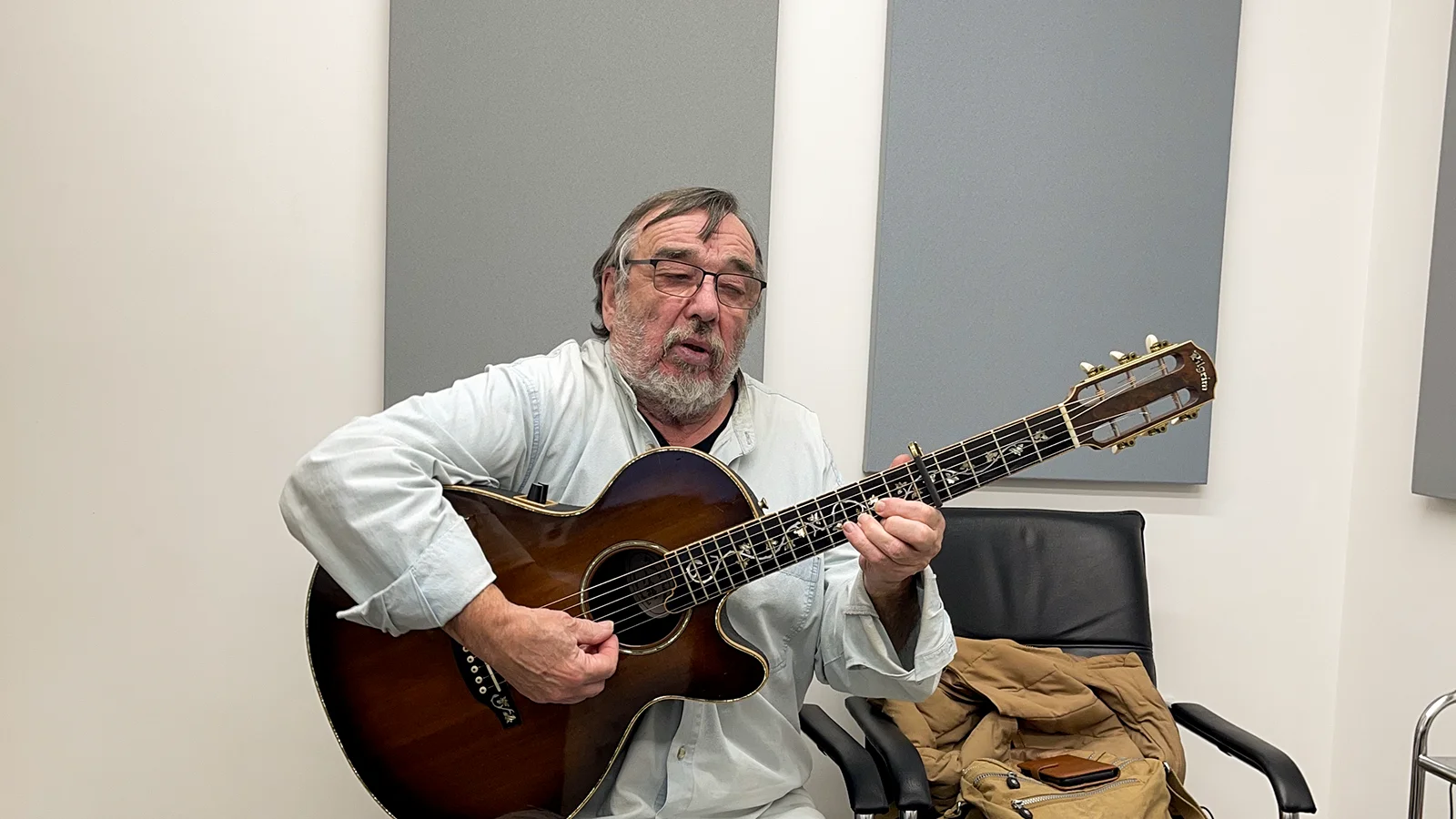
At Alto, we regularly fit singers and musicians. We have had patients bring their instruments into the clinic so we can fine-tune the hearing aids while they play. Music is personal, and being able to hear the problem together helps us make more useful adjustments.
In this article
Speech settings can change the music
A hearing aid may reduce background sound, favour a voice in front of you and adjust amplification as the sound level changes. Those functions can help you follow a conversation. With music, you may want to hear the whole performance, including sounds arriving from other directions.
A sustained instrument note can also be difficult for feedback-control systems to distinguish from whistling. The result may be a wavering or altered tone. And the way the hearing aid manages changes in loudness can affect the contrast between softer and louder passages.
That does not mean every distorted note has the same cause. The programme, the fit in your ear and the hearing loss itself all need considering. A music-specific adjustment should start with the sound you are struggling with.
We fine-tune musicians’ hearing aids while they play
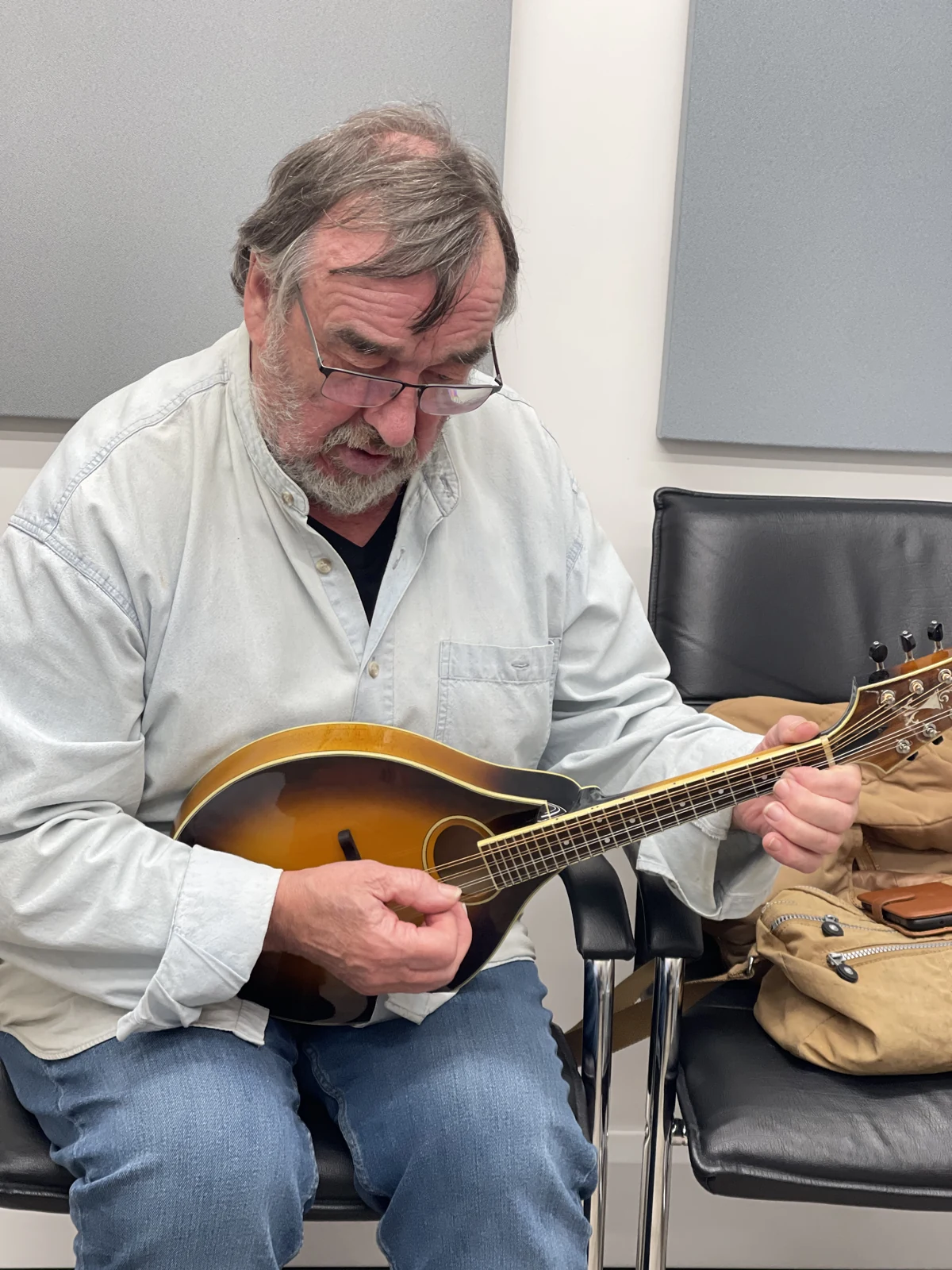
One musician we worked with brought his guitar, banjo and mandolin into the clinic. We adjusted his hearing aids while he played, then set up separate programmes around his instruments and live playing needs.
A guitar strum and a sustained sung note put different demands on a hearing aid. Playing gives the musician a chance to tell us what has changed as we adjust the sound. We can work with the passages they know, rather than relying entirely on descriptions such as “too sharp” or “a bit digital”.
We also see singers. For them, hearing their own voice comfortably and following the other voices or accompaniment may need particular attention. A setting that suits listening to a recording may feel quite different when you are making the sound yourself.
Tell us about your music before the fitting. If you play an instrument you can bring with you, mention it when arranging the appointment so we can discuss how to include it.
Why hearing aids don’t sound like headphones
Hearing aids amplify selected pitches according to your hearing needs. Their usable frequency range is limited, and the response depends on the model, the tiny speaker in the ear, the earpiece and the settings. They should not be expected to reproduce music in the same way as a full-range pair of headphones.
With an open or vented fitting, some low-frequency sound can escape from the ear canal. Streamed music may then lack bass. A more closed earpiece can change that response, but it also changes how your own voice and other sounds feel. The physical fit needs reviewing with the audiologist.
Timing can affect the tone too. In an open fitting, sound coming directly into the ear mixes with amplified sound. A delay between them can add an artificial quality. Our article on why new hearing aids can sound strange explains this in more detail.
Frequency range, loudness and processing delay are separate properties. A single specification cannot tell us whether you will enjoy a hearing aid’s sound.
What a music programme changes
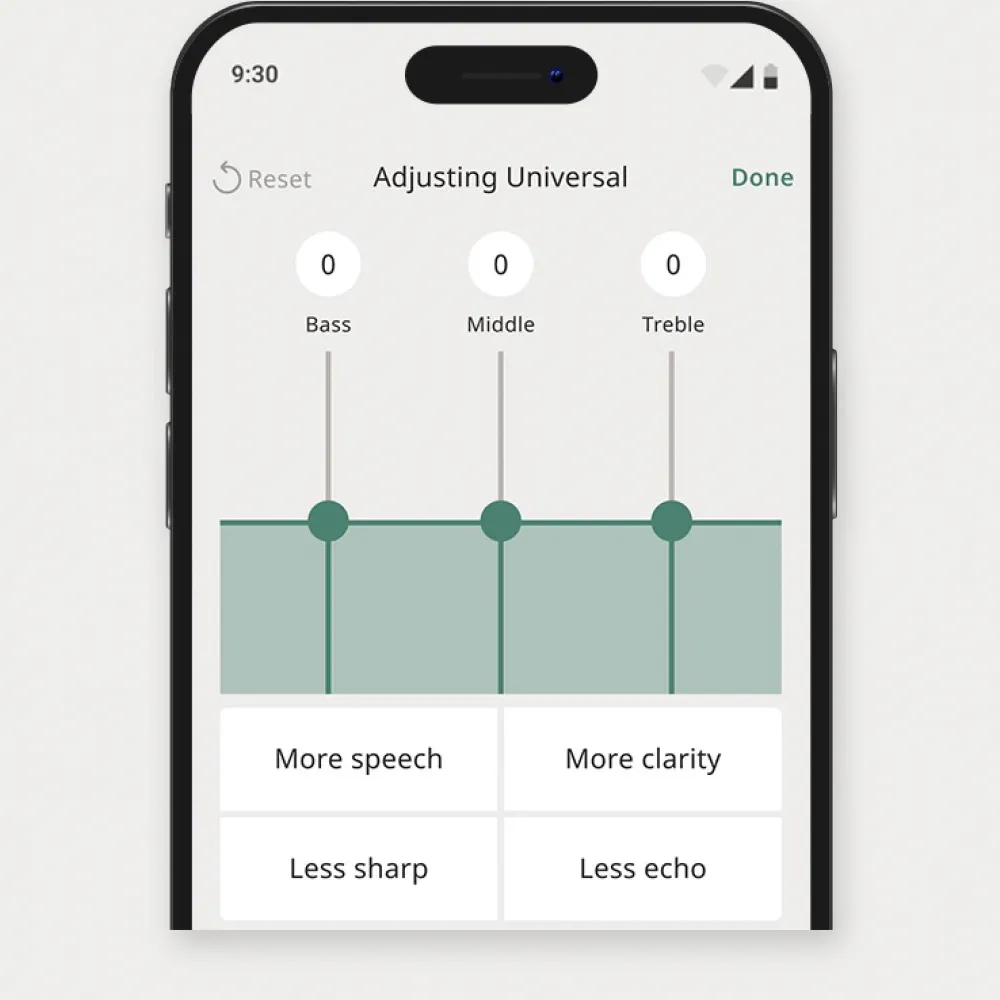
A music programme gives the audiologist a separate setting to adjust without replacing the everyday speech programme. Depending on the hearing aid, it can change the frequency balance, the handling of loud and soft sounds, microphone directionality or feedback control.
Manufacturers take different approaches. Widex Allure has a Music programme for non-streamed sources. Signia describes its HD Music presets as settings for non-streamed music too. Unitron’s Hearing Remote app offers a Live Music option on supported hearing aids and technology levels.
ReSound also describes a Music Mode within its feedback-management system. This slows the system’s adaptation to avoid treating musical tones as feedback. That feature is different from selecting a programme in an app.
We check these settings with the music you actually listen to or play. Turning off every feature is not the answer: some people still need compression to keep softer sounds audible and louder sounds comfortable.
Our experience with Widex and ReSound
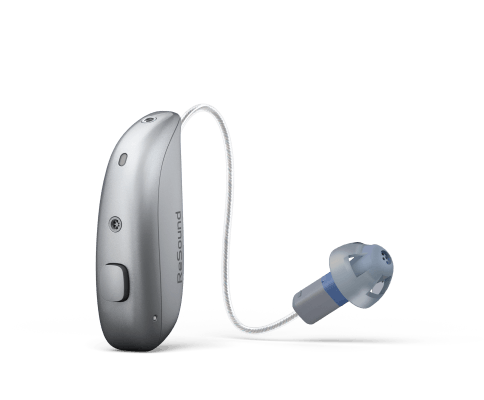
In my experience, musicians often lean towards Widex because they like its natural sound. It has been a useful option in our music fittings, where small changes in tone can be very noticeable.
When I tested ReSound Vivia in 2025, I was pleasantly surprised by how good music sounded through a speaker. That was my own listening experience; streamed music and a different person’s fitting may sound different.
Bring familiar music into the discussion. Knowing how a voice or instrument should sound to you is useful when we are fine-tuning your hearing aids.
Streamed music needs its own checks
Music from a speaker enters through the hearing-aid microphones. Streamed music arrives electronically from a phone or another connected source. The hearing aids may use different settings for that audio, so a Music programme for the microphones should not be assumed to change the streamed sound.
If streaming sounds thin, we would consider the earpiece and the balance of frequencies as well as the streaming settings. The mix between streamed audio and the hearing-aid microphones may also affect what you hear.
Check the source as well. An equaliser or other sound setting in the music app can change the recording before it reaches the hearing aids. Keep a note of those settings so the audiologist knows what you were listening to.
Drop-outs, interruptions or sound in only one ear need a different investigation from a consistent lack of bass. Our guide to hearing aids and phone compatibility covers the connection side.
Bring the sound that bothers you
A familiar recording helps. Note the track and the point where the problem happens, the device or speaker you used and the hearing-aid programme selected. Tell us whether it affects one ear or both, and whether it happens at ordinary listening levels or only when the music gets louder.
“The violin wavers on this held note” gives us more to work with than “music sounds bad”. If you sing or play, explain whether the problem is with your own sound, the other musicians or the backing track.
Loud music can overload the hearing aid’s input before later volume adjustments are applied. Turning down the hearing aids may make it softer without removing that distortion. Move away from a loud source rather than trying to overcome it with more amplification.
If speech and everyday sounds have become distorted too, particularly in one aid, we would want to check for a blocked filter or a device fault as well as the programming. Start with the relevant checks in our hearing-aid troubleshooting guide.
Loud performances still need hearing protection
A music programme does not make a loud gig or rehearsal safe. Hearing aids are not hearing protection, and turning them down or muting them does not turn them into earplugs.
Use suitable hearing protection, take breaks from loud areas and keep your distance from speakers. If you perform regularly, discuss protection for your instrument and surroundings. Alto’s custom ear protection page explains that service.
Talk to Alto about music and your hearing aids
Tell us what you listen to or play, and what sounds wrong. Contact Alto to discuss your hearing aids and whether a fitting review would help.
If you are considering hearing aids for the first time, a Complete Hearing Assessment gives us the opportunity to understand your hearing and discuss your music alongside your other listening needs.
Contact AltoSources and further reading
- Madsen and Moore (2014): Music and Hearing Aids
- Moore (2022): Listening to Music Through Hearing Aids
- Widex Allure programmes and app controls
- ReSound Music Mode and feedback management
- Signia Integrated Xperience feature overview
- Unitron Hearing Remote 5.3 user guide
- RNID: listening to music safely