

Getting a hearing aid into your ear can be awkward when your fingers are stiff. A tiny wax filter or a charging light you can’t see can cause problems, too. Arthritis, tremor and poor eyesight deserve attention when you’re choosing your first hearing aids, or when a pair you already wear has become difficult to manage.
At Alto, we look at the design of the hearing aid, how it fits your ear and the movements needed to use it. Sometimes we recommend a different style. Sometimes a change to the fitting or a handling technique makes the difference.
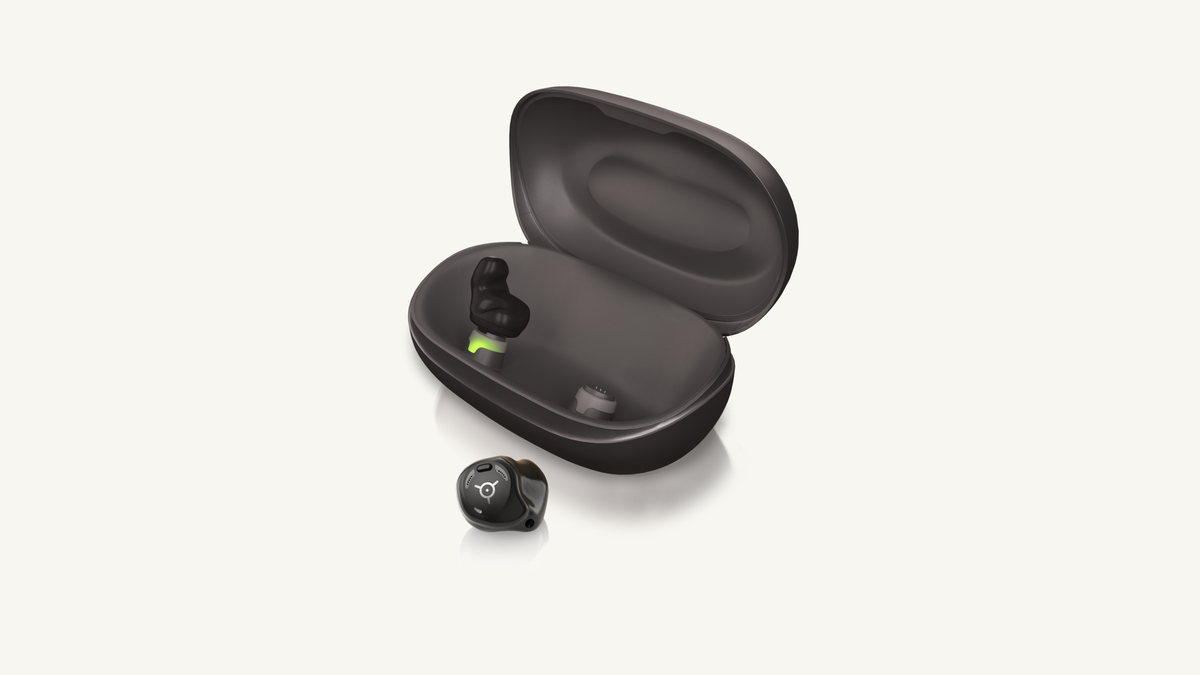
Main image: Unitron Insera S-R rechargeable in-ear hearing aids and charger, shown as an example. Image: Unitron.
Which part is difficult?
You might hold the hearing aid comfortably but struggle to guide the soft tip into your ear. Or insertion is straightforward, but the charger is difficult to use. The same description, “too fiddly”, can mean either of these.
Where you get stuck helps us decide what to change. So does the time of day: hands that cope well during an afternoon appointment may be much stiffer when you’re getting ready in the morning.
Rechargeable in-ear hearing aids for severe dexterity difficulties
A rechargeable custom in-the-ear hearing aid brings the working parts together in one shell that sits in your ear. There is no separate case to position behind the ear, no wire and small tip to manage, and no loose battery to change.
In our experience at Alto, this style is nearly always easier to handle than a receiver-in-canal aid for people with severe dexterity difficulties. We mean a rechargeable in-ear design with a shell they can handle, rather than the smallest possible invisible aid. The hearing loss and ear shape still need to suit the fitting.
Some devices have custom-made inserts in the charger, so each aid drops into a space shaped for it. This can help with positioning the aids without having to line up small parts.
Getting the aids into the charger is only half the job. You also need to be able to lift them out, tell left from right and check that charging has started. These are things to try with the actual charger. Once your custom pieces have been made, we check that you can manage them.
Why we might use a custom tip on a RIC hearing aid
Receiver-in-canal hearing aids, often called RIC aids, have a case behind your ear and a small speaker inside your ear canal, joined by a thin wire. The speaker has either a standard silicone dome or a custom-made earpiece attached to it.
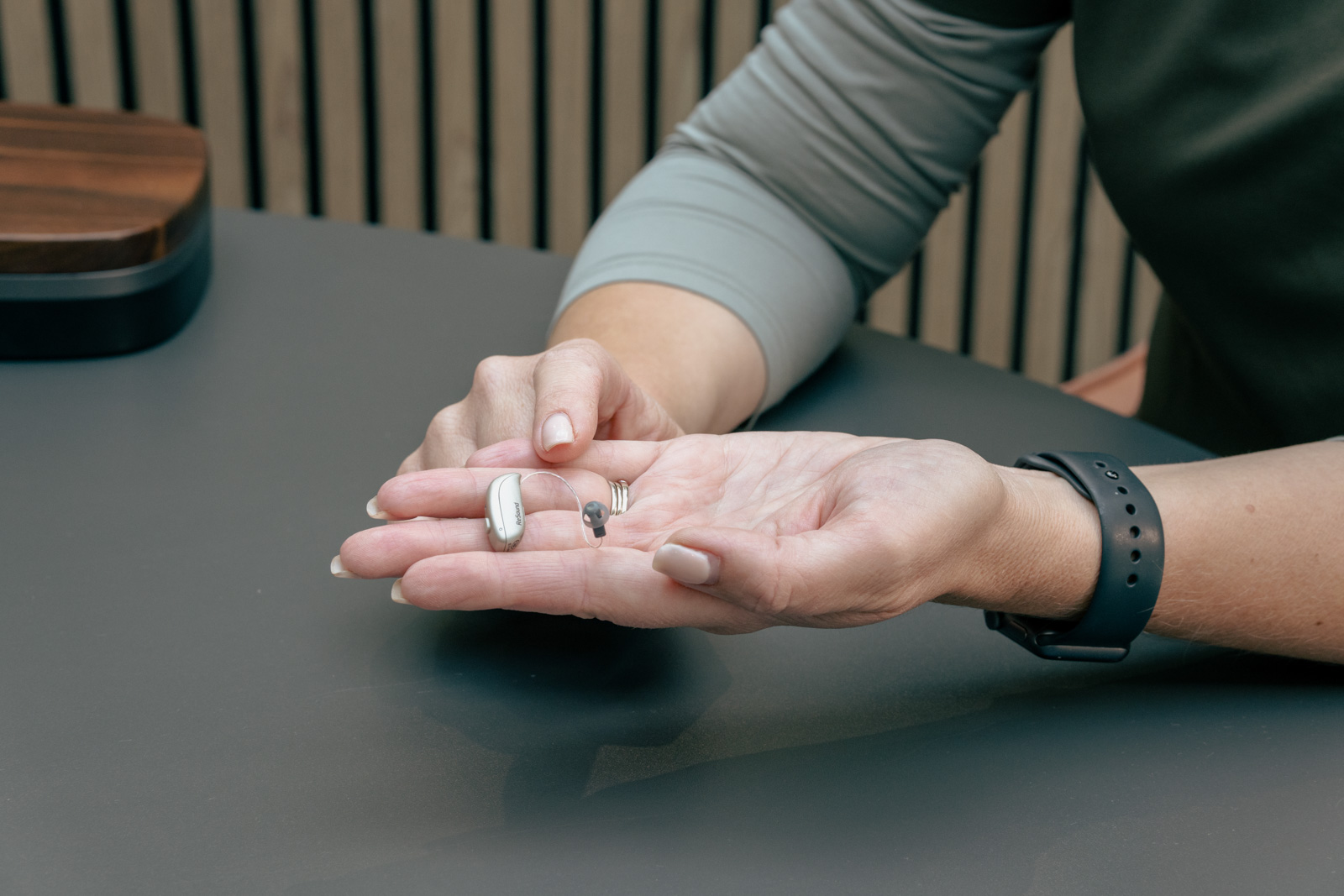
A custom tip is made to fit your ear. We may recommend one when a standard dome is uncomfortable, won’t stay securely in place, or doesn’t provide the seal needed to deliver the sound your hearing loss requires. A suitable seal can also help control whistling caused by sound leaking back to the hearing-aid microphones.
We choose the vent, an opening through the earpiece, to balance the amplification you need with how open the ear feels and how your own voice sounds.
A custom tip can also be easier to guide into the ear. That is an additional benefit of the individual fit; we wouldn’t choose one solely because someone has poor dexterity. The aid still sits behind the ear, with a wire connecting it to the earpiece.
Where a custom tip is appropriate, it may be possible to fit one to an existing hearing aid. The fit and hearing-aid settings then need checking together.
Which jobs will you need help with?
Changing a wax filter involves much smaller parts than putting a hearing aid in. You may manage your aids comfortably each day and still need someone to do that occasional job. A family member or the clinic may be able to help. Whoever takes on the job needs to be available when a filter needs changing, including between routine appointments.
Daily assistance is a bigger commitment. A relative who visits once a week can help with some maintenance, but won’t be there to put the aids in each morning and remove them at night. That needs someone available every day, including someone who can help when your usual helper is away.
Our wax-filter demonstration shows the parts involved in one RIC system. Filter designs differ, so anyone helping needs the instructions for the particular aids.
Regular hearing-aid aftercare gives us time to check how you’re getting on with handling, charging and cleaning. A job that was manageable when the aids were new may become harder later.
For a partner or adult child, it helps to agree which jobs the wearer wants help with. They may welcome help changing filters but want to put their aids in themselves. Anyone providing that help should have a chance to learn the relevant tasks at the appointment. For advice on discussing hearing care with your parent, see helping a parent with hearing loss.

Give yourself time to practise
At Alto, we work on handling techniques as well as the choice of hearing aid. That might mean changing your grip, adjusting the position of your hands or breaking a movement down into smaller steps. Watching you do it helps us see where a different technique could help.
There should be time to repeat a step without feeling rushed. Our RIC insertion video can serve as a reminder afterwards, alongside the instructions for your own fitting.
Pain, repeated dropping or difficulty taking an aid out are reasons to get back in touch before your next routine review. More practice may not resolve a problem with the fit or the movement itself.
When you can’t see the small details
The small red and blue markers used to identify right and left can be difficult to see. One practical advantage of private hearing care is the wider choice of hearing-aid colours. We can use that choice to make the two aids easier to tell apart.
With custom in-ear hearing aids, we sometimes have the left shell made in blue and the right in red. The faceplates, the outward-facing parts, can stay the same colour as each other. The coloured shells are hidden when the aids are in your ears, but much easier to distinguish when you’re holding them.
We can also use two different colours for behind-the-ear or RIC hearing aids if that’s needed. It’s a less common choice, and those colours may be visible behind the ears, but it is an option when identifying left and right is a real difficulty.
Colour needs to be something you can recognise reliably. Charging is a separate check: a larger coloured shell won’t help you see a tiny indicator light, so we also need to establish how you’ll know the aids are charging.
Using your usual reading glasses and a well-lit table can help. A plain cloth underneath gives you somewhere to practise and catches small parts if you drop them. Choose a colour that makes the aids easy for you to see, and keep away from the sink.
Before adding a mark or label to an aid, ask us where it can safely go. It mustn’t cover an opening or interfere with charging.
What to try at your appointment
Before settling on hearing aids, allow time for the everyday tasks as well as listening with them. This checklist can also help identify what has become difficult with an existing pair.
| Try this | Check this |
|---|---|
| Tell the aids apart | Can you identify left and right reliably? Would different shell colours help? |
| Put each aid in and take it out | Can you do both sides comfortably, using the technique you’ve been shown? |
| Use the charger or change a battery | Can you get the aids out as well as in, and tell whether charging has started? If you use loose batteries, can you manage the drawer and battery? |
| Adjust the controls you need | Can you use them without losing your grip? Which settings can be automatic? |
| Do the daily cleaning | Can you hold the aid securely and follow the instructions? |
| Change a wax filter, if needed | Can you manage the small parts, or will you need someone to help? |
Getting help with handling
For an existing wearer, an appointment with the aids, charger and usual glasses gives us a chance to see what’s happening. The next step may be help using what you already have, a change to the fitting, or a different style if handling has become much harder. NHS wearers can raise handling difficulties with their own audiology service, too.
For your first pair, concerns about your hands or eyesight belong in the Complete Hearing Assessment, before choosing a device.
Request a call back to discuss the part you’re finding difficult, or anything you’re worried about managing.
Further information
- NICE guidance on assessing hearing loss in adults, which includes physical mobility and dexterity in the assessment history.
- NHS explanation of hearing-aid styles and support.
- RNID advice on cleaning and maintaining hearing aids.
- ReSound instructions for custom hearing aids and their charger inserts.
- Widex guidance on vent selection for custom earpieces.
- Oticon technical guide to custom receiver-in-ear earpieces.