
Phonak is one of the best-known hearing aid brands in the world. If you are researching private hearing aids, there is a good chance you will come across Phonak fairly early.
You may have seen Phonak recommended online. You may know someone who wears Phonak hearing aids. You may have been quoted for Phonak by another clinic. Or you may simply be comparing the major brands before deciding where to have your hearing properly assessed.
This guide explains what Phonak hearing aids are known for, which current Phonak models you are likely to come across, how much Phonak hearing aids may cost, who they may suit, and why the fitting matters as much as the brand name.
The quick answer: Phonak hearing aids can be an excellent option for people who value strong Bluetooth connectivity, speech-in-noise features, remote microphone support, power options or support for more complex hearing needs. But Phonak is not automatically the right choice for everyone. The right hearing aid depends on your hearing loss, your ears, your speech-in-noise ability, your phone use, your handling needs and the quality of the fitting.
A note from Alto Hearing
At Alto Hearing, we do not recommend hearing aids by brand name alone.

Phonak is a major manufacturer with serious technology, but the logo on the device is only one part of the decision. A pair of hearing aids can be technically advanced and still be wrong for a particular person if the hearing loss, ear shape, sound preference, dexterity, phone use or fitting style do not line up.
Our view is simple: the best result comes from matching the person to the right technology, then fitting it properly.
So if you are comparing Phonak with Widex, ReSound, Oticon, Unitron or another major brand, the aim should not be to find the most famous name. The aim should be to find the most suitable route for your hearing and your life.
Table of Contents
Are Phonak hearing aids good?
Phonak hearing aids are very good, yes. Phonak is a long-established hearing aid manufacturer and part of Sonova, one of the major global hearing care groups. Its current UK-facing range includes products such as Audéo Infinio Ultra R, Audéo Infinio Ultra Sphere, Virto R Infinio, CROS Infinio, Naída Lumity and Lyric.

But “good” is not precise enough.
A better question is:
Are Phonak hearing aids right for your hearing loss, your ears and your listening priorities?
For some people, Phonak will be a great option. For others, a different manufacturer may give a more comfortable sound, a better physical fit, better app usability, better battery behaviour, or a more appropriate fitting pathway.
A good audiologist should not start by asking which brand you want. They should start by understanding where you struggle, how your hearing is changing, what your ears will physically tolerate, and what level of support you need in real life.
What are Phonak hearing aids known for?
Phonak is particularly well known for four things: connectivity, speech-in-noise technology, power options and its Roger remote microphone ecosystem.

Phonak has long positioned itself around universal Bluetooth connectivity. Its current Infinio Ultra R page says the hearing aids can pair with up to eight Bluetooth devices, with two simultaneously connected, and are designed for hands-free calls and streaming across a broad range of devices.
That can matter if you use your phone frequently, stream audio, take video calls, move between devices, or want hearing aids that behave more like part of your everyday technology.
Phonak is also heavily focused on speech clarity in noise. The current Audéo Infinio Ultra Sphere range is built around Spheric Speech Clarity 2.0 and a dedicated AI chip called DEEPSONIC, which Phonak says is designed to separate speech from noise in real time and support voices from different directions.
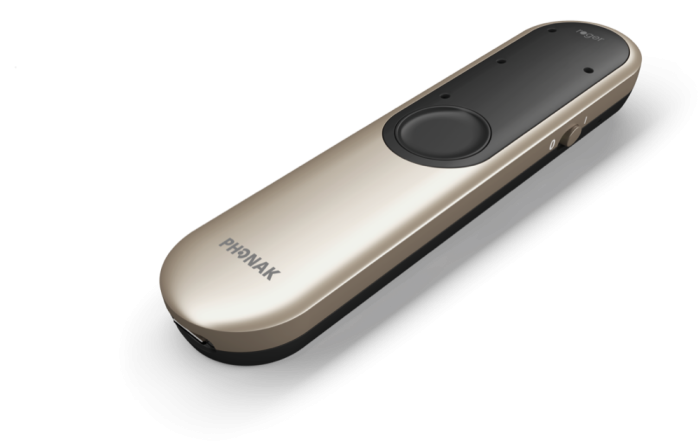
Then there is Roger. Roger microphones are external wireless microphones designed to send speech directly to compatible hearing aids, particularly where background noise or distance makes listening harder. Phonak describes Roger On as a microphone for everyday use in noise and over distance, with different modes for table use, pointing, online calls and presenter-style situations.
This is very important because sometimes the best answer is not simply “buy a more expensive hearing aid”. For certain listening problems, especially meetings, restaurants, group conversations or distance listening, the right accessory can make a meaningful difference.
Current Phonak hearing aid ranges
Phonak has several product families, and not every model is designed for the same person. This is where many comparison searches become confusing.
A Phonak Sphere hearing aid, a Virto custom hearing aid, a CROS system and a Naída power hearing aid are not simple upgrades of one another. They are different tools for different hearing and fitting needs.
Phonak Audéo Infinio Ultra R
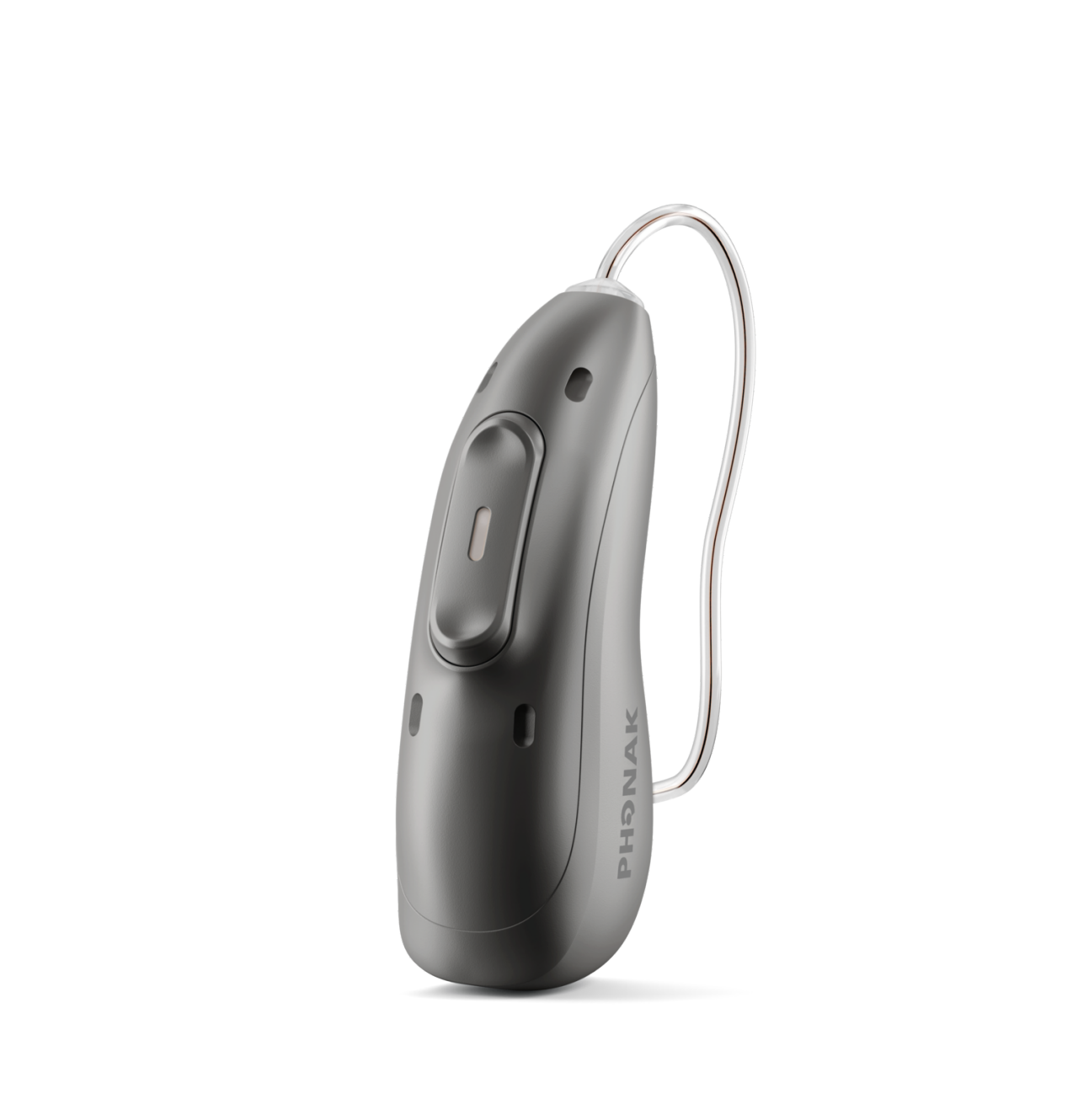
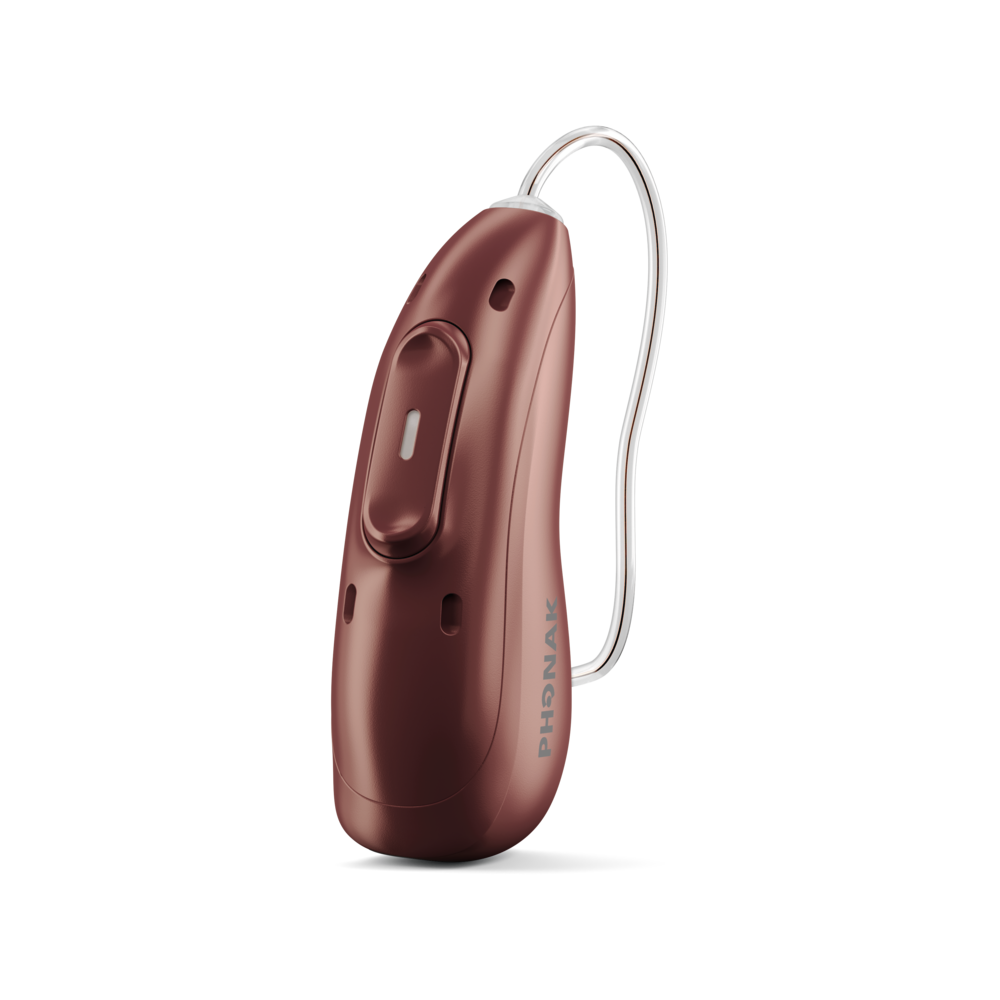
Phonak Audéo Infinio Ultra R is a rechargeable receiver-in-canal hearing aid. This is the style many people picture when they think of a modern private hearing aid: a small device behind the ear, with a thin wire leading to a receiver in the ear canal.

Phonak describes Audéo Infinio Ultra R as using AI technology, AutoSense OS 7.0, rechargeable power, universal connectivity and EasyGuard dome compatibility. It is listed as suitable for mild to profound hearing loss, depending on the receiver and fitting choice. Phonak also states up to 31 hours of battery life, although real-world battery life depends on hearing loss, streaming, environmental classification and feature use.
This is likely to be the mainstream Phonak option many private clients are quoted. It may suit someone who wants a discreet rechargeable device, strong Bluetooth use and a flexible fitting for everyday listening.
It does not automatically mean it is the best option for every mild or moderate hearing loss. Some people prefer a different sound profile, a different app experience, a different physical fit, or a different way of managing background noise.
Phonak Audéo Infinio Ultra Sphere
Phonak Audéo Infinio Ultra Sphere is the more noise-focused option within the current Infinio family.

Phonak positions Sphere around speech clarity in noisy places. It uses Spheric Speech Clarity 2.0 and a dedicated AI chip, DEEPSONIC, which Phonak says is designed for real-time speech-from-noise separation from any direction. Phonak also states up to 56 hours of battery life, subject to use and fitting conditions.
This may be the model people find when they search for “Phonak AI hearing aids” or “best Phonak hearing aids for background noise”.
The important caveat is that no hearing aid removes background noise completely. Better technology can help with access to speech, listening effort and directionality, but it cannot make a noisy restaurant behave like a quiet sitting room.
For someone with significant speech-in-noise difficulty, the right question is not just whether Sphere is technically impressive. The question is whether the person’s speech-in-noise results, lifestyle, ear fitting and expectations make that type of technology clinically sensible.
Phonak Virto R Infinio
Phonak Virto R Infinio is a rechargeable custom in-the-ear hearing aid. Instead of sitting behind the ear, it is made to fit inside the individual ear.
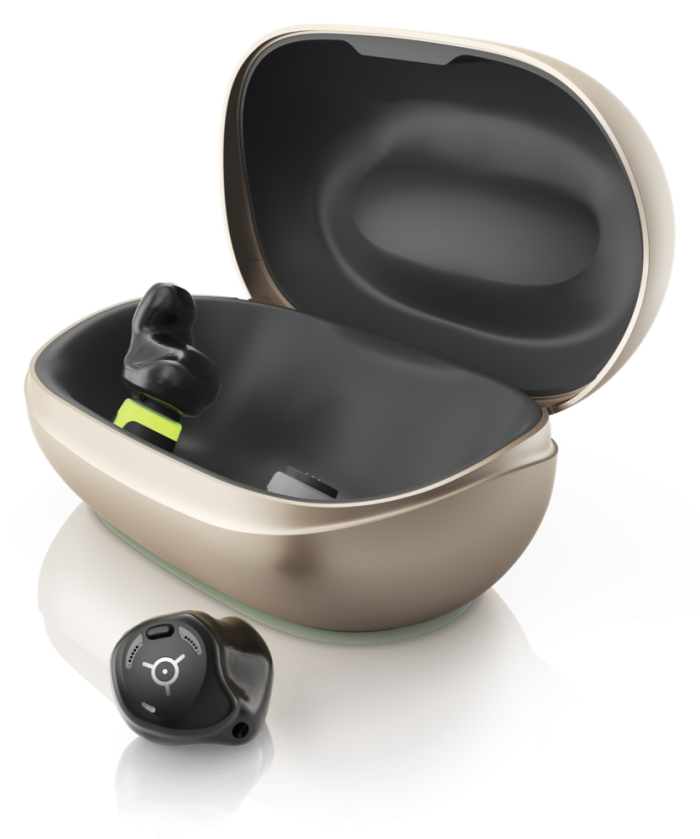
Phonak describes Virto R Infinio as a discreet in-the-ear device with SmartSpeech Technology, rechargeability, universal connectivity, RightFit customisation and AutoSense OS 7.0. Phonak also says its biometric calibration approach uses 1,600 data points to support the fitting.
This may appeal to people who dislike the idea of a behind-the-ear device, wear glasses, use oxygen tubing, wear masks often, or simply prefer a self-contained in-ear style.
But custom hearing aids are not automatically better because they are custom. They need enough space in the ear, suitable ear canal anatomy, appropriate hearing loss, manageable feedback control and realistic expectations around visibility, handling and maintenance.
For some people, a receiver-in-canal fitting behind the ear will still be neater, more flexible and easier to adjust.
Phonak CROS Infinio
Phonak CROS Infinio is designed for unaidable hearing loss in one ear. A CROS system picks up sound from the poorer side and sends it to the better hearing ear.
Phonak describes CROS Infinio as fully rechargeable and compatible with Audéo R Infinio. It is designed for people with unilateral hearing loss where one ear cannot be usefully aided in the usual way.
This is a very specific fitting category. Someone with single-sided deafness or an unaidable ear should not be treated in the same way as someone with a typical age-related high-frequency hearing loss in both ears.
A proper assessment needs to establish whether the poorer ear is genuinely unaidable, whether the better ear also needs amplification, and whether alternatives such as bone conduction, CROS, BiCROS or other medical pathways should be considered.
Phonak Naída Lumity
Phonak Naída Lumity is a behind-the-ear power range. Phonak describes it as a powerful hearing solution with universal connectivity, and lists different Naída models for different degrees of hearing loss, including severe to profound hearing loss in the Naída L-UP model.
This is relevant because some people need far more than a small open-fit hearing aid. Severe or profound hearing loss often needs more power, more feedback control, a stronger receiver or traditional behind-the-ear format, and a carefully made earmould.
That type of fitting is more clinical than cosmetic. The earmould, venting, feedback management, verification and follow-up matter enormously.
Phonak Lyric
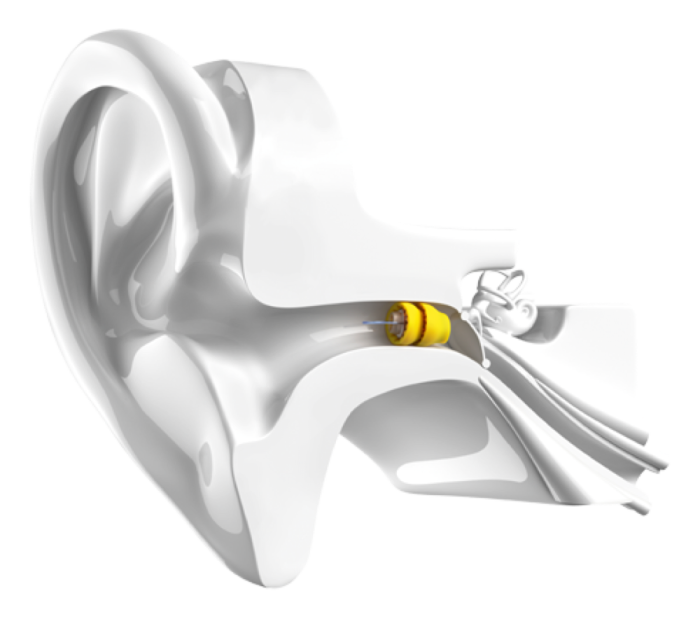
Phonak Lyric is a different proposition. It is an extended-wear invisible hearing aid placed deep in the ear canal by an authorised provider. Phonak describes it as worn around the clock for months at a time, available through a subscription model, and not suitable for everyone.

Lyric can be attractive to people who want an invisible device and do not want daily insertion, removal or charging. But the ear canal has to be suitable, and it requires a specific provider model. It also does not offer Bluetooth streaming in the way that many modern receiver-in-canal hearing aids do.
Which Phonak hearing aid is best?
There is no single best Phonak hearing aid.
The best Phonak hearing aid depends on the hearing problem being solved.
| Hearing need | Phonak option people may come across | Why it may be considered |
|---|---|---|
| Everyday mild to moderate hearing loss | Audéo Infinio Ultra R | Discreet, rechargeable, flexible receiver-in-canal fitting |
| Background noise and complex social listening | Audéo Infinio Ultra Sphere | Stronger speech-in-noise positioning, AI speech separation claims |
| Preference for in-the-ear design | Virto R Infinio | Custom fit, rechargeable, in-ear format |
| Severe or profound hearing loss | Naída Lumity | More powerful behind-the-ear options |
| Unaidable hearing loss in one ear | CROS Infinio | Routes sound from the poorer side to the better ear |
| Invisible extended-wear option | Lyric | Deep-canal, subscription-based, worn for months at a time |
Phonak can be particularly relevant when the listening challenge extends beyond simple one-to-one conversation. The Roger ecosystem is a good example: Roger On can be used on a table, held, clipped to a speaker, used for online calls, or connected to audio sources, depending on the listening need.
That said, suitability is not just about features. A person can have every feature available and still not get the result they hoped for if the fitting is wrong, the expectation is unrealistic, or the ear cannot support the style chosen.
Who might not need Phonak?
Phonak may not be the best route if your main priority is the softest possible first-fit sound, if you dislike managing Bluetooth settings, if you want the simplest possible device, or if another manufacturer gives a better match for your hearing pattern and sound preference.
Some people also arrive with a brand in mind because a friend has that brand or they have read about it on social media. That is understandable, but it is not a reliable way to choose hearing aids.
Other people may have a different hearing loss, different ear canals, different dexterity, different phone, different listening needs and a different tolerance for amplified sound.
The right choice should come from assessment, not imitation.
Can Phonak hearing aids help in background noise?
Yes, Phonak hearing aids can help in background noise. But they cannot remove background noise completely. This distinction matters very much.
Phonak’s current Sphere technology is specifically positioned around speech clarity in noisy environments, with Spheric Speech Clarity 2.0 designed to extract, enhance and integrate speech from multiple voices in real time.

That is valuable, but background noise is still one of the hardest problems in audiology. The real-world result depends on more than the hearing aid chip. It depends on your hearing loss, your auditory processing, the acoustics of the room, where you sit, how many people are speaking, whether you can see people’s faces, and whether the hearing aids have been properly fitted.
At Alto, we do not rely only on a standard hearing test to understand this. We use speech-in-noise testing, including QuickSIN, which measures the signal-to-noise ratio you need to understand speech clearly. That gives a more useful picture of how you are likely to manage in restaurants, groups and busy social settings.
What is Roger, and why does it matter?
Roger is a remote microphone system from Phonak, designed to help when distance and background noise make conversation harder.

This matters because hearing aids can only work with the sound that reaches their microphones. If the person speaking is across the room, at the other end of a restaurant table, in a meeting, or surrounded by noise, even very good hearing aids have limits.
A remote microphone helps by moving the microphone closer to the voice you want to hear.
Roger On can be placed on a table, held in the hand, worn by a speaker, used in online calls or connected to an audio source. Phonak describes Roger On as suitable for conversations in background noise or over distance, with modes such as table mode, pointing mode and presenter mode.
This is where Roger can be genuinely useful. For some people, especially those who struggle in meetings, restaurants, lectures, group conversations or family gatherings, a Roger microphone may provide more practical benefit than simply moving to a higher technology level of hearing aid.
However, Roger should not be seen as a Phonak-only advantage.
Although Roger is a Phonak system, it can also be used with other compatible hearing aids. Phonak states that Roger On is compatible with all Phonak hearing aids and almost any other hearing aids or cochlear implant brands via Roger receivers. Unitron also states that wireless hearing aids on Discover Next and newer platforms offer RogerDirect, allowing Roger microphones to be used without additional hardware once the receivers have been installed.
That matters if you are comparing Phonak with Unitron.
At Alto Hearing, we mainly work with Unitron where we believe it offers the right balance of performance, fitting flexibility, usability and long-term support. If Roger is clinically useful for you, it can still form part of the conversation. The decision should be based on your hearing, your listening environments and the fitting plan, not simply on the Phonak name.
Do Phonak hearing aids work with iPhone and Android?
Many Phonak hearing aids work with iPhone and Android phones, but compatibility should always be checked before choosing.

Phonak says most mobile devices are compatible with Phonak hearing aids, but the exact features depend on the phone and hearing aid combination. Its compatibility checker shows information such as Bluetooth, phone calls, streaming and myPhonak app support. Phonak also notes that some Samsung Galaxy phones using Android with One UI 6.x may experience Bluetooth disconnections or limited hearing aid functionality due to phone software handling of Bluetooth audio profiles.
This is an important fitting point.
If you rely heavily on phone calls, WhatsApp calls, streaming, podcasts, Zoom, Teams or TV audio, your audiologist should check your exact phone model before making the recommendation.
Connectivity can be excellent when it works well. But if the phone and hearing aids are a poor match, it can become frustrating.
How much do Phonak hearing aids cost?
Phonak hearing aid prices vary depending on the model, technology level, fitting style and care package included.

In the UK, private hearing aids usually range from around £1,500 to £6,000 per pair. In a good private clinic, many people will find hearing aid prices around £3,500 to £4,500 for a pair, depending on the technology level and the care included.
Read: How much do hearing aids cost in the UK?
Phonak pricing can vary because “Phonak hearing aids” is not a single product. A pair of Audéo Infinio Ultra Sphere hearing aids may be priced differently from a pair of Audéo Infinio Ultra R, Virto custom aids, Naída power aids, or a CROS system. Accessories such as Roger microphones or TV streaming devices may also be additional.
But price comparison needs care.
Two quotes may both say “Phonak”, but they may include very different levels of care. One may include a basic fitting and limited follow-up. Another may include a detailed diagnostic assessment, speech-in-noise testing, Real Ear Measurements, fine-tuning appointments, warranty support and long-term aftercare.
When comparing Phonak hearing aid prices, ask:
- Which exact Phonak model is being quoted?
- Which technology level is included?
- Is the price for one aid or a pair?
- Is the charger included?
- Are accessories included or extra?
- Are Real Ear Measurements included?
- How many follow-up appointments are included?
- What warranty is included?
- What happens if the sound needs adjusting?
- Is this a device sale, or a properly supported treatment plan?
Why fitting quality matters more than the brand
A hearing aid does not work properly just because it has an advanced processor.
It needs to be chosen correctly, fitted accurately and adjusted around the person wearing it.
The shape and volume of your ear canal affect how sound reaches your eardrum. Software predictions are useful, but they do not fully know your ear. Real Ear Measurements allow the audiologist to measure the sound reaching your eardrum while you are wearing the hearing aids, then adjust the fitting to match the prescription target.
This is especially important with premium hearing aids. If someone pays for advanced technology but the aids are not verified, they may never hear what the devices are capable of providing.
It is also important because many hearing aid problems are not really brand problems. They are fitting problems.
Examples include:
- speech still sounding unclear
- background noise feeling overwhelming
- the wearer’s own voice sounding unpleasant
- whistling or feedback
- poor comfort in the ear
- too much sharpness
- too little high-frequency clarity
- difficulty judging whether the hearing aids are doing enough
These issues often need clinical adjustment, not a different logo.
What happens after the first fitting?
Hearing aids are not like glasses. The first day is not the final result.
When hearing loss has developed gradually over years, the brain has adapted to receiving less sound. When hearing aids are fitted, the brain suddenly receives more information again, especially in higher frequencies. That can feel sharp, strange or tiring at first.
Alto’s guidance on the hearing aid adjustment period is that many people need around 45 to 60 days to adjust, although some need less time and some need longer. Consistent wear, realistic expectations and good follow-up all matter.
This is another reason not to choose by brand alone.
The technology matters. But the support around the technology is what turns it into a useful daily treatment.
Phonak vs Unitron: how different are they?
Phonak and Unitron are sister brands within Sonova, one of the world’s major hearing care groups. Sonova develops and manufactures hearing aids and wireless communication products through brands including Phonak and Unitron.
That means Unitron is not a completely separate alternative to Phonak. The two brands share a lot of technology heritage, manufacturing expertise and accessory compatibility. In custom in-the-ear hearing aids, they are especially close because they sit within Sonova’s wider custom manufacturing infrastructure. Sonova has previously described consolidating custom product production into fewer advanced regional centres.
The real difference is usually in the software and fitting experience: the operating system, sound processing, app, automatic programmes, fine-tuning tools and feature packaging.
Phonak’s current Infinio Ultra range uses AutoSense OS 7.0, while the Sphere model adds Spheric Speech Clarity 2.0 with a dedicated DEEPSONIC AI chip for speech separation in noise. Unitron’s current Smile platform uses AI-trained Integra OS, detects eight listening environments, includes improved HyperFocus, uses the ERA chip and offers universal Bluetooth connectivity.
The main current exception is Sphere. Unitron does not currently have a direct Sphere equivalent.
Roger is not a Phonak-only reason to choose Phonak either. Unitron says its wireless hearing aids from Discover Next onwards offer RogerDirect, allowing Roger microphones to be used without additional hardware once the receivers are installed.
So if you came across Phonak in your research, it is worth knowing that Unitron may offer a very similar Sonova technology route in many real-world fittings. The right choice depends less on the brand name and more on your hearing loss, speech-in-noise ability, ear shape, phone use, fitting quality and long-term support.
Phonak vs Widex

People often compare Phonak with Widex because both are premium hearing aid manufacturers, but they tend to appeal for different reasons.
Phonak is often discussed when Bluetooth flexibility, remote microphone support, power options and speech-in-noise technology are high priorities.
Widex is often discussed when natural sound quality, music, comfort and a less processed listening experience are central to the decision.
That does not make one brand better than the other.
For a new wearer with a mild-to-moderate hearing loss who is anxious about sound quality, Widex may be worth serious discussion. For someone who relies on multiple Bluetooth devices or may need a Roger microphone system, Phonak may be more relevant.
The right answer depends on the person.
Phonak vs ReSound
Phonak and ReSound are both strong brands, but they are not identical in feel or focus.

Phonak is often considered when someone wants universal Bluetooth, a broad accessory ecosystem, Roger microphone support, CROS options or strong power fittings.
ReSound is often considered when someone wants modern connected hearing aids, app control, streaming, everyday usability and a more open sense of environmental sound.
Again, this is not about picking a winner. It is about matching the technology to the person.
Phonak vs Oticon
Phonak and Oticon are both major manufacturers with premium technology, but their positioning is different.
Phonak often leads with connectivity, speech-in-noise support, power options and remote microphone integration.
Oticon is often discussed around access to the broader sound scene and its brain-hearing positioning, particularly with current Oticon Intent technology.
For some people, Phonak’s connectivity and Roger ecosystem may be the stronger fit. For others, Oticon’s sound philosophy may feel more suitable. For others again, neither will be the best recommendation.
This is why a brand comparison page can only take you so far. A proper assessment is where the decision becomes personal.
Should you ask for Phonak by name?
It is perfectly reasonable to ask about Phonak if you have been researching it.
But it is better not to arrive with the decision already made.
Hearing aids are not like choosing a television or a phone. The same model can work very well for one person and disappoint another. The reason is usually not the brand. It is the match between the hearing loss, the ear, the fitting, the listening goals and the ongoing care.
A better starting question is:
“Which hearing aid is most suitable for my hearing and lifestyle?”
That may be Phonak. It may be Widex. It may be ReSound, Unitron, Oticon or another option. The important part is that the recommendation should make clinical sense.
When this guide is useful
This guide is useful if:
- you have been quoted for Phonak hearing aids elsewhere
- you are comparing private hearing aid brands
- you want to understand Phonak pricing
- you are comparing Phonak with Widex, ReSound or Oticon
- you are interested in Bluetooth, rechargeable hearing aids or speech-in-noise technology
- you want to know whether brand matters more than fitting
This guide is less useful if:
- you only want the cheapest online Phonak price
- you have already decided on one exact model and do not want clinical advice
- you only need a Phonak repair or manufacturer-specific support
- you are looking for an accessory without a proper hearing assessment
So, should you choose Phonak?
Phonak is a serious hearing aid manufacturer with strong technology, especially around Bluetooth connectivity, speech-in-noise support, power fittings, CROS options and Roger remote microphones.
But the brand name should not be the decision.
The right hearing aid is the one that best fits your hearing loss, your ears, your lifestyle and your ability to use it consistently.
If you are comparing Phonak hearing aids, the most useful next step is not to keep reading manufacturer claims. It is to have your hearing assessed properly, including speech-in-noise testing, then discuss the options with an audiologist who can explain the reasoning clearly.
At Alto Hearing, we can help you compare the major hearing aid technologies and decide which route is most appropriate for you.
Considering hearing aids?
Book a Complete Hearing Assessment at Alto Hearing.
Frequently Asked Questions
Are Phonak hearing aids good?
Yes. Phonak is a major hearing aid manufacturer with a broad range of products, including Audéo Infinio Ultra R, Audéo Infinio Ultra Sphere, Virto R Infinio, CROS Infinio, Naída Lumity and Lyric. The more useful question is whether Phonak is right for your specific hearing loss, fitting needs and lifestyle.
What is the newest Phonak hearing aid?
Phonak’s current UK-facing premium range is centred on Infinio Ultra, including Audéo Infinio Ultra R and Audéo Infinio Ultra Sphere. Sphere is the more speech-in-noise-focused model, using Spheric Speech Clarity 2.0 and a dedicated AI chip called DEEPSONIC.
What is Phonak Infinio Ultra?
Phonak Infinio Ultra is Phonak’s current platform focused on adaptive sound, universal connectivity, easier maintenance and speech clarity. The range includes Audéo Infinio Ultra R and Audéo Infinio Ultra Sphere, with Virto R Infinio and CROS Infinio also part of the wider Infinio family.
What is the difference between Phonak Infinio Ultra R and Phonak Sphere?
Audéo Infinio Ultra R is the mainstream rechargeable receiver-in-canal option with AutoSense OS 7.0, universal connectivity and up to 31 hours of battery life. Audéo Infinio Ultra Sphere is more focused on difficult noise situations, with Spheric Speech Clarity 2.0, a dedicated AI chip and up to 56 hours of battery life, depending on use and fitting conditions.
How much do Phonak hearing aids cost?
Phonak hearing aid prices vary by model, technology level, fitting style and care package. In the UK, private hearing aids usually range from around £1,500 to £6,000 per pair, with many good private clinic fittings around £3,500 to £4,500 depending on the technology and care included.
Are Phonak hearing aids rechargeable?
Yes, many Phonak hearing aids are rechargeable. Audéo Infinio Ultra R, Audéo Infinio Ultra Sphere, Virto R Infinio and CROS Infinio are all described by Phonak as rechargeable options.
Do Phonak hearing aids connect to iPhone and Android?
Many Phonak hearing aids connect to iPhone and Android devices, but the exact features depend on the hearing aid and phone combination. Phonak provides a compatibility checker for Bluetooth, phone calls, streaming and myPhonak app support.
Are Phonak hearing aids good for background noise?
Phonak hearing aids can help in background noise, especially when the right model is selected and fitted properly. Audéo Infinio Ultra Sphere is specifically positioned around speech clarity in noise, using Spheric Speech Clarity 2.0. No hearing aid removes background noise completely.
What is Phonak Roger?
Roger is Phonak’s remote microphone system. It is designed to send speech directly to hearing aids in difficult listening situations, such as restaurants, meetings, distance listening and online calls. Roger On can be used in different modes, including table, pointing, presenter and headset modes.
Are Phonak hearing aids better than Widex?
Not automatically. Phonak is often discussed for Bluetooth connectivity, Roger microphone support, power options and speech-in-noise features. Widex is often discussed for natural sound quality and comfort. The better choice depends on the person wearing the hearing aids.
Are Phonak hearing aids better than ReSound?
Not automatically. Phonak may be more relevant for someone who wants universal Bluetooth, Roger accessories, CROS options or certain power fittings. ReSound may be more relevant for someone who wants strong app control, streaming, everyday usability and a different sound profile. The right answer depends on the hearing test, lifestyle and fitting needs.
Does Alto Hearing provide Phonak hearing aids?
At Alto Hearing, we do not recommend hearing aids by brand name alone. We compare suitable technologies after a proper assessment and recommend the route we believe best fits your hearing, lifestyle and priorities. If you are considering Phonak, we can discuss how it compares with the options we commonly recommend and explain which route makes most clinical sense for you.
Do I need Real Ear Measurements with Phonak hearing aids?
Yes, Real Ear Measurements are strongly recommended with any premium hearing aid fitting, including Phonak. They measure the sound reaching your eardrum while you are wearing the hearing aids, so the audiologist can adjust the fitting more accurately.
Why do Phonak hearing aids need follow-up appointments?
Hearing aids usually need fine-tuning after the first fitting. Your brain needs time to adapt to amplified sound, and many people need around 45 to 60 days to adjust fully. Follow-up appointments help refine comfort, clarity, background noise handling and daily use.