

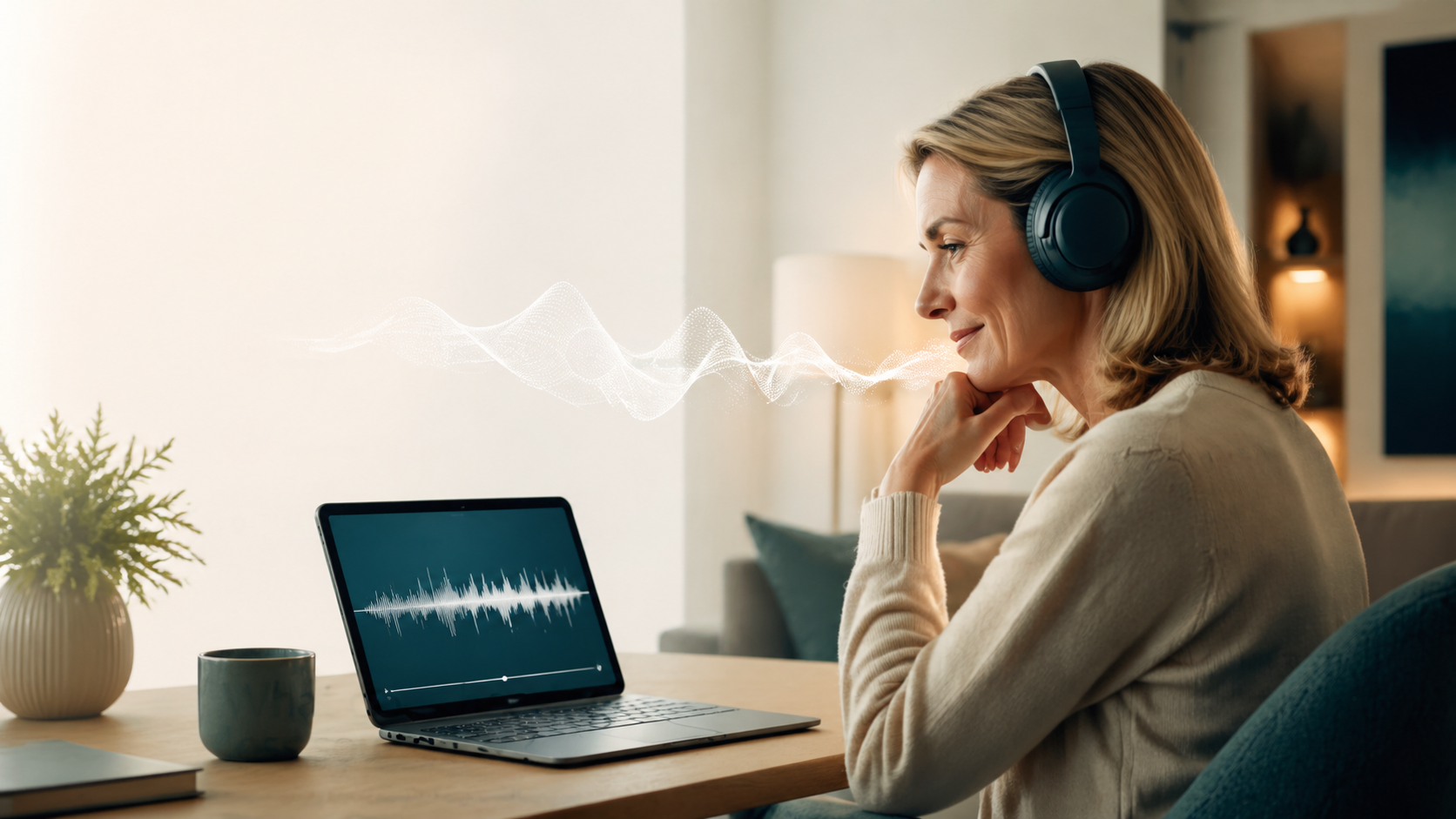
Hearing loss is not always as simple as sounds becoming quieter. For many people, the biggest change is clarity. Speech can become harder to separate from background noise, consonants can sound less sharp, and music may lose some of its brightness and detail.
Our hearing loss simulator lets you compare everyday listening examples through normal hearing and three simulated levels of hearing loss – this can help you understand what hearing loss can sound like. Try speech in quiet, speech with background noise, and music to hear how different listening situations can change.
This tool is designed to help people understand and empathise with how hearing loss can affect everyday listening. It is not a medical test, but it can be a helpful way to start a conversation about hearing, communication and support.
Try the hearing loss simulator:
Table of Contents
What the hearing loss simulator shows
The simulator gives a simple, practical impression of how hearing loss can change everyday listening. It is especially useful for family members, friends, carers and colleagues who want to better understand what someone with hearing loss may be experiencing.
One of the biggest lessons is that hearing loss does not always mean silence. A person may still hear that someone is speaking, but the words can become less clear. This is why someone might say, “I can hear you, but I cannot always make out what you are saying.”
What the simulator cannot show
A hearing loss simulator is a useful way to understand why everyday conversation can become harder, but it only gives examples. Real hearing is more individual.
Hearing loss rarely affects all sounds evenly. Some people miss higher-frequency consonants like “s”, “f” and “th”, while lower-pitched sounds remain fairly clear. Others may have different hearing in each ear, or find that they manage reasonably well in one-to-one conversation but struggle as soon as background noise is added.
The simulator also cannot fully recreate listening effort. Two people with similar hearing test results can experience very different levels of fatigue, concentration and confidence in social situations. Your hearing history, ear health, speech-in-noise ability and how your brain processes sound all play a part.
So use this tool as a guide. If the examples feel familiar, the next step is a proper hearing assessment, where we can measure your hearing in detail and explain what is happening in your own ears.
Why background noise makes hearing harder

Many people with hearing loss find busy places especially challenging. Restaurants, family gatherings, group conversations, shops and social events can all create competing sound.
When background noise is present, the brain has to work harder to separate the voice you want to hear from everything else. This can make conversations feel tiring, even when the person is trying hard to listen.
For people supporting someone with hearing loss, this is important to understand. Speaking clearly, reducing background noise where possible, facing the person, and being patient can make communication much easier.
What this means for everyday communication
Small changes can make a big difference. If someone is finding listening difficult, try to:
- get their attention before speaking
- face them when you talk
- speak clearly without shouting
- reduce background noise where possible
- avoid speaking from another room
- be patient if they ask you to repeat something
These simple adjustments can help conversations feel easier, calmer and more inclusive.
When to book a hearing test
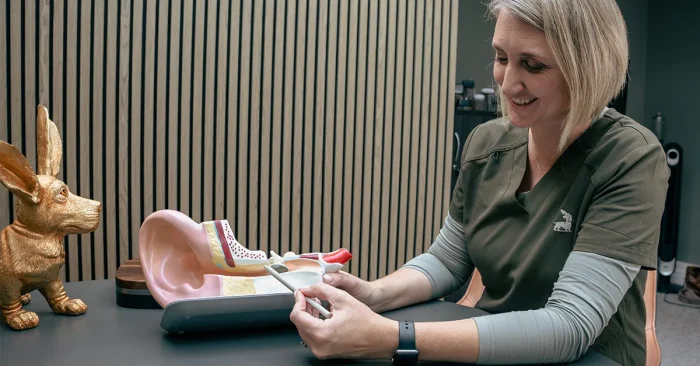
Although this simulator is mainly designed for education and empathy, it may also help someone recognise listening situations that feel familiar.
A hearing test may be helpful if you or someone close to you notices:
- speech sounds less clear than it used to
- conversations are harder in background noise
- the TV or phone volume is creeping up
- listening feels more tiring in social situations
- people often seem to mumble
- family or friends have mentioned hearing concerns
A Complete Hearing Assessment gives a clear picture of hearing levels and can help explain what support, advice or technology may be useful. At Alto Hearing, we explain the results in plain English and help people understand their options without pressure.
FAQs
Can this simulator diagnose hearing loss?
No. The simulator is an educational tool, not a hearing test. It is designed to help people understand how hearing loss can affect everyday sound and communication.
Who is the simulator for?
It is useful for anyone who wants to better understand hearing loss. This may include people with hearing concerns, family members, friends, carers, colleagues or professionals who support people with hearing difficulties.
Why does hearing loss make speech unclear?
Speech clarity depends on a wide range of sound details. Some types of hearing loss reduce access to the higher-frequency sounds that help us hear consonants clearly. When those details are reduced, speech can sound muffled or incomplete.
Why is background noise so difficult?
Background noise competes with speech. When hearing clarity is reduced, it becomes harder to separate the voice you want to hear from the surrounding sound. This is why busy places can feel exhausting.
How can I support someone with hearing loss?
Face them when speaking, reduce background noise where possible, speak clearly, and be patient if they ask you to repeat something. Small communication changes can make a big difference.
What should I do if these examples feel familiar?
If the examples feel familiar for you or someone close to you, a hearing test can provide clarity. It can show whether hearing loss is present and what kind of support may help.
Want to understand hearing better?
Whether you are concerned about your own hearing or supporting someone close to you, a Complete Hearing Assessment can provide clear answers. Alto Hearing offers friendly, professional hearing care with straightforward advice and no pressure.
If you are unsure whether your hearing needs a full appointment, you can start with SoundCheck.