

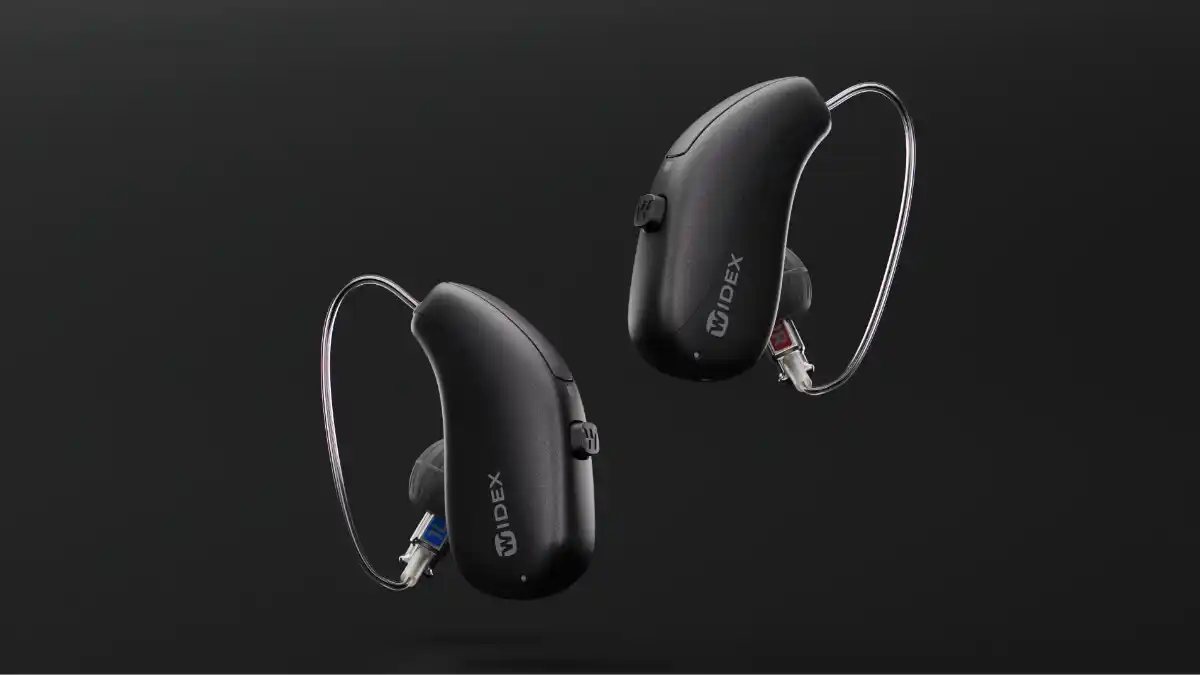
Clarity Boost is the extra listening programme in Widex Allure AI RIC for conversations in background noise. You switch it on with the hearing-aid button or through the Allure app.
Allure AI RIC is a rechargeable receiver-in-canal hearing aid, with the main body behind the ear and a small speaker in the ear canal. It has an additional AI co-processor for Clarity Boost.
This first look was written in May 2026, before the planned June introduction. Allure AI RIC is now part of the Widex range. The fitting experience described below concerns the original Allure; it should not be read as an Alto test of Clarity Boost.
Jump to:
Where Allure already earns its place
Widex Allure already has a clear place in our clinic.
We often think about it when someone wants natural sound hearing aids, music quality, comfort and hearing aids they can wear for the whole day without feeling worn down by them.
Some people are not against hearing aids. They are against how hearing aids have sounded to them before.
They describe previous devices as sharp, tinny, metallic, too loud, too busy or tiring. They were hearing more, but they did not want to live with the sound.
That is where Allure has done well for some of our patients. We have had people tell us it is the best hearing aid they have worn. We have had others say they used to wear hearing aids only when they had to, but now leave them in all day.
That is the difference between a device someone owns and a device someone actually uses.
Why Clarity Boost is interesting
Most people do not come into clinic asking for an AI hearing aid.
They say things like:
- “I am fine one-to-one, but I lose track at a table.”
- “I can hear people talking, but I cannot follow it.”
- “Restaurants are exhausting.”
- “Family meals are harder than they should be.”
That is speech in noise.

A standard audiogram does not explain that fully. It tells us the softest sounds a person can detect. It does not tell us how they cope when speech and background sound compete.
At Alto, we use speech-in-noise testing, including QuickSIN, because it changes the recommendation.
Two people can have similar hearing levels on paper. One may mainly need help with softer speech at home. Another may need more support in restaurants, meetings and group conversation.
Those are different recommendations.
Clarity Boost is relevant because it aims at that problem: speech clarity when background noise is competing.
What the Widex technical paper says
Widex’s May 2026 technical paper explains how Clarity Boost uses a separate AI co-processor. Universal and PureSound use the Allure W1 chip for everyday listening.
Widex measured hearing-aid output using a head-and-torso simulator and closed ear tips. With speech presented from the front, it reports improvements in output signal-to-noise ratio of up to 5.1 dB compared with Universal and up to 6.2 dB compared with the competitor systems tested.
These are laboratory measurements of the sound leaving the hearing aids. They do not measure how much better a person understands conversation, or establish that Clarity Boost will sound natural to every wearer.
For a fitting, we would compare speech clarity, sound preference and access to the programme alongside the person’s speech-in-noise results.
Everyday sound and Clarity Boost
Universal and PureSound remain the everyday listening options. Clarity Boost is a separate programme you choose when you want additional support in noise.
That gives the wearer a choice of sound processing. Whether it is useful depends on how clearly they can follow speech and how comfortable that sound feels.
Sound quality in noise
A programme can make a voice more prominent while changing how the room sounds. During fitting, we would compare Clarity Boost with the everyday programme and discuss which you prefer in the situations you find difficult.
Some people accept more processing for clearer speech in a noisy room. Others prefer to keep more background sound. That preference needs attention alongside speech clarity.
No hearing aid removes background noise completely. Speech-in-noise performance still depends on the hearing loss, ear shape, ear coupling, speech-in-noise ability, fitting accuracy, acclimatisation and follow-up.
Who may suit Widex Allure AI RIC
Our experience with the original Allure gives us a reason to consider AI RIC for people who like that sound but still struggle at meals or in groups. The assessment and fitting determine whether its additional programme is useful for the individual.
Most relevant patients
- Previous hearing aids sounded sharp, tinny or tiring
- Music and sound quality matter
- Allure sound feels comfortable
- Restaurants or family meals still take too much effort
What we would still check
- QuickSIN or other speech-in-noise results
- Whether the ear coupling gives enough clarity
- Whether the app or hearing aid controls are easy enough
- Whether an accessory would solve the problem better
When another route may be better
Some patients may need something else.
If someone has a very poor speech-in-noise score, Clarity Boost may not be enough on its own. A remote microphone may help more. Another hearing aid platform may suit better. A different fitting style may be needed.
If the main issue is comfort, feedback, blocked ears, wax, poor verification or inconsistent use, changing to the newest model may miss the actual problem.
Product research reaches its limit here. A hearing aid can only be judged properly once it is matched to the person wearing it.
Fitting still decides a lot
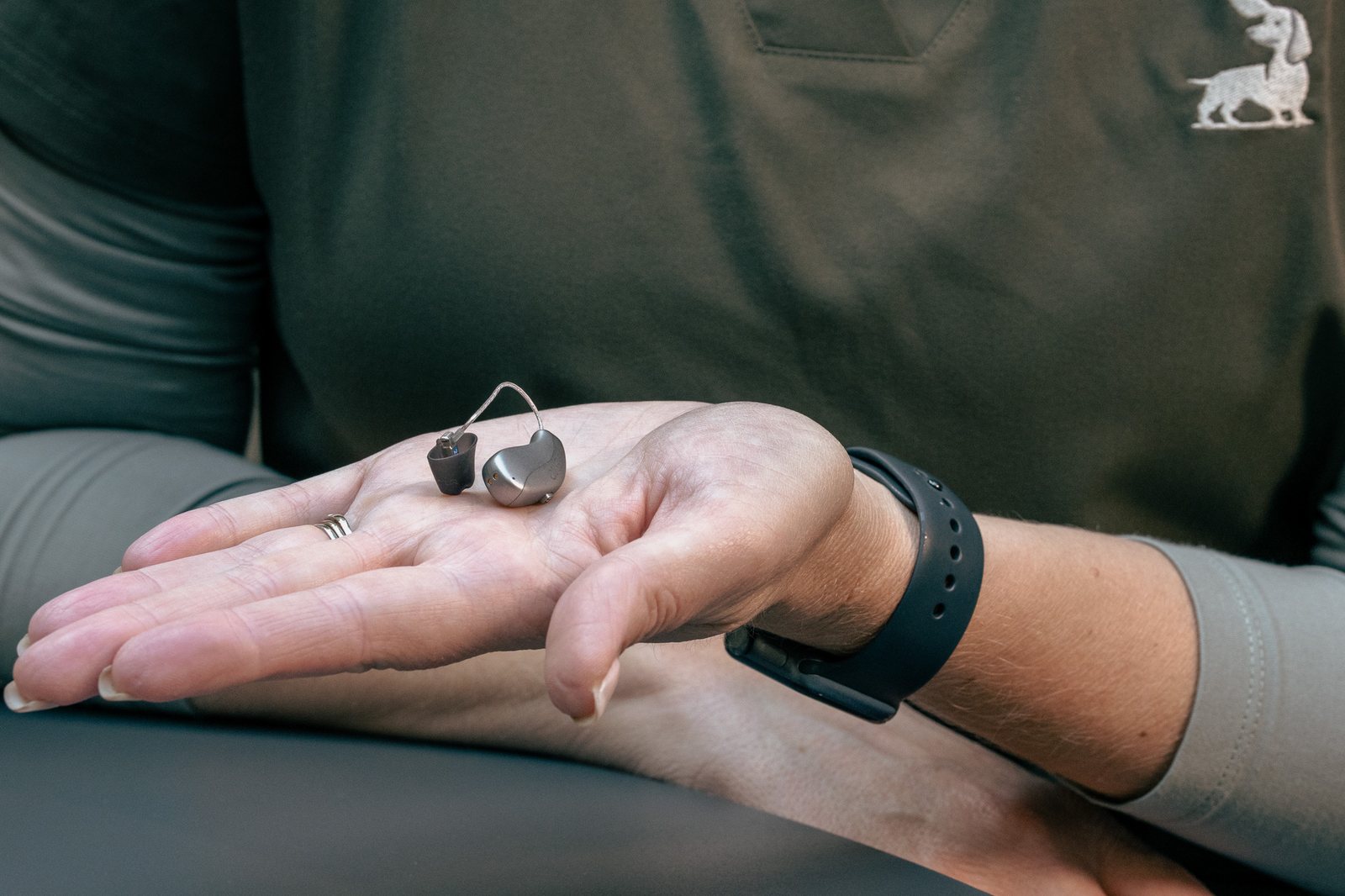
A launch makes the hearing aid the story. In clinic, the fitting and verification often decide the outcome.
With Widex Allure, small choices can change the result: receiver strength, dome choice, venting, custom tips, feedback control, Real Ear Measurements, programme setup and follow-up timing.
A new wearer may need a gentler start. Someone who has disliked hearing aids before may need smaller early changes. A person with poor speech-in-noise results may need a different plan from the start.
Newer does not mean better for everyone.
Sometimes the newest model is exactly right. Sometimes another route fits the person better. That is why we would not recommend Allure AI RIC with Clarity Boost from the product name alone.
What we would check in a fitting
For someone considering Clarity Boost, these are the questions we would work through:
- Does the everyday sound still feel like Allure?
- Does Clarity Boost make speech easier without making the sound too processed?
- Is the programme easy to access?
- Does the benefit feel obvious enough that people will remember to use it?
- Does it help in restaurants, family tables, cafes and group conversation?
Battery runtime, phone connections and access to the programme also need checking in everyday use.
Alto’s first view
We would consider Allure AI RIC when someone likes the original Allure sound but needs more help following conversation in noise. A review of the existing fitting should come first if clarity, comfort or feedback is the problem.
Clarity Boost adds another programme to assess during that process. Our Widex hearing aids guide covers the current range and fitting choices.
Considering Widex hearing aids?
The right hearing aid depends on your hearing, your speech-in-noise ability, your lifestyle and the fitting. A Complete Hearing Assessment gives us the information we need before recommending a specific model.
Frequently Asked Questions
What is Widex Allure AI RIC?
Widex Allure AI RIC is a rechargeable receiver-in-canal hearing aid. It has an additional AI co-processor for the Clarity Boost programme. The original Allure RIC is a separate model.
What is Clarity Boost?
Clarity Boost is an on-demand programme for listening in background noise. On Allure AI RIC, you activate it with the hearing-aid button or through the Allure app.
What does the Widex technical paper say?
Widex’s May 2026 paper reports laboratory measurements of hearing-aid output, including improvements in signal-to-noise ratio with Clarity Boost. It does not measure improvement in a wearer’s speech understanding or establish Alto’s own results.
Is Widex Allure good in background noise?
Widex Allure can help in background noise, but results vary. At Alto, we use speech-in-noise testing before deciding whether Allure is the right recommendation.
Are Widex hearing aids good for music?
Widex hearing aids are often a strong option for people who care about natural sound and music quality. We have seen music-focused patients respond well to Widex Allure, provided the fitting is right.
Is the newest Widex hearing aid always the best option?
No. Newer does not always mean better for a particular person. The best option depends on the assessment, ear shape, hearing loss, listening goals and fitting quality.
Related Alto guides
Sources
Manufacturer information checked 15 October 2026: Widex Allure AI RIC and the Allure app. Technical evidence: Bianchi et al. (2026), Widex Allure AI RIC with Clarity Boost technical paper.