

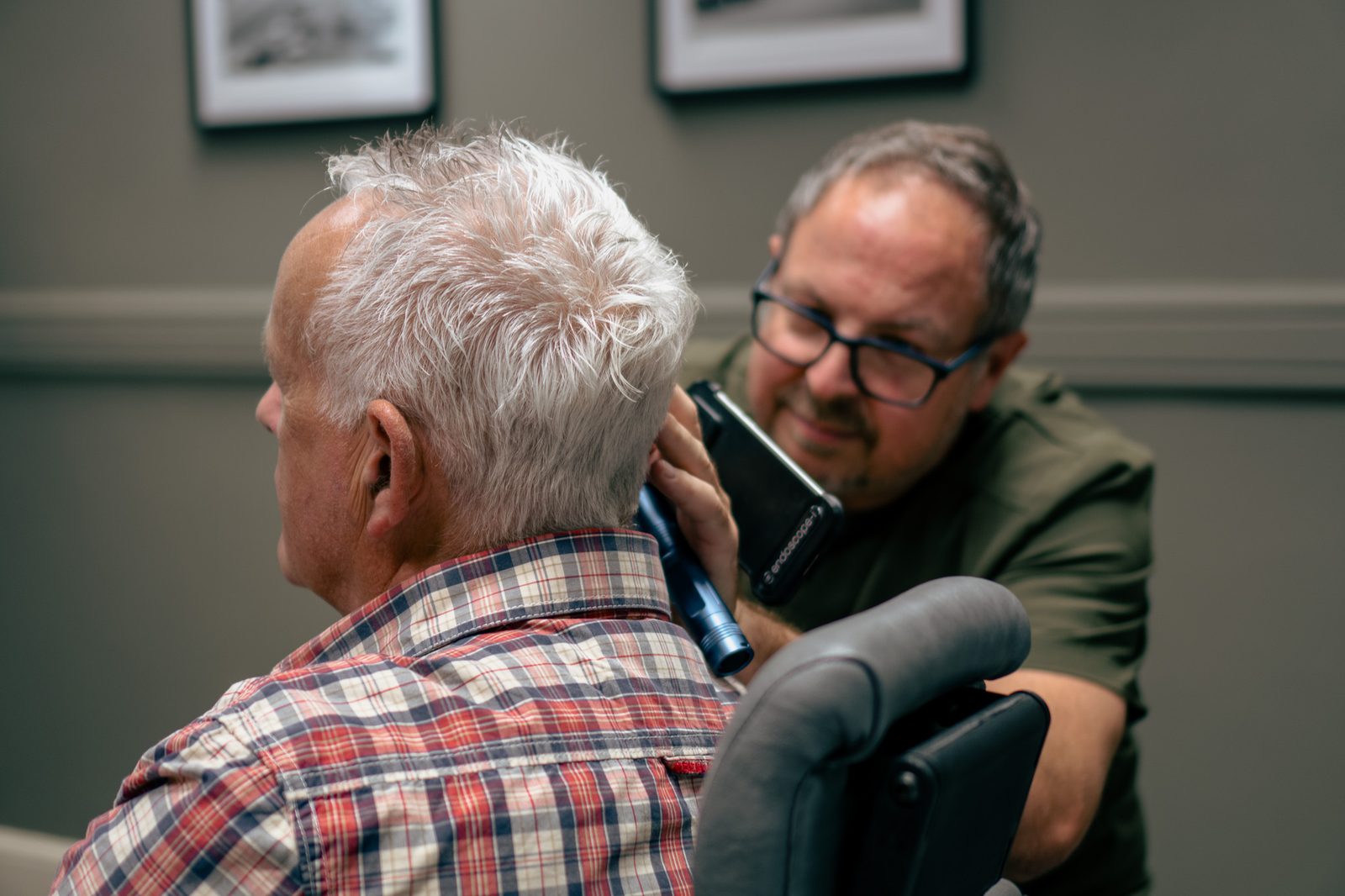
Muffled hearing, blocked ears or reduced clarity can be frustrating because the cause is not always obvious.
Sometimes the answer is simple. Earwax has built up and is stopping sound from travelling cleanly through the ear canal. Once the wax is removed safely, hearing often feels clearer again.
At other times, the ear canal is clear and the hearing itself needs checking. Hearing loss can develop gradually, and many people first notice it as unclear speech, difficulty in background noise, or needing the television louder than before.
There is also a third possibility: both can be present at the same time. A person may have earwax and an underlying hearing loss, which means removing wax may help, but may not explain everything.
The short version
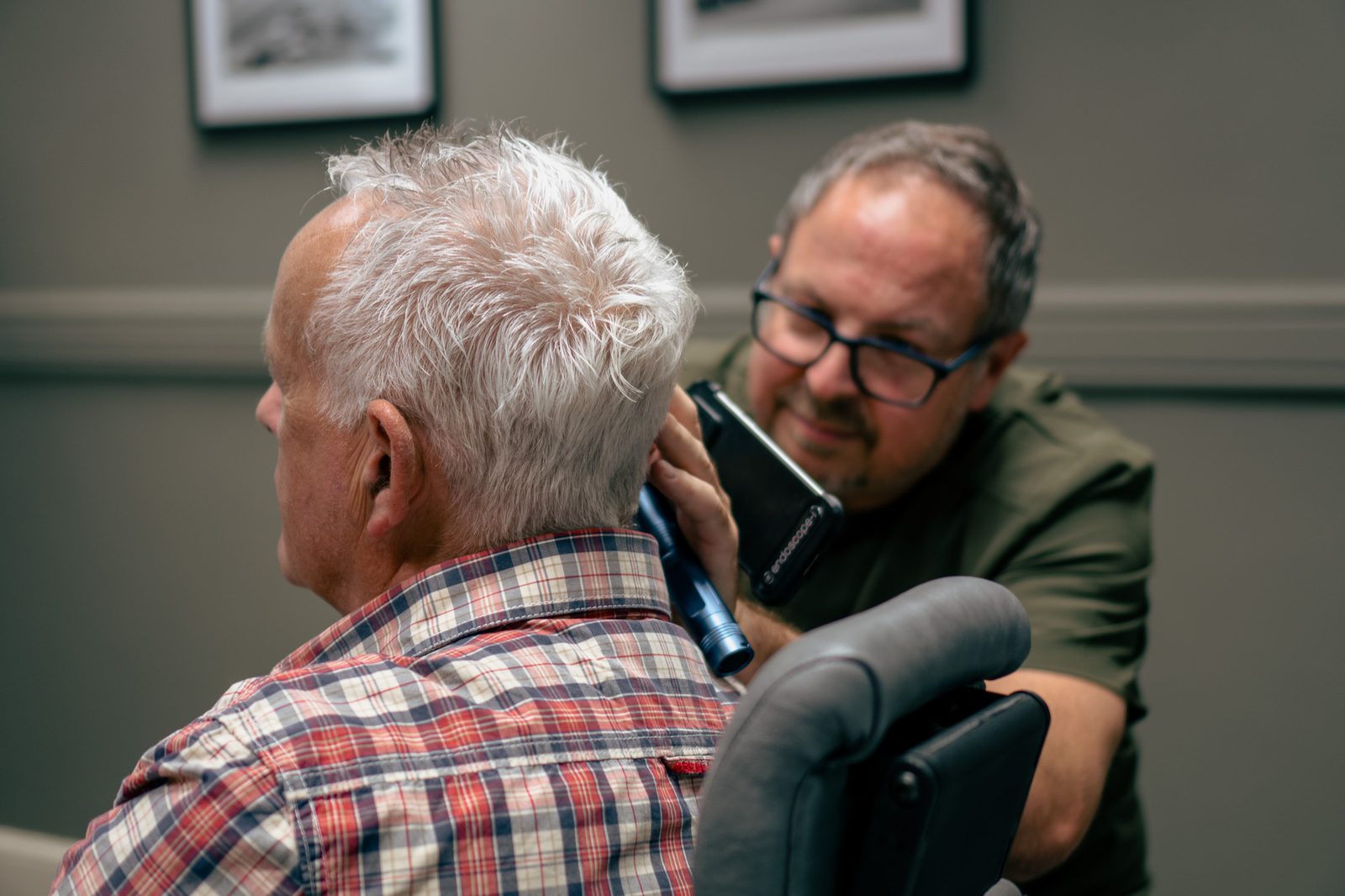
Earwax often causes a blocked or muffled feeling because sound is being physically blocked in the ear canal. Hearing loss often affects clarity as well as volume, especially speech in background noise.
The symptoms can overlap. You cannot always tell the difference yourself, and a professional ear check can usually show whether wax is part of the problem. If the hearing change is sudden, rapidly worsening, painful, associated with discharge, dizziness, facial weakness or feels unusual for you, seek medical advice promptly rather than assuming it is wax.
Table of Contents
How earwax can affect hearing
Earwax is normal. It helps protect the skin of the ear canal and usually works its way out naturally. Problems begin when wax builds up, becomes hard, or sits in a position that blocks the ear canal.
When wax blocks the ear canal, sound cannot travel through as easily. The result can feel like a temporary hearing loss from earwax: sounds may seem muffled, distant or blocked.
Earwax build-up symptoms can include:
- A blocked or full feeling in one ear or both ears
- Muffled hearing
- A sense that sounds are less clear on one side
- Itchiness or mild irritation
- Tinnitus or extra awareness of sounds in the ear
- Symptoms that change after showering, swimming or using drops
Earwax can affect one ear more than the other. It can also fluctuate. Some people notice their ear feels more blocked after using ear drops because softened wax temporarily expands or moves before clearing.
If wax is the main cause, hearing often improves once the wax has been safely removed. That is one reason a professional ear check is useful. It shows whether wax is actually present, rather than guessing from the sensation alone.
You can read more about Alto’s ear wax removal service and our guide to microsuction ear wax removal.
How hearing loss can feel different
Hearing loss does not always feel as if sounds are simply softer. Often, the first problem is clarity.
You may hear that someone is speaking, but miss the words. You may follow one-to-one conversation well enough, but struggle when several people are talking. You may hear the television, but find speech less crisp than music, adverts or background sound.
Common signs of hearing loss include:
- Asking people to repeat themselves more often
- Finding speech harder in restaurants, meetings or family gatherings
- Turning the television or radio up higher than other people prefer
- Mishearing words, names or endings of sentences
- Feeling tired after listening for a long time
- Relying more on lip-reading or watching people’s faces
- Noticing that background noise makes conversation much harder
Age-related or noise-related hearing loss often develops gradually. Because of that, the person with hearing loss may not notice it first. Family members may notice the pattern before the person does.
If the main difficulty is conversation in groups or background noise, our article on background noise and hearing loss may also be useful.
Symptoms that can overlap
This overlap is why it can be hard to know which appointment to book.
Both wax and hearing loss can make speech seem less clear. Both can make television harder to follow. Both can make one ear feel less useful than the other. Both can be linked with tinnitus.
There are also cases where removing wax improves hearing, but the person still notices difficulty afterwards. That can happen when wax was adding to an underlying hearing loss.
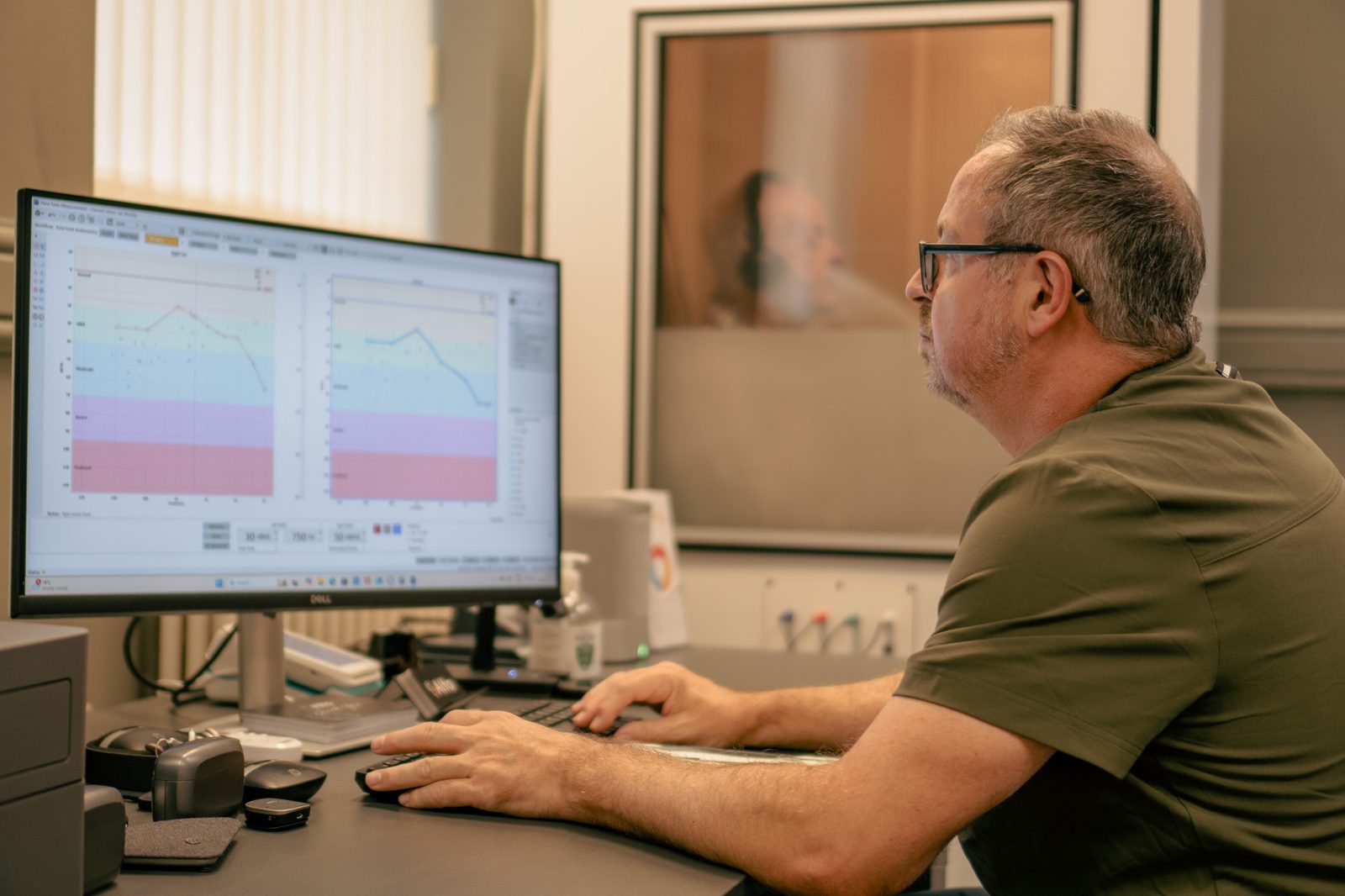
The sensible first step is to have the ear examined. If wax is blocking the canal, it should be dealt with before anyone judges the hearing. If the ears are clear, or hearing still feels reduced after wax removal, the included SoundCheck helps decide whether a Complete Hearing Assessment is needed.
This is not about making every blocked ear into a hearing-loss concern. It is about avoiding guesswork when symptoms persist, change, or do not behave as expected.
When should you get your ears checked?
It is sensible to have your ears checked if:
- Your ear feels blocked and does not settle
- Your hearing feels muffled in one ear or both ears
- You are unsure whether wax is present
- Symptoms keep returning
- Your hearing still feels reduced after wax has been removed
- Family members have noticed you missing conversation
- You are avoiding social situations because listening is harder than before
When to seek medical advice promptly
Do not assume sudden or rapidly worsening hearing loss is earwax. NHS advice is to ask for an urgent GP appointment or get help from NHS 111 if you have sudden hearing loss in one or both ears, hearing that has worsened over the last few days or weeks, or hearing loss with symptoms such as earache or discharge.
NICE guidance also recommends urgent or immediate referral for sudden or rapidly worsening hearing loss when it is not explained by external or middle ear causes.
If your symptoms are mild and feel like wax, a professional ear check is still useful because it confirms whether wax is present before treatment is attempted.
What happens at Alto?
At Alto Hearing, the aim is to understand the cause of the hearing change, not to push everyone towards the same appointment.
If you attend for ear wax removal, your clinician will first ask about your symptoms and examine your ears. If wax is present and removal is suitable, they will explain the safest method for your ears on the day. That may be microsuction, irrigation, manual removal, or a combination.
At Alto, ear wax removal appointments include an ear check and can include SoundCheck where appropriate. That means we can do a simple hearing health check as part of the same visit, once your ears have been examined and any suitable wax removal has been completed.
If there is little or no wax, or if SoundCheck suggests the hearing needs further investigation, we would usually advise a Complete Hearing Assessment as the next sensible step. Our guide to what happens at a hearing test explains that process in more detail.
If the results suggest hearing aids may be useful, that conversation comes later and should be based on evidence, not assumption. You can read more about our approach to hearing aids if you reach that stage.
If wax is found
We explain whether removal is suitable and choose the safest method for your ears. SoundCheck is included, so we can also check whether the results look broadly as expected afterwards.
If wax is not the answer
If the ears are clear, or the result still needs explaining after wax removal and SoundCheck, we can advise whether a Complete Hearing Assessment is the right next step.
Earwax or hearing loss checklist
This is not a diagnosis. It is a way to choose a sensible first step, based on the pattern rather than one symptom in isolation.
| Pattern | What it may suggest | Sensible first step |
|---|---|---|
| One ear feels physically blocked or full, especially if this has happened with wax before. | Wax is a possible cause, particularly if the sound is muffled rather than unclear. | Book an ear wax removal appointment. The ear check comes first. |
| Symptoms changed after using drops, showering, swimming or wearing earplugs/hearing aids. | Wax may have moved, softened or swollen enough to alter the blockage. | Have the ear examined before trying to manage it yourself. |
| Speech is unclear even when it is loud enough. | This can point more towards hearing loss, especially if it has developed gradually. | If there is no blocked-ear feeling, SoundCheck can provide a simple hearing health check. If it is affecting daily life, a Complete Hearing Assessment is more appropriate. |
| Background noise has become the main problem. | Wax can contribute, but this is a common pattern with hearing loss. | If the ears are clear and the problem continues, a Complete Hearing Assessment is usually more useful than repeated wax treatment. |
| TV volume, repetition or listening effort has increased over months or years. | A gradual hearing change is more likely than wax alone. | Consider a Complete Hearing Assessment, especially if it is affecting conversation or confidence. |
| Wax has been removed but hearing still feels reduced. | Wax may have been only part of the picture. | SoundCheck is included with Alto wax removal. If further investigation is indicated, a Complete Hearing Assessment is the next step. |
| Hearing changed suddenly, especially in one ear, or comes with pain, discharge, dizziness or facial symptoms. | This should not be treated as routine wax until medically assessed. | Seek prompt medical advice. |
If the pattern feels mostly blocked, full or wax-related, an ear wax removal appointment is usually the right starting point because the ear is examined first. If the pattern is mainly clarity, background noise, repeated misunderstandings or gradual change, a Complete Hearing Assessment may be the more suitable route.
What should you book?
The right appointment depends on what you are noticing.
Choose the route
Start with the pattern
If it feels blocked, start by checking the ear. If the main problem is clarity, background noise or gradual change, a fuller hearing assessment may be the better route.
Book ear wax removal
Best if your ear feels blocked or muffled and you suspect wax may be present. The appointment begins with an ear check.
Use SoundCheck
Useful if you are unsure whether your hearing has changed but do not have a strong blocked-ear feeling.
Choose a Complete Hearing Assessment
Best if hearing difficulty is persistent, affecting daily life, or mainly shows up as unclear speech and background-noise difficulty.
You can also read our guide to NHS ear wax removal if you are comparing NHS and private options.
Frequently Asked Questions
Can earwax cause hearing loss?
Yes. Earwax can cause temporary hearing loss if it blocks the ear canal and stops sound travelling through normally. Hearing often improves once the wax has been removed safely, although some people may also have an underlying hearing loss.
Can hearing loss feel like blocked ears?
Yes, it can. Some people describe hearing loss as fullness, muffling or a blocked sensation, even when there is no wax. That is why examining the ear canal and checking hearing can be useful when symptoms are unclear.
Does earwax affect one ear or both?
Earwax can affect one ear, both ears, or one ear more than the other. A one-sided blocked feeling is common with wax, but sudden hearing loss in one ear should not simply be assumed to be wax.
How do I know if I need wax removal or a hearing test?
If your ear feels blocked or muffled and you suspect wax, an ear wax removal appointment may be the right first step because the ear is examined first. At Alto, SoundCheck is included. If the ears are clear, or if further investigation is indicated, a Complete Hearing Assessment may be advised.
Can you have both wax and hearing loss?
Yes. Some people have wax build-up and hearing loss at the same time. Removing wax may improve hearing. At Alto, SoundCheck is included with wax removal, and if the result suggests more detailed testing is needed, a Complete Hearing Assessment may be advised.
Should I remove earwax myself?
Avoid putting cotton buds, fingers, ear candles or other objects into the ear canal. These can push wax deeper or damage the ear. If you think wax is causing symptoms, use pharmacy advice where appropriate or have your ears checked professionally.
What to do next
If your ear feels blocked or muffled and you think wax may be involved, book an ear wax removal appointment. SoundCheck is included. If the ears are clear, or if hearing still needs explaining after wax removal and SoundCheck, a Complete Hearing Assessment gives the fuller answer.
The point is not to guess. It is to understand what is happening and choose the right next step.
Sources checked May 2026: NHS inform earwax build-up, NHS hearing loss, NICE hearing loss in adults guidance.