

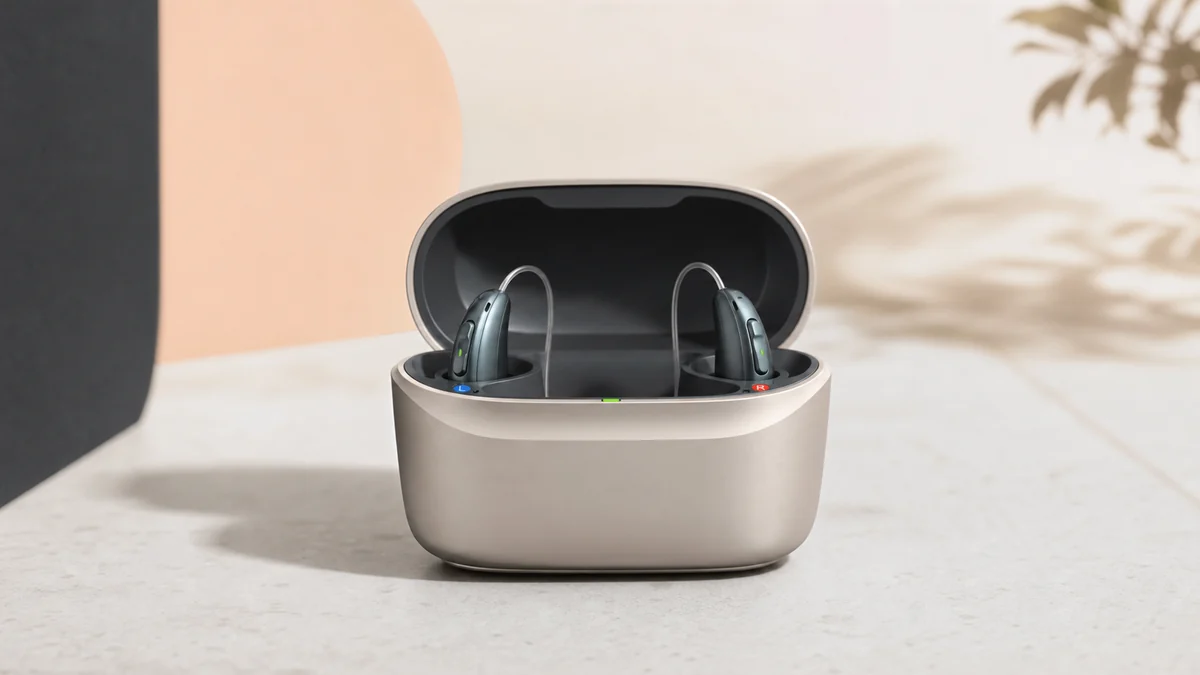
A private pair of hearing aids can cost around £4,000. Sometimes more, sometimes less. The expensive mistakes usually happen before anything ever goes in your ears.
People often assume a bad experience with hearing aids means they bought a bad hearing aid. Sometimes that is true. More often, the device was only part of the problem.
The problem may have been badly defined. The quote may have been unclear. The fitting may have been rushed. The follow-up may have been vague. Or nobody asked the small practical question that decides whether the hearing aids end up being worn or left in a drawer.
By Adam Bostock, founder of Alto Hearing. Last updated June 2026.
Premium hearing aids can be excellent value when they are chosen for the right problem, fitted properly and supported properly. When they sit unused in a drawer, they become expensive very quickly.
Before you compare brands, prices or technology levels, these are the five mistakes I would try to avoid.

Table of Contents
Mistake 1: shopping for the best hearing aid
People love to ask, “What is the best hearing aid?”
It is an understandable question. If you are spending thousands of pounds, you want to buy the right thing. With most products, comparing reviews and looking for the best-rated option is sensible.
With hearing aids, it is the wrong first question.
Best for what?
- Best for sitting with one person in a quiet room?
- Best for restaurants?
- Best for work meetings?
- Best for someone who struggles with small batteries?
- Best for someone who wants Bluetooth and app control?
Different problems need different answers. A hearing aid that suits someone who spends most of their day at home may not be the right choice for someone still working, eating out, travelling or managing busy family gatherings.
In clinic, people often say, “I can hear people talking, I just cannot make out the words.” That sounds specific, but it is still too broad. Where does that happen? Sunday lunch? The car? Work? A restaurant? Grandchildren speaking from another room while facing a cupboard?
Before anyone talks about brands, write down the three situations you most want to improve.
- I want to follow conversations at Sunday lunch.
- I want to stop pretending in restaurants.
- I want to hear my partner in the car.
If the recommendation does not clearly connect to those situations, be careful. That is how people buy a technically good hearing aid for a badly defined problem.
If you are still comparing brands, our guide to hearing aid brands compared is useful, but the brand decision should come after the listening problem has been properly understood.
Mistake 2: comparing the price, not the care
Two quotes can look very similar.
Same brand. Same technology level. One is £2,500. One is £4,000.
The obvious question is, “Why is that one more expensive?” It is a fair question, especially when online prices can look much lower than a clinic quote.
But the answer may not be the hearing aid. It may be the time, fitting process, follow-up, repairs, warranty, review appointments, or whether you can actually speak to the person who fitted them when something is not right.
Private hearing care is not one thing. Buying online is different from a home visit. A high street chain is different from an independent clinic. Even two independent clinics can work very differently.
That does not make one automatically good and one automatically bad. It does mean you need to compare the care around the hearing aids, not just the hearing aids themselves.
Hearing aids go wrong. They need cleaning, servicing, software updates, fine-tuning, repair support and review as your hearing changes. Most people also need adjustments as they adapt to wearing them.
Questions to ask about the quote
- What happens after the fitting?
- How many appointments are included?
- Who adjusts the hearing aids?
- What happens if I cannot get on with them?
- Are repairs included?
- What happens in a year if my hearing changes?
If someone can explain that clearly, that is a good sign. If the answer is vague, put the pen down for a moment.
For more detail on why prices vary, read our guide to hearing aid prices in the UK. If you want to see how Alto packages technology and care together, see our hearing aid plans and prices.
Mistake 3: assuming programming is the same as fitting
This bit is more technical, but it is one of the places people lose clarity without realising it.
When a hearing aid is fitted, the software gives a starting point. That is all. A starting point.
The computer has not met your ear. It does not know the exact shape of your ear canal, the way the hearing aid sits in it, the acoustics, or what actually reaches your eardrum.
It has an educated guess. But it is still a guess.
That is where Real Ear Measurements can be useful. In plain English, we measure what the hearing aid is actually doing in your ear rather than only trusting what the software says it is doing.
Two people can have the same hearing aid and the same hearing test result, and still get a different amount of sound at the eardrum.
If speech sounds are too low, you may hear more noise but not more clarity. If they are too high, the world can feel sharp, harsh and tiring.
Then someone says, “I tried hearing aids and they were awful.” Sometimes they were. More often, they were not fitted accurately enough yet.
Before you buy, ask: how do you check the fitting is right in my ears?
Not just, “Will you ask me how it sounds?” Of course the person wearing the hearing aids matters. But if you are spending thousands of pounds, the technical side should be checked properly as well.
You do not want the first proper test of your hearing aids to be a noisy restaurant three days later, while you are smiling politely and catching one word in every seven.
Our page on hearing aid fitting and verification explains how this should work in practice.
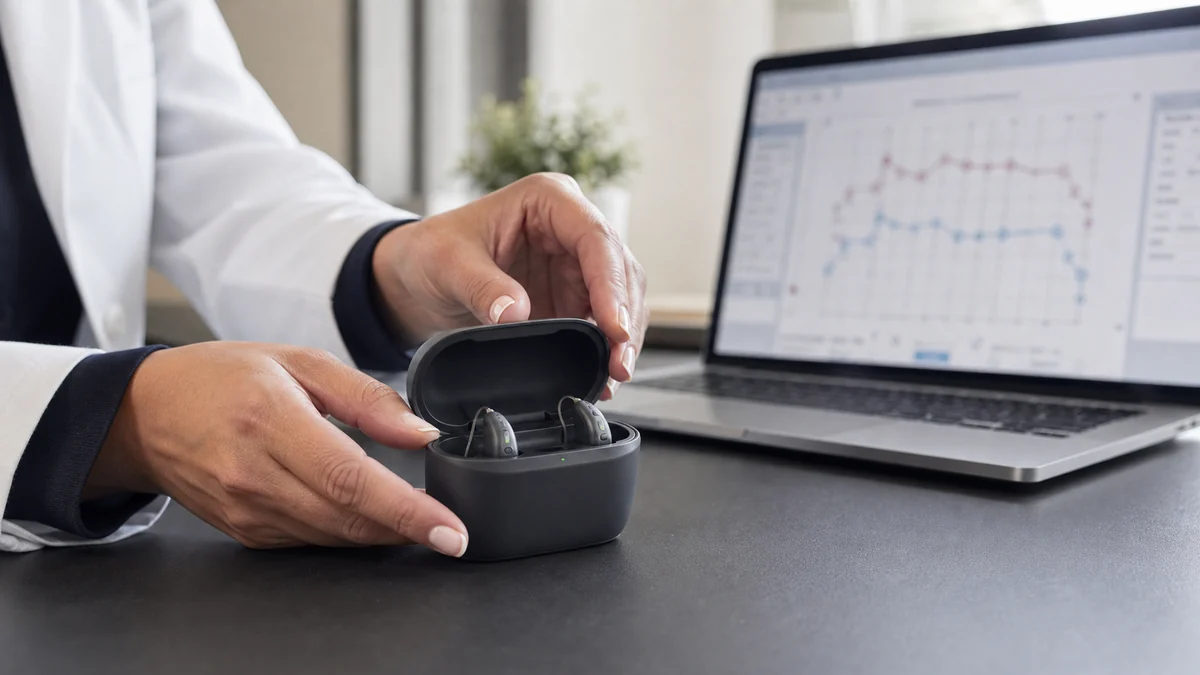
Mistake 4: treating the first fit like the finished result
This is where a lot of people are lost after what looked like a perfectly normal appointment.
People often think the fitting appointment is the moment the hearing aids are done.
It is not.
The first fitting gets you started. Then real life gives us the useful information.
At home, the kettle may sound too sharp. In the car, the indicator may suddenly be the loudest thing in Warwickshire. In a cafe, cutlery may become deeply irritating. Your own voice may sound strange.
Then the family say, “But can you hear better?”
That is not quite the whole point. Yes, we want you to hear better. But the hearing aids also need to be wearable. If they improve your hearing but you hate wearing them, the outcome is still poor.
That is what the follow-up is for.
Use the first few weeks properly
The first couple of weeks should produce notes:
- Where did they help?
- Where did they annoy you?
- Where did you take them out?
- Where did you say “they are fine” because you did not want to be a nuisance?
That last one is common. People do not want to complain. They do not want to feel difficult. They do not want to admit they have not worn the hearing aids as much as they were told to.
So they stop coming back, and six months later the hearing aids are living next to the reading glasses and an old phone charger.
Before you buy, ask what the follow-up actually looks like. When do I come back? What do we review? Who do I contact if something feels wrong? Do you adjust for real-life situations, or are we just hoping for the best?
If follow-up is vague, treat that as part of the quote. You are not just buying the first appointment. You are buying what happens when the first appointment needs improving.
This is why hearing aid aftercare matters. It is not a bonus. It is part of the result.
Mistake 5: ignoring the thing that will stop you wearing them
This is probably the most human mistake, and often the one people are least honest about.
They do not like how the hearing aids look. They cannot get them in easily. They do not like their own voice. They find the app annoying. They do not want rechargeable hearing aids. Or they do want rechargeable hearing aids but forget to charge everything.
Their glasses get in the way. They feel old. Their family pushed too hard. Or they have spent more than they were comfortable with, so every tiny irritation now feels like proof they made a bad decision.
This is what I think of as the drawer reason.
Before you buy, ask yourself: what would make me stop wearing these?
Be honest. If visibility bothers you, say it. If fiddly things bother you, say it. If you do not want anything connected to your phone, say it. If you are only there because your daughter booked the appointment and sprung it on you, say that as well.
The best hearing aid is not the one with the longest feature list. It is the one you will actually wear.
If this were my parent, I would care far more about what they will tolerate every day than whether the brochure has a slightly better comparison table.
The questions to take with you
Before a hearing aid appointment, open the notes app on your phone and write five lines.
- The three situations I want improved are…
- What is included in the price?
- How will you check the fitting in my ears?
- What happens after the first fit?
- The thing most likely to stop me wearing them is…
Take that with you. If the appointment answers those properly, good. You are much closer to knowing what you are buying.
If the conversation keeps coming back to brands, technology levels and “this is our best one”, I would not sign that day. Get the answers first.
What a good buying conversation should feel like
A good recommendation should make sense in plain English.
The clinician should be able to explain what problem they are solving, why a certain style or technology level fits that problem, what the fitting process involves, and what happens if the first setup needs changing.
They should also be able to explain when a lower-cost option is enough. Premium hearing aids can be excellent, but the answer should not always be the most expensive one.
The painful part of a poor fitting is not only wasting money. It is telling your family, “I tried hearing aids and they did not work.” It is avoiding the restaurant again. It is sitting through another meal pretending you followed more than you did. It is the small moment where someone says, “Never mind,” and changes the subject.
None of that is solved by choosing a brand name on its own.
Premium hearing aids, fitted well and supported well, can be excellent value. The expensive mistake is buying them before anyone has properly defined the job they are supposed to do.
Thinking about private hearing aids?
At Alto Hearing, hearing aid recommendations start with a Complete Hearing Assessment. We look at your hearing, speech understanding, ear health, lifestyle, budget and the listening situations you most want to improve.
If hearing aids are suitable, we explain the options clearly, fit them carefully and support you after the first fitting. The aim is not to sell you a famous brand. It is to help you hear better with something you will actually wear.
Useful next reads
Frequently Asked Questions
What should I ask before buying hearing aids?
Ask what situations the hearing aids are meant to improve, what is included in the price, how the fitting will be checked in your ears, what follow-up is included and what might stop you wearing them every day.
Is the most expensive hearing aid always the best?
No. Premium hearing aids can be excellent, especially for complex listening needs, but the best choice depends on your hearing loss, lifestyle, ears, dexterity, budget and fitting goals. A well-fitted mid-range hearing aid can be more useful than a poorly fitted premium one.
Why do private hearing aid prices vary so much?
Prices vary because quotes may include different technology levels, warranties, repair support, fitting methods, follow-up appointments and aftercare. Compare the care package as well as the hearing aid model.
Do I need Real Ear Measurements when buying hearing aids?
Real Ear Measurements are strongly recommended. They help check what the hearing aid is actually doing in your ear, rather than relying only on software predictions.
What if I cannot get used to my new hearing aids?
Tell your audiologist early. The first fitting is not usually the final result. Follow-up appointments should be used to adjust comfort, clarity, loudness, own voice and real-life listening problems.
Should I compare hearing aid brands before booking an assessment?
It can help to understand the main brands, but brand should not be the first decision. Start with the situations you want to improve, then choose the style, technology and care route that fits those needs.