

You can be perfectly happy with your hearing aids. Then a new model arrives, and suddenly you wonder whether you bought the wrong ones.
In this film, I look at why hearing aids have started to feel like smartphones, and how to decide whether an upgrade would actually help you.
In the film: Widex and the launch cycle, 0:28 · Meaningful upgrades, 1:17 · The firmware question, 2:24 · Treatment plans, 4:35
Should you upgrade your hearing aids?
A new launch alone is not a reason to replace hearing aids that are working well. An upgrade is worth considering when it addresses a problem you actually have, your hearing or daily needs have changed, or your current aids are becoming unreliable. Start with a review of your hearing, the devices and their fitting. Then compare what a new model could realistically change.
When “new” starts to feel like “necessary”
In August 2026, ReSound, Oticon, Signia and Phonak announced new hearing aid ranges within a fortnight. That is a lot of new names, technology claims and launch material for anyone to make sense of.
There are good reasons to keep developing hearing technology. There are commercial reasons to keep launching it, too. In its 2025 annual results presentation, GN linked ReSound Vivia to market share gains and described further innovation as part of its growth plans.
My concern is what that cycle does to the way we judge hearing aids. Once one manufacturer launches, the others face fresh competition for attention. A product can begin to look dated because the conversation has moved on, even when it is still helping the person wearing it.
Widex Moment did not suddenly stop working
I remember the criticism Widex received in the industry for going several years without a completely new platform before Allure arrived. Meanwhile, at Alto, we were fitting Moment hearing aids and seeing clients do well with them.
Widex had made changes along the way. Moment Sheer was an update within the Moment family. SmartRIC, announced in February 2024, brought a different design, microphone positioning and charging arrangement. Those changes could matter to a wearer, even without being a complete reset of the underlying technology.
Allure followed in March 2025 with a new W1 chip and platform. It has been good for us, too. We can welcome that progress and still recognise that people were getting good results from Moment. Both things are true.
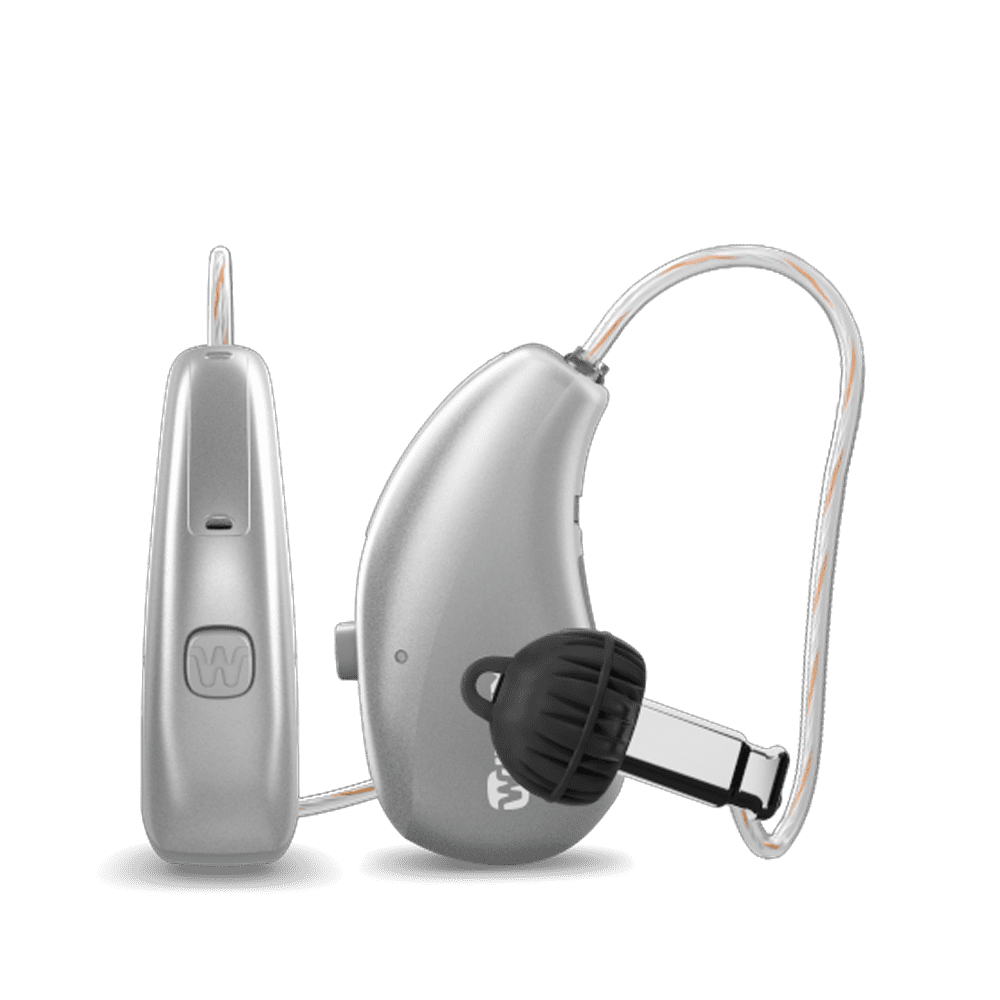
The question is what changes for the person wearing them.
Some changes really do make a difference
Think about rechargeable hearing aids. If changing tiny disposable batteries was fiddly or frustrating, being able to put your aids in a charger at night could change the experience of using them every day. The benefit is easy to explain.
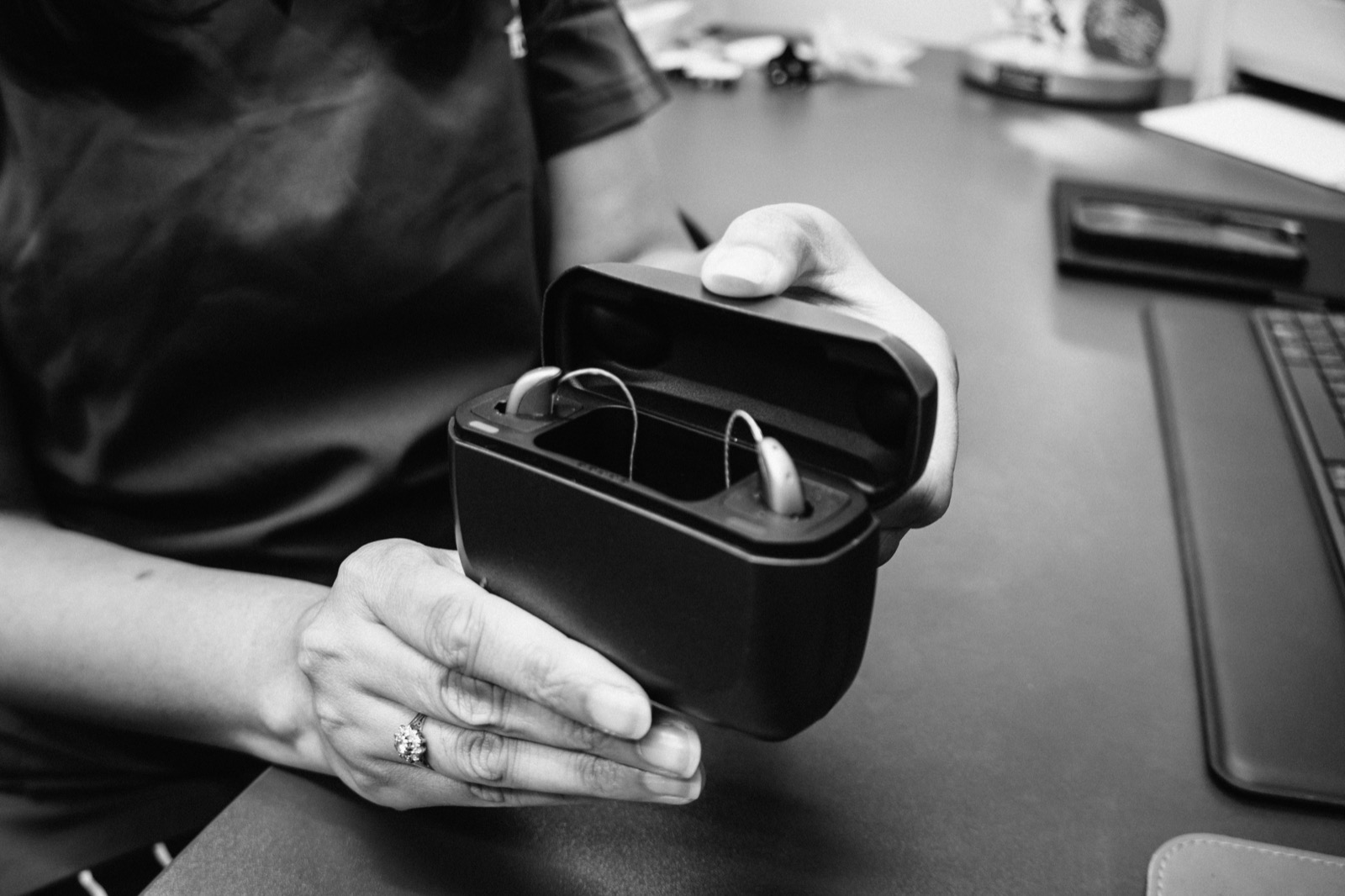
Receiver-in-canal designs changed where the speaker sits. In a conventional behind-the-ear hearing aid, sound travels from a speaker in the case through a tube. In a receiver-in-canal, or RIC, hearing aid, a thin electrical wire connects to a speaker in the ear canal. That opens up different design and fitting options. It does not make one style right for everybody.
Dedicated AI processing chips are another potentially significant step. Some systems are designed to separate speech from background noise more effectively. For someone who struggles in those environments, that may be worth exploring. The letters “AI” on the box cannot tell us whether a particular system will suit that person.
A smaller improvement can also be worthwhile. It simply needs an explanation that is proportionate to what has changed.
Before buying new hardware, ask about software
One detail in the film deserves a closer look. Phonak’s October 2025 paper on Spheric Speech Clarity 2.0 says the feature forms part of Infinio Ultra and would also be made available through a firmware update to existing Audéo Sphere Infinio wearers.
That is a useful question to take into an appointment: can my current hearing aids receive the improvement? It does not mean every older Phonak model can, or that every difference between ranges is software. Compatibility needs checking for the exact model you own.
A better conversation than “which model is newest?”
If you are thinking about changing your hearing aids, bring a real example of what is difficult. Perhaps you are missing a partner’s voice in a restaurant, struggling with the controls, or no longer getting through the day on a charge. That gives your audiologist something useful to investigate.

- What is causing the difficulty? Review your hearing, the condition of the aids and how they are fitted before assuming the technology is the problem.
- What could we improve with the hearing aids I have? Ask about adjustments, maintenance, suitable accessories and any compatible software updates.
- What would a new pair do differently for me? Ask which feature addresses your problem, how you would assess the benefit, and what the full cost and ongoing support would be.
Sometimes that conversation leads to a new pair. Sometimes it leads to a better result from the pair you already own. Either is a useful outcome.
Why Alto sells treatment plans
Hearing aids are an important part of treating hearing loss. But choosing the device is only one part of the work. Understanding your hearing, fitting the aids, checking the result and making adjustments over time all matter.
That is why our hearing care treatment plans bring the hearing aids and ongoing care together. The aim is to keep helping you hear well in your life, rather than making the purchase itself the finish line.
Enjoy the new technology. Be curious about it. But before a launch persuades you that your hearing aids are out of date, speak to an audiologist who knows your hearing and can explain what an upgrade would change. That explanation should be about you.
Wondering whether your hearing aids are still right for you?
Tell us what is working and what is difficult. We can talk through your next step, whether that is a review of your current hearing aids or exploring something different.
Questions about hearing aid upgrades
How often should I replace my hearing aids?
There is no single replacement timetable that suits everyone. Reliability, repair options, changes in your hearing and the results you are getting are more useful starting points than the date of the latest launch. Ask your audiologist to review those with you.
Are newer hearing aids always better?
A newer model may offer useful features, but it will not automatically be a better fit for every wearer. The value depends on your hearing, the situations you find difficult and how the hearing aids are fitted and supported.
Can a firmware update improve my current hearing aids?
Sometimes. Updates depend on the manufacturer and the exact model. The Phonak example in the film concerns Spheric Speech Clarity 2.0 for existing Audéo Sphere Infinio wearers. Ask your provider to check compatibility and what the update would change.
About this article
Written by Adam Bostock, founder of Alto Hearing, to accompany the film. Experiences with Moment and Allure refer to our work at Alto. Manufacturer announcements establish what was launched and when; they do not establish which hearing aid is best for an individual.
August 2026 launch announcements
ReSound Sensia, 10 August · Oticon Reveal, 12 August · Signia MaX, 24 August · Phonak EON, 24 August. Announcement dates are not necessarily UK availability dates.