


Hearing treatment in 2027
Yes, treatment is moving forward. But 2027 is unlikely to bring a cure for the hearing loss that affects most adults.
The new treatments for hearing loss in 2027 will not be one cure for everyone. The first gene therapy for an inherited form of hearing loss has been approved in the United States. Other gene and cell treatments are being tested. For now, they apply to small groups with a specific cause and, often, severe hearing loss.
For age-related and noise-related hearing loss, hearing aids will remain the main treatment in 2027. Modern hearing aids deserve more credit than the phrase “while we wait for a cure” gives them. A well-chosen, properly fitted pair can do far more than make everything louder.
By Alto Hearing. Clinically reviewed by Adam Bostock, Audiologist. Last reviewed 3 September 2026.
What 2027 is likely to bring
A first gene treatment
A landmark approval for one rare inherited cause of severe or profound hearing loss. It is not a treatment for ordinary age-related hearing loss.
Better hearing aids
Faster processing and more capable speech and noise systems. The benefit will still depend on choosing and fitting them well.
Early trial results
Gene, cell and nerve-repair studies will produce useful evidence. That is different from a treatment becoming available in clinic.
The first hearing-loss gene therapy has been approved
In April 2026, the US Food and Drug Administration approved Otarmeni, the first gene therapy for hearing loss.
It treats severe or profound hearing loss caused by changes in a gene called OTOF. People with this condition have faulty copies of the gene needed to make otoferlin, a protein that helps the inner ear pass sound signals to the hearing nerve.
The treatment places a working copy of the gene into the inner ear. In the study used for approval, 16 of the 20 patients who could be assessed showed an improvement in hearing. The FDA granted accelerated approval, so researchers must continue to study how long the benefit lasts and how it affects speech and quality of life.
The words “first gene therapy for hearing loss” need some context.
OTOF-related hearing loss is rare. The treatment is for people with two confirmed faulty copies of that gene and very severe hearing loss. It does not treat the gradual change many adults notice in conversation, at the television or in a busy restaurant. At the time of writing, it has US approval and is not available as routine treatment in the UK.
Read the FDA announcement about the first approved hearing-loss gene therapy.
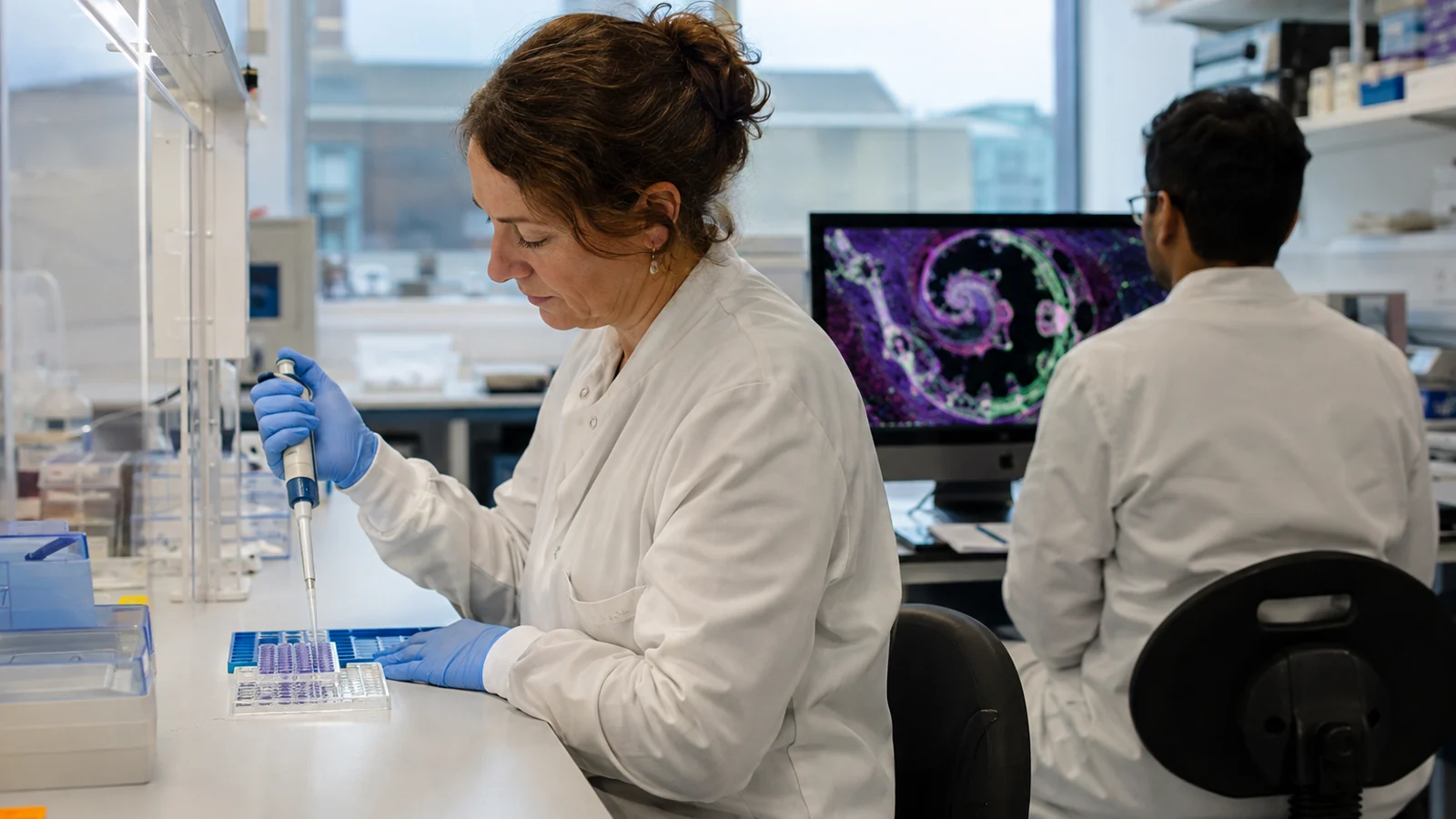
One fault, one precise target
Why can it treat only one type of hearing loss?
The inner ear is not damaged in the same way in every person.
OTOF-related deafness has a known fault in one part of the system. Much of the inner-ear structure needed to detect sound can still be present. Supply the missing genetic instruction, and the ear may be able to pass the signal again.
Age-related hearing loss is more complicated. Years of wear, noise exposure, health, inherited risk and changes in the hearing pathways can all be involved. One replacement gene cannot repair all of that.
Treatment available now
Hearing aids are treatment
Calling hearing aids a stopgap understates what they can do.
They give the brain better access to the parts of speech the ear is no longer picking up well. Speech can become clearer. Conversation can take less effort. The television need not dominate the room. Family meals and social occasions can become easier to follow.
An updated Cochrane review published in August 2026 found that hearing aids probably produce a large improvement in listening ability and hearing-related quality of life for adults with mild to moderate hearing loss. NICE recommends offering hearing aids when hearing loss is affecting communication, awareness of sounds or enjoyment of music.
Read the updated Cochrane review of hearing aids for adults.
They do have limits. They cannot return an ear to normal or make every voice clear in every noisy room. A poor fitting can sound sharp, dull, boomy or unhelpful. The evidence supports hearing aids as a treatment. It does not support treating every device or fitting as equal.

What will improve in hearing aids during 2027?
The words “artificial intelligence” will appear on more hearing-aid launches in 2027.
Some hearing aids already use machine learning to identify speech and control competing sound. Newer processors can analyse the sound around the listener and change direction, noise reduction and amplification within fractions of a second. Some do this better than others.
AI does not give a hearing aid human understanding. In a group of three people, it may not know which voice you want unless the microphones, software or controls give it enough information. It also cannot rebuild speech detail that the damaged ear and hearing system can no longer resolve.
Manufacturers tend to give every new processor a bold launch. At Alto, we test the claim against what the wearer wants to do.
- Can they follow their partner in the car?
- Can they stay with a family meal without giving up halfway through?
- Does the hearing aid deal with wind, music and several voices better than their present pair?
- Can they manage the controls?
- Is the improvement large enough to justify the cost?
The letters AI on the box tell us very little without those answers. Our guide to AI hearing aids explains how the latest systems differ and where AI can help.
Technology is only half the job
The fitting can change the result
The same hearing aid can be excellent for one person and wrong for another. Two people can have similar hearing charts and struggle in different ways. One may cope well at home but lose speech as soon as several people talk. Another may hear words but find them blurred even in a calm room.
At Alto, a Complete Hearing Assessment looks at ear health, hearing levels, speech in background noise and the situations the person wants to improve. If hearing aids are suitable, the prescription then needs to be set for the individual ear, checked and adjusted.
Real Ear Measurements check the sound delivered in the ear rather than relying on a manufacturer’s first-fit estimate. Then the hearing aids need to be worn outside the clinic, where careful follow-up can deal with issues that only appear in daily life.
Our hearing-aid treatment plans include the devices, fitting and care. An expensive hearing aid set badly can disappoint. Accurate fitting and useful follow-up give the technology a fair chance to work.

What about stem cells and nerve repair?
A British trial plans to test a cell treatment called Rincell-1 in adults with severe neural hearing loss. The cells are intended to repair or replace damaged auditory nerve cells and are given during cochlear implant surgery.
The researchers plan to enrol 20 people. Participants must already meet NHS criteria for a cochlear implant. The study record gives a primary completion date in late 2027, with full completion expected in 2028.
The trial will look first at safety and early signs of nerve repair. Routine availability would still be years away, even if those results are encouraging.
See the Rincell-1 clinical trial record.
Other teams are studying ways to protect inner-ear cells, regrow sensory hair cells and deliver medicines into the cochlea. The inner ear is tiny, delicate and difficult to reach. A result in cells or animals is many steps away from a treatment that is safe, effective and available to patients.
Early research is useful. It is not a promise to patients.
Cochlear implants will continue to improve
Hearing aids are not enough for every hearing loss. People with severe or profound deafness who receive too little benefit from acoustic hearing aids may be assessed for a cochlear implant.
Cochlear implants bypass damaged parts of the inner ear and stimulate the hearing nerve electrically. They already provide useful access to sound and speech for many people. Work continues on electrode design, sound processing, preservation of remaining hearing and combining electrical and acoustic hearing.
Progress here is more likely to come in measured gains than through one cure for every kind of deafness.
Should you wait for a better treatment in 2027?
No. If hearing is getting in the way now, it is reasonable to deal with it now.
Wearing hearing aids does not close the door on treatments that may become available later. A current assessment can show whether the cause may be wax, a middle-ear problem, age-related change or something that needs medical referral.
You may also be surprised by what present hearing aids can do. The oldest pair in the family drawer is not a fair test of current technology. Nor is a quick demonstration using settings copied from a hearing chart.
Try suitable devices, have them fitted for your ears and judge them in the places where you struggle.
What is likely to change in 2027?
We expect more results from gene and cell trials, though their immediate use will remain narrow. Hearing aids are likely to gain more processing power and better ways to handle speech among competing sound.
For an adult with age-related hearing loss, the most useful treatment in 2027 will probably look familiar: a proper assessment, well-chosen hearing aids, accurate fitting and enough support to make them work well.
The shape is familiar, but the hearing aids have changed. Testing now tells us more about speech in noise. Fitting can be measured in the ear. Follow-up can deal with the problems that appear only after someone has worn the devices at home, at work and with family.
Find out what would help now
Start with your hearing, not a prediction
If conversations have become harder, a Complete Hearing Assessment gives us time to check your ears, measure your hearing and speech-in-noise ability, and explain the options. We will tell you if hearing aids are likely to help, if it is too soon, or if another service or medical opinion is needed.
Only just started wondering? Try our free SoundCheck.
Questions people are asking
Will hearing loss be cured in 2027?
The first gene therapy has been approved in the United States for a rare inherited form of severe or profound hearing loss. No approved treatment is expected to reverse ordinary age-related hearing loss in 2027.
Can hearing aids repair damaged hearing?
No. Hearing aids do not regrow damaged inner-ear cells. They improve access to sound and speech by giving the ear a carefully adjusted signal. Good evidence shows that they can improve listening ability and hearing-related quality of life.
Are AI hearing aids worth waiting for?
AI hearing aids are already available. New models will keep arriving, so waiting for the next launch can become endless. Compare current technology using your own hearing results and the situations you want to improve. A newer device earns its price when it gives you a useful difference.
Will wearing hearing aids prevent me from having a future treatment?
No. Wearing hearing aids does not normally prevent someone from being considered for a future medicine, gene treatment, cell treatment or implant. Eligibility would depend on the cause and severity of the hearing loss and the evidence for that treatment.
Where should I start if I am unsure about my hearing?
If you have only just started wondering, Alto’s free SoundCheck can give you an initial result. If you already know conversations are becoming difficult, request a call back about a Complete Hearing Assessment.