

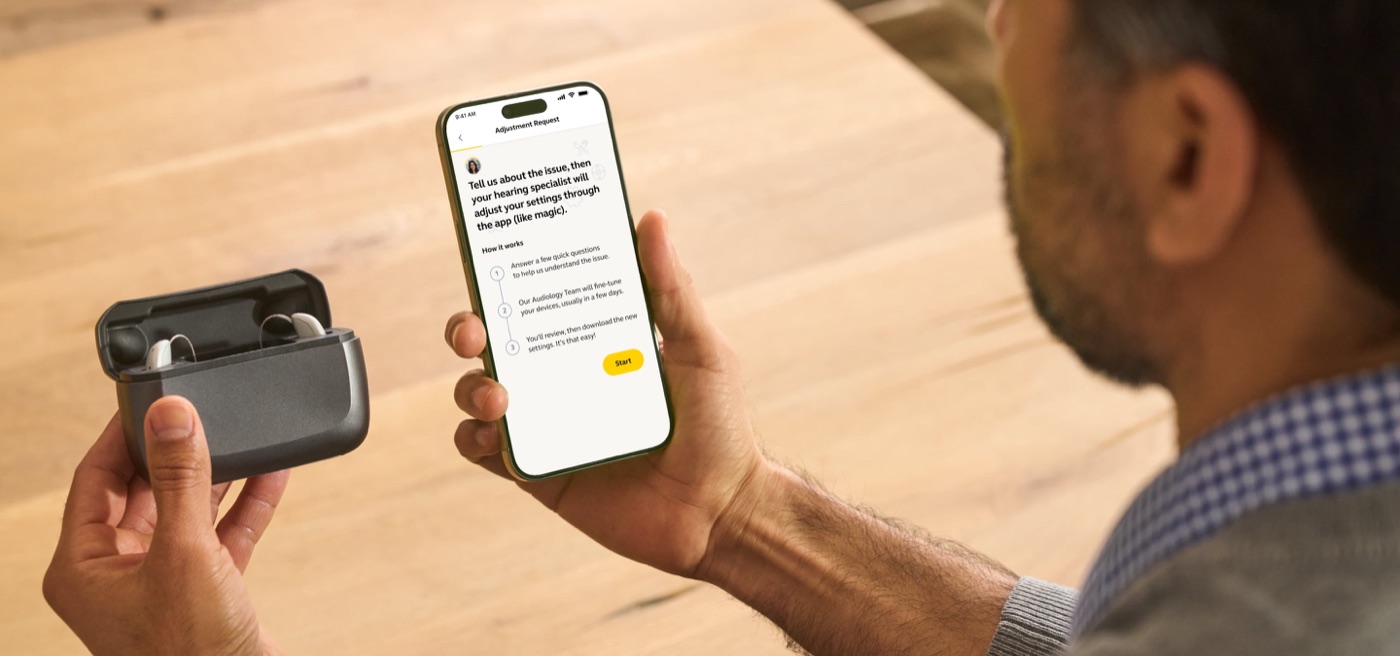
OTC hearing aids sound simple: buy the device, follow the app, turn the sound up and see how you get on.
For some people, that may be a useful first step. For others, it can be an expensive way to guess at a hearing problem that really needs a proper look.
This is the quick checklist we would want someone to read before buying. If you want the wider UK explainer, read our full guide to OTC hearing aids in the UK.
Clinically reviewed by Adam Bostock, Audiologist. Last reviewed 13 May 2026.
The quick test
OTC hearing aids are worth considering only if the problem is gradual, mild to moderate, broadly similar in both ears, and you feel comfortable setting up technology yourself.
If your hearing changed suddenly, one ear is clearly worse, or you have pain, discharge, dizziness or sudden tinnitus, do not buy a device first. Get medical or clinical advice.
1. Is this the right kind of hearing loss?
OTC hearing aids are mainly aimed at adults with perceived mild to moderate hearing loss. In plain English, that usually means you can hear, but conversation has started to take more effort.
They may be worth looking at if you mostly notice:
- people mumbling more than they used to
- the television volume creeping up
- soft voices becoming harder to follow
- listening feeling more tiring by the end of the day
They are not designed for children, sudden hearing loss, severe hearing loss, or hearing that is much worse in one ear. Those situations need proper assessment. If you are unsure what type of hearing loss you may have, our guide to hearing loss signs and types is a better starting point.
2. Have you checked your ears first?
A hearing device can make sound louder. It cannot examine your ear.
That matters because reduced hearing is not always caused by permanent inner-ear hearing loss. Ear wax, infection, fluid behind the eardrum, a perforation or another ear-health issue can all change what the right next step should be.
Before spending money on an OTC device, be cautious if you have:
- a blocked or full feeling in one ear
- ear pain, discharge or recurring infections
- sudden tinnitus or dizziness
- a history of ear surgery
- hearing that changed quickly
If wax may be involved, start with ear wax removal or an ear check. If the issue is affecting normal life, a Complete Hearing Assessment gives you a clearer answer.
3. Can you set it up yourself?
The convenience is real, but so is the responsibility. Most OTC and self-fitting devices rely on you doing the setup: pairing the device, using an app, running a hearing check, choosing settings and making adjustments over time.
That is fine if you are comfortable with apps and patient enough to experiment. It is less useful if Bluetooth, phone settings and small controls already feel irritating.
Before buying, check the practical details
- Does it work with your phone?
- Can you return it if it does not help?
- Is there UK support?
- Are replacement tips, wax filters or batteries easy to get?
- Is it actually a hearing aid, or just a sound amplifier?
4. Where do you need to hear better?
This is often the deciding point.
If the main problem is the television, quiet conversation at home or hearing one person nearby, a simpler device may give useful benefit. If the real problem is restaurants, meetings, groups, family meals, distance or several people talking at once, the fitting becomes more demanding.
Noise reduction is not the same as speech clarity. Making everything louder can help in a quiet room and still fail in a busy one.
OTC may be enough if…
- your hearing difficulty is mild
- your listening needs are fairly simple
- you mainly want short periods of support
- you are happy adjusting settings yourself
Professional care is wiser if…
- speech in noise is the main problem
- you need all-day wear
- one ear is worse than the other
- you want testing, fitting and follow-up
With professionally fitted hearing aids, the device is only part of the work. The hearing test, ear check, fitting, verification and follow-up all affect the outcome.

5. What happens after the first week?
New hearing devices often sound odd at first. The voice you know best may sound different. Cutlery, paper, traffic and your own footsteps may seem louder than expected.
That does not automatically mean the device is wrong. It may mean your brain is adjusting. But it can also mean the fitting is poor, the device is too basic, the ear tip is wrong, or the hearing loss has not been matched accurately.
This is where people often need help. A return policy is useful, but it is not the same as clinical follow-up. If you want to understand the adjustment process, read our guide to the hearing aid adjustment period.
What about Apple AirPods?
AirPods Pro have made this conversation much more visible. Compatible AirPods Pro models include hearing health features, including a Hearing Aid feature for adults with perceived mild to moderate hearing loss, subject to device, software and regional availability.
They may be useful for some people, especially for familiar listening situations such as television, calls and quieter conversation. They are still not a replacement for ear examination, diagnostic hearing testing or professional fitting when those are needed.
We cover that separately here: Apple hearing aids and AirPods Pro hearing features.
So, should you buy OTC hearing aids?
Possibly. If your hearing difficulty is mild, gradual, fairly even between both ears and you are comfortable with self-fitting technology, OTC hearing aids may be a reasonable first step.
But if hearing is affecting your confidence, work, family life or ability to follow conversation in noise, it is worth getting proper advice before spending money. You may still choose an OTC route afterwards, but you will be making that decision with better information.
A sensible first step
If you are not sure what level of help you need, start with SoundCheck. If hearing difficulty is already affecting normal life, book a Complete Hearing Assessment.
If hearing aids are appropriate, we can talk you through the difference between OTC-style technology, professionally fitted hearing aids and long-term hearing aid care plans.
Quick FAQs before buying OTC hearing aids
Should I have a hearing test before buying OTC hearing aids?
You do not always have to, but it is often sensible. A hearing test can show the type and level of hearing loss, whether both ears are similar, and whether OTC-style hearing technology is likely to be enough.
Are OTC hearing aids suitable for severe hearing loss?
No. OTC hearing aids are mainly aimed at adults with perceived mild to moderate hearing loss. If hearing is poor even in quiet situations, or if you know your hearing loss is severe, you should seek professional advice.
Can OTC hearing aids help in restaurants?
They may help some people, but restaurants and group conversations are difficult listening situations. If background noise is your main problem, professionally fitted hearing aids and follow-up care are usually more appropriate.
What if OTC hearing aids do not help?
Check the return period and do not assume hearing aids are not for you. The device may be unsuitable, poorly fitted, incorrectly adjusted, or not matched to your hearing loss. A clinical hearing assessment can help explain what is going on.
Are AirPods the same as OTC hearing aids?
Compatible AirPods Pro models include hearing health features, including a Hearing Aid feature for adults with perceived mild to moderate hearing loss. They are part of the same wider shift towards self-fit hearing support, but they are not the same as a professionally fitted hearing aid pathway.
Sources
Sources checked May 2026: FDA: OTC hearing aids, MHRA guidance on regulating medical devices in the UK, and NHS hearing loss guidance.