


Signia makes hearing aids that sit behind the ear, small rechargeable aids that fit inside it, and more powerful models for greater hearing loss. Pure Charge&Go MaX is its newest model. The earlier IX range includes small in-ear, custom and power styles that MaX does not yet offer.
We fit Signia regularly at Alto. Choosing a small in-ear model can mean giving up phone streaming. A receiver-in-canal aid has a casing behind the ear and a separate earpiece to insert. We look at how you hear, how the aid fits and whether you can manage its controls and charging comfortably.
In this article
Current Signia hearing aid ranges
Signia is part of WS Audiology, the group that also includes Widex. The model name identifies the physical style as well as the technology generation. A Silk IX and a Pure IX have different microphones and phone features despite sharing the IX name.
| Range | Style | Main distinction |
|---|---|---|
| Pure Charge&Go MaX | Rechargeable receiver-in-canal | Newest platform; Bluetooth Classic and LE Audio, with full Auracast planned through a future update |
| Pure Charge&Go IX family | Rechargeable receiver-in-canal | Earlier platform; BCT IX uses Bluetooth Classic, while other IX variants use different phone connections |
| Styletto IX | Slim rechargeable receiver-in-canal | A longer, narrower behind-the-ear shape |
| Silk Charge&Go IX | Rechargeable instant-fit completely-in-canal | Soft sleeves rather than a custom shell; app control without Bluetooth audio streaming |
| Insio IX | Custom in-ear styles | Includes rechargeable CIC and battery-powered options; features vary with the size and model |
| Motion Charge&Go IX | Rechargeable behind-the-ear | M, P and SP variants for different power requirements |
| Active IX family | Rechargeable instant-fit in-ear | Active Mini IX and Active Pro IX, with an earbud-style appearance |
| CROS IX | Transmitter paired with a compatible hearing aid | Routes sound from an unaidable ear to the better-hearing side |
Scroll across to compare the ranges.
Signia apps and phone compatibility
MaX uses the Signia One app. Earlier Signia models use the Signia app. The controls available depend on the hearing aid, technology level and setup.
The apps can change volume and programmes, adjust sound balance and let you direct the microphone focus. Signia Assistant offers AI-guided sound adjustments and help with using the aids. TeleCare can provide remote professional support where your provider has enabled it.
App control and audio streaming are separate functions. Silk and Insio Charge&Go CIC IX can be controlled through an app without streaming phone audio.
We check the functions you use, including ordinary calls, WhatsApp, video meetings and music, with your exact phone. Our guide to hearing aids and phone compatibility explains the difference between app control, streaming and hands-free calls.
Repeated app adjustments are useful information at follow-up. Tell us what you change and where you are listening, so we can review the everyday programme.
Signia models and fitting differences
Pure Charge&Go MaX
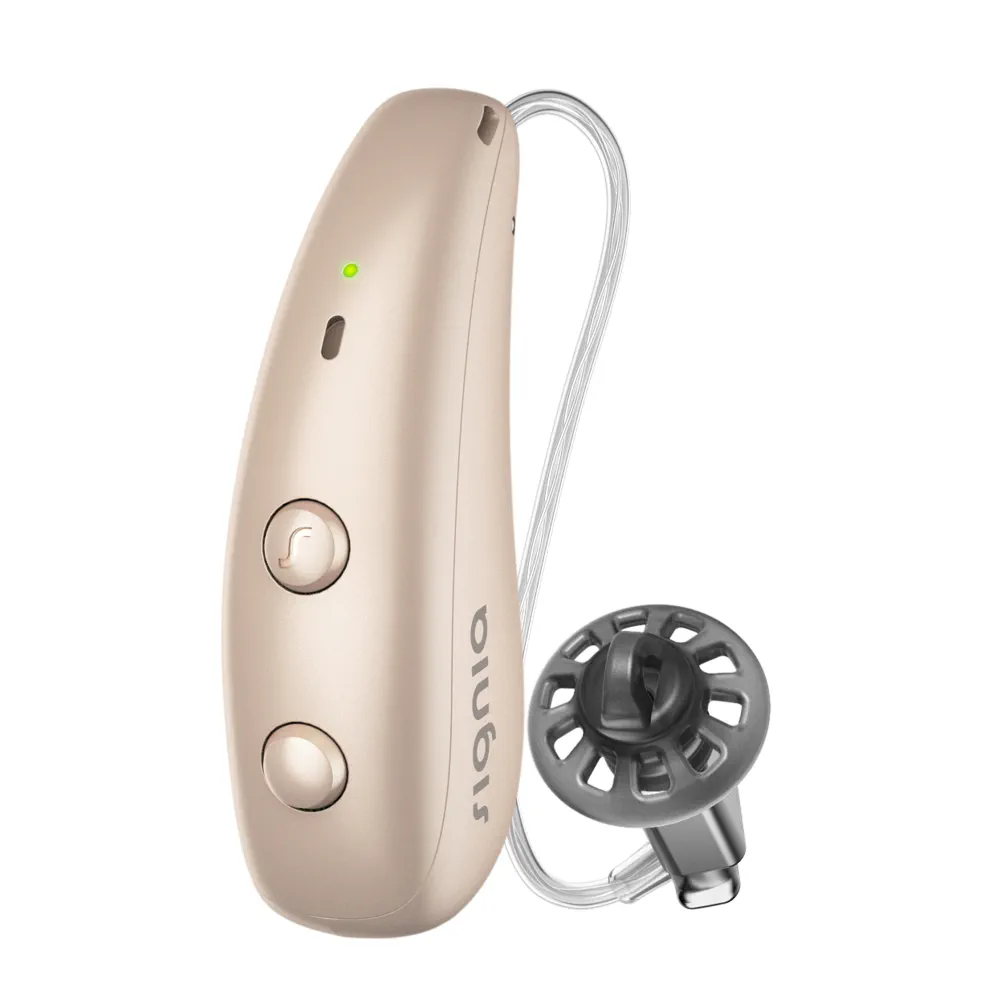
Pure Charge&Go MaX is the rechargeable receiver-in-canal model on Signia’s newest platform. It sits behind the ear, with a fine wire leading to the receiver inside the ear canal.
MaX processes speech, background noise, the surrounding environment and your own voice. Its conversation feature tracks several speakers around a group. Signia also changed its own-voice processing so it recognises your voice without the earlier calibration step.
If your own voice sounds boomy or unfamiliar in hearing aids, we check the dome or earmould and the amplification alongside the own-voice setting. Each affects what you hear.
MaX supports Bluetooth Classic and LE Audio, and includes a telecoil for compatible hearing loops. Full Auracast support is planned for a future Signia One firmware update. Signia’s launch announcement gives a timetable of delivery by March 2027. It is not available today.
Pure Charge&Go BCT IX and the IX family
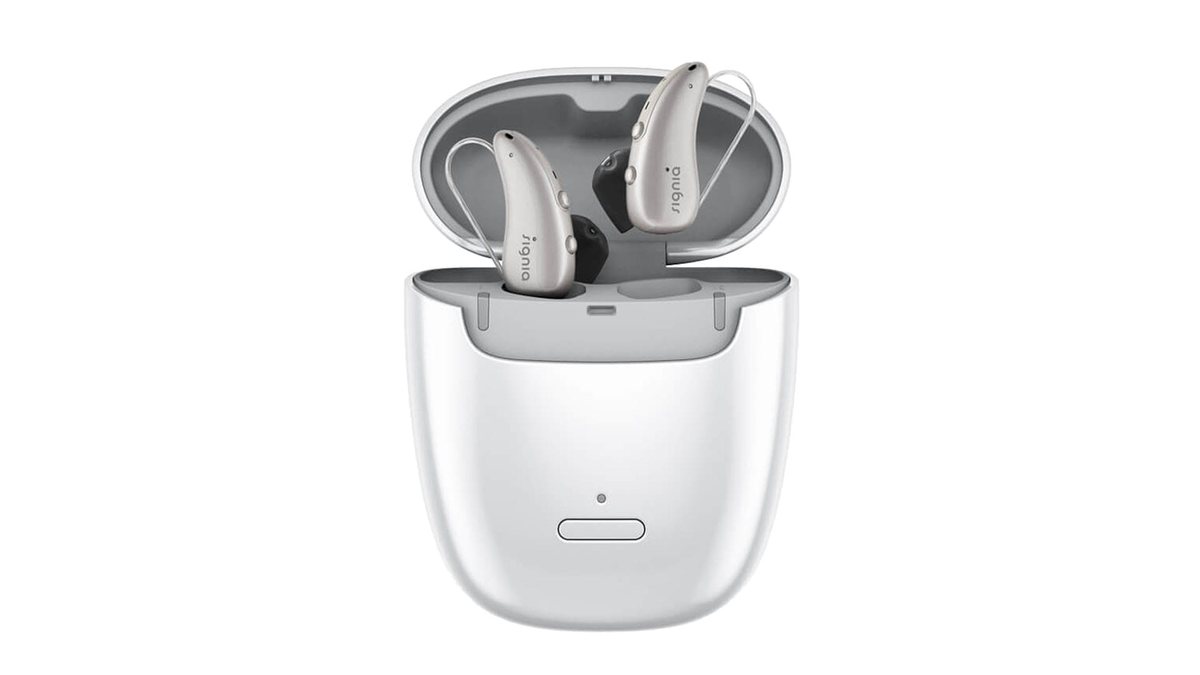
Pure Charge&Go BCT IX remains in the UK range. It uses the earlier Integrated Xperience platform and Bluetooth Classic for calls and audio streaming.
Its separate Bluetooth Low Energy connection is for app control. That is different from LE Audio streaming, and BCT IX does not support Auracast. Other Bluetooth-enabled IX models offer MFi, ASHA or LE Audio connections according to the model, phone and firmware.
A quote should name the exact Pure model. BCT IX, Pure Charge&Go IX and Pure Charge&Go T IX can look similar while offering different phone connections and features.
Styletto IX
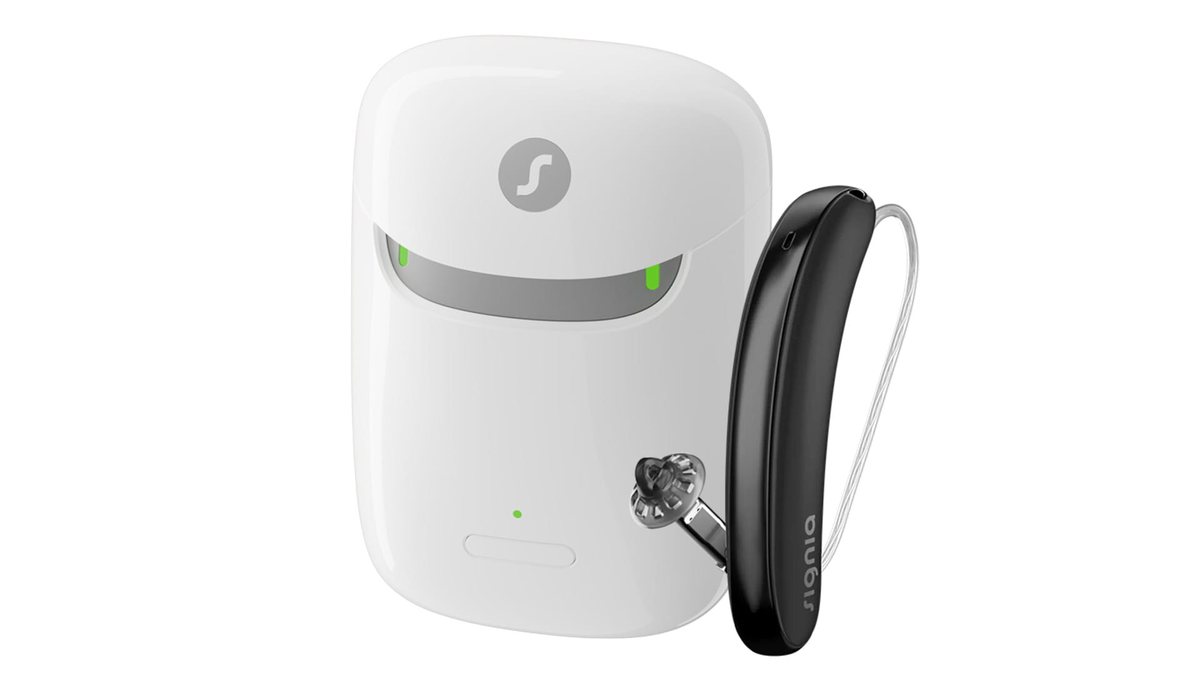
Styletto IX is Signia’s slim rechargeable receiver-in-canal design. It has a longer, narrower profile than the Pure models and a portable charging case.
The shape can affect how it sits beside glasses and how easily you can pick it up and place it in the charger. We check the receiver power and earpiece as well as the space behind the ear. Styletto uses the earlier IX platform.
Silk Charge&Go IX
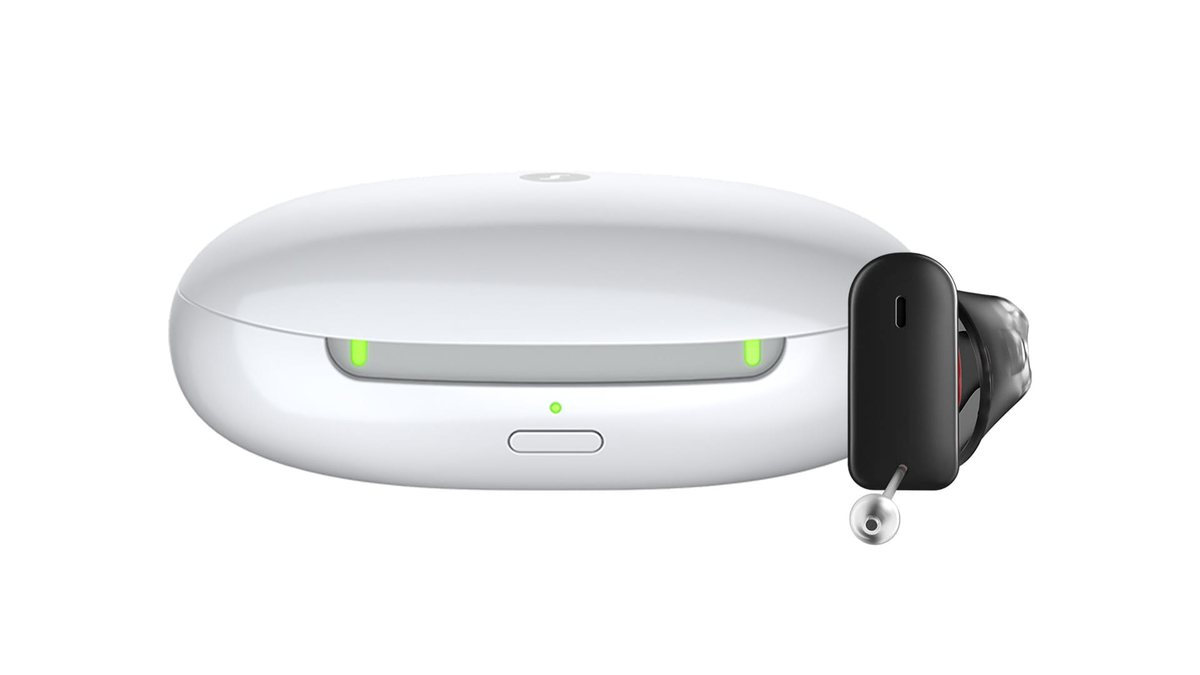
Silk Charge&Go IX is a small rechargeable completely-in-canal aid. It uses soft instant-fit sleeves rather than a shell made from an ear impression.
Silk offers Signia app control but no Bluetooth streaming for calls or music. It uses a different microphone arrangement from the larger receiver-in-canal models. In compatible two-aid fittings, the microphones work together to focus towards speech in front of you.
A small in-ear aid needs enough room in the canal for a comfortable fit. We check the sleeves, ventilation and feedback, and whether you can grip and clean the aid. Hearing loss and wax also affect suitability. Our invisible hearing aids guide explains these fitting choices in more detail.
Insio Charge&Go CIC IX and Insio IX
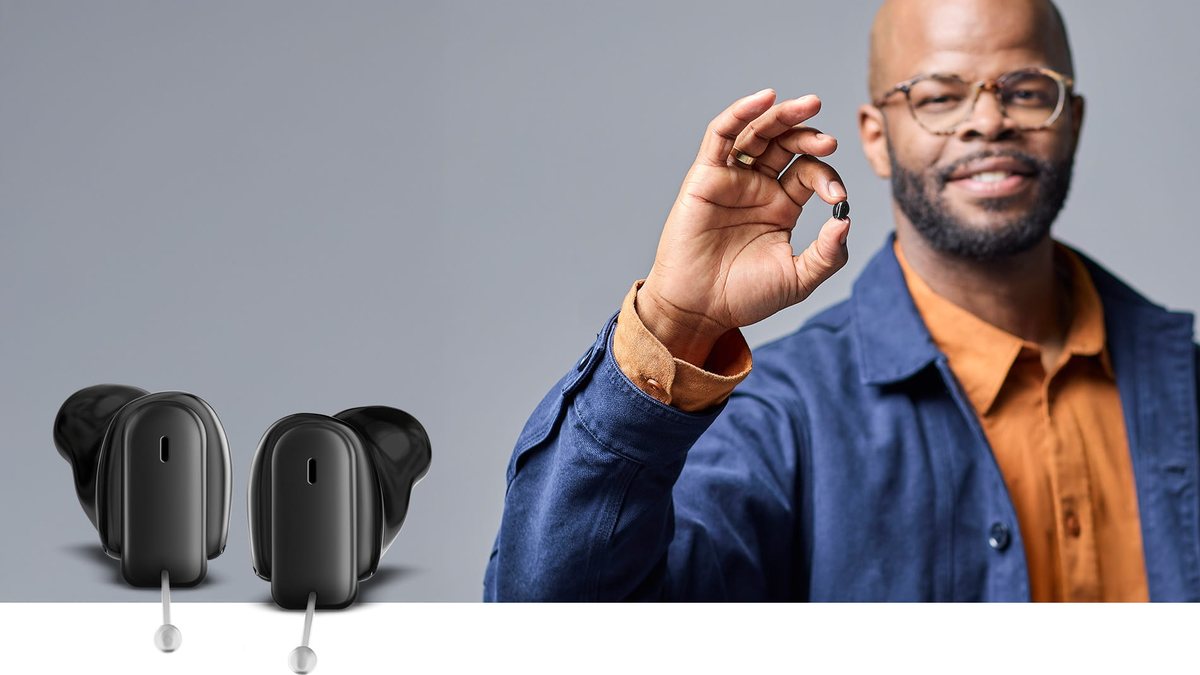
Insio Charge&Go CIC IX is Signia’s rechargeable custom completely-in-canal aid. Unlike Silk, its shell is made for the individual ear. The wider Insio IX range includes battery-powered custom styles in different sizes.
The rechargeable CIC has app and remote-control adjustments, but no Bluetooth audio streaming. Larger custom shells can offer different microphone and control options. An Insio quote should identify the style as well as the technology level.
Custom hearing aids can be helpful where a behind-the-ear device is awkward beside glasses or where someone handles an in-ear device more easily. A very small shell can also be harder to grip and clean. Our custom in-the-ear guide covers those fitting decisions.
Motion Charge&Go IX
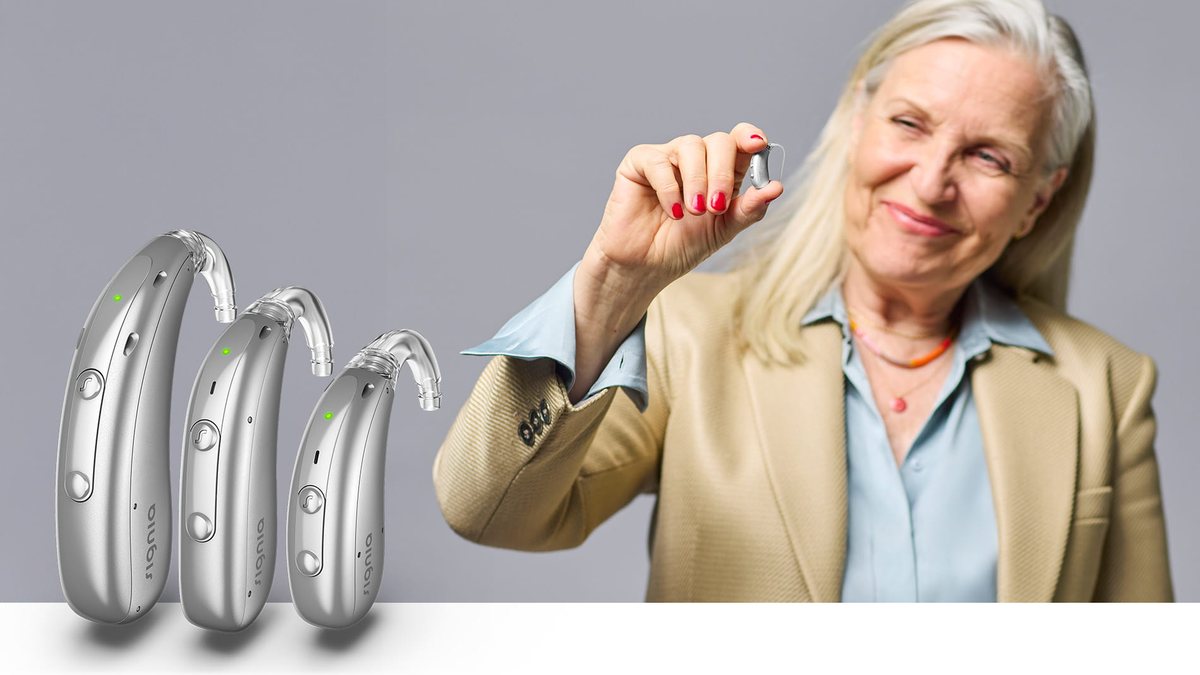
Motion Charge&Go IX is the rechargeable behind-the-ear family. It includes M, P and SP models, with different power capabilities. The SP is the super-power option.
For more significant hearing loss, we pay particular attention to the earmould, venting, feedback control and fitting measurements. Follow-up appointments allow further adjustment. The larger casing may be easier to handle, though inserting the earmould, cleaning and charging still need checking. Our guide to hearing aids with arthritis or poor eyesight explains the practical checks.
Active Mini IX and Active Pro IX
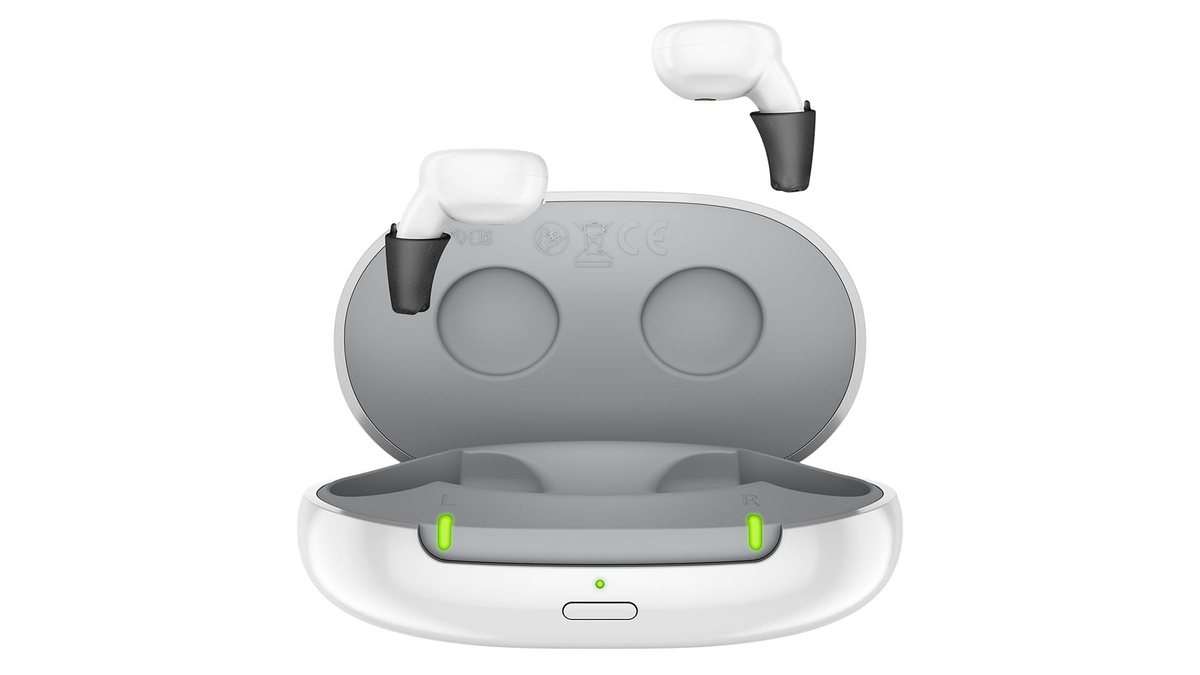
The Active IX family includes Active Mini IX and Active Pro IX. These are rechargeable instant-fit in-ear hearing aids with an earbud-style appearance and phone connectivity on compatible devices.
The earbud look appeals to some people who would otherwise put off wearing hearing aids. We check how securely the aids sit, how easily you can insert and remove them, and how you manage daily cleaning and charging.
CROS IX, tinnitus support and accessories
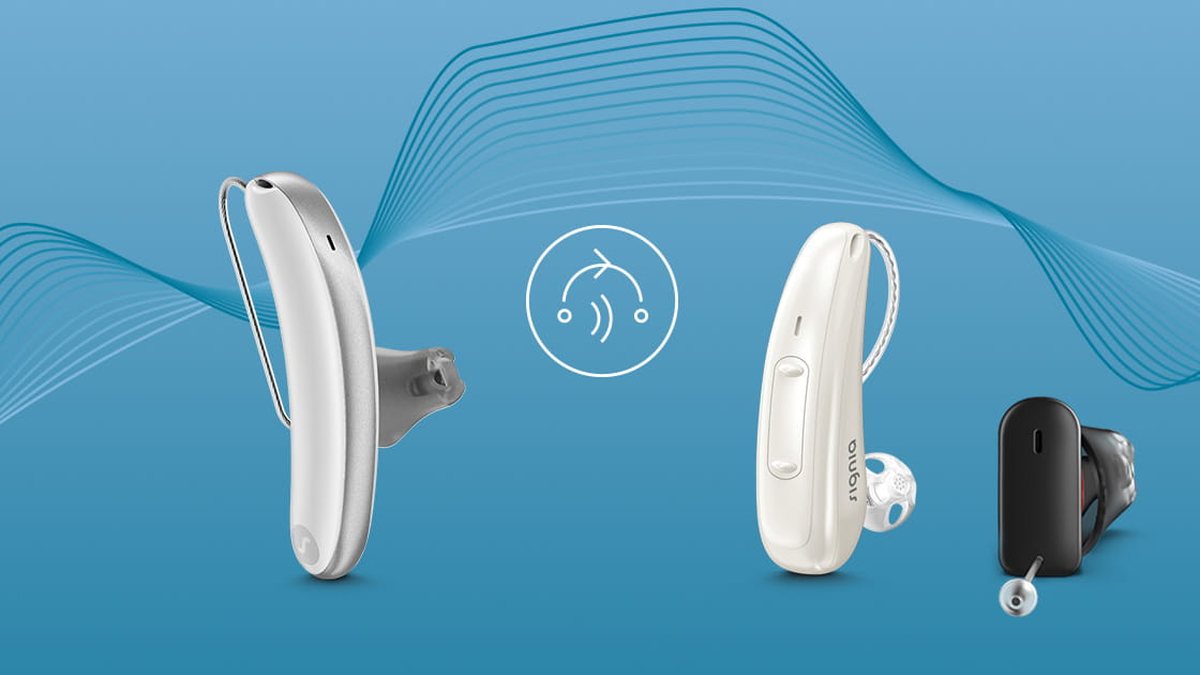
Signia CROS IX is designed for people with unaidable hearing loss on one side. A CROS system picks up sound from the poorer side and sends it to the better-hearing ear. BiCROS also amplifies sound for the better ear when it needs help.
The assessment needs to establish whether the poorer ear can be aided and whether a CROS or BiCROS fitting is suitable. The transmitter and receiving aid must be a compatible pair. Our CROS and BiCROS guide explains how these systems work.
A TV transmitter or remote microphone can help with a specific listening difficulty. Accessory compatibility varies across Signia models, so we check the hearing aid and accessory as a pair, including with Silk and small Insio CIC fittings. Our hearing-aid accessories guide explains the options.
Some Signia models include tinnitus support settings. These are one part of tinnitus care. If tinnitus is new, sudden, one-sided, pulsatile or associated with other symptoms, it needs appropriate clinical advice.
Can Signia hearing aids help in background noise?

MaX and IX include features intended to make speech easier to follow among other sounds. Their capabilities vary by model and technology level. The smallest one-microphone styles use different conversation processing from the larger aids.
At Alto, we use speech-in-noise testing, including QuickSIN, to understand how much extra speech level you need relative to the noise. Someone who misses words across a large table may need a different combination of hearing aid, earpiece and microphone from someone who struggles with a person beside them.
Room acoustics, distance and several people speaking at once still affect what you hear, even with hearing aids. Our background noise article explains why.
How much do Signia hearing aids cost?
Signia prices vary by model, technology level, style and the fitting and aftercare included. Our UK hearing-aid prices guide uses £1,500 to £6,000 per pair as a broad private-care budgeting range, with options outside it. This is not a price list for Signia or a quote for MaX.
A written quote should identify the model and technology level and state whether it covers one aid or a pair. It should also set out the charger, accessories, fitting verification, warranty and length of aftercare included, plus any separate assessment fees and running costs.
At Alto, our hearing-aid treatment plans cover the devices, fitting and ongoing support. The £75 Complete Hearing Assessment is paid separately. We explain the proposed fitting and its full cost before you decide.
How we fit Signia hearing aids
The shape and volume of your ear canal affect how sound reaches your eardrum. The manufacturer’s software provides a starting setting. With Real Ear Measurements, the audiologist measures the amplified sound in your ear and adjusts the fitting from those results.
A sore earpiece needs attention to the fit, and a shell that you cannot grip may need a different style. We also check insertion, removal and the controls.
At follow-up, we work on the difficulties that remain after fitting. Details help, such as missing words from the person across a table or finding your own voice too loud. Our hearing-aid fitting and verification page explains the process.
Comparing Signia with other brands
We are independent and fit several manufacturers. We may recommend different hearing aids, earpieces or accessories to two people whose hearing results look similar because their ears, phone use and listening difficulties differ.
Our hearing aid brands comparison covers the wider choice. For current models, see the best hearing aids in 2026.
Considering Signia hearing aids?
A Complete Hearing Assessment takes 90 minutes and costs £75. We check your ear health, measure your hearing and assess how you follow speech in noise. We also discuss the conversations and daily tasks you find difficult.
We explain your results and any suitable hearing-aid options, including the earpiece, accessories, fitting and follow-up support.
Clinics in Kenilworth, Lutterworth, Market Bosworth and Clitheroe.
Signia hearing aids: common questions
Common questions
Are Signia hearing aids good?
We fit Signia regularly at Alto. Its range includes receiver-in-canal aids, small rechargeable in-ear styles and power behind-the-ear models. We choose among those options using the hearing assessment, the fit in your ears and the listening difficulties you want help with.
What is the newest Signia hearing aid?
Pure Charge&Go MaX is the receiver-in-canal model on Signia’s newest Multi-adaptive Xperience platform. The UK catalogue also lists IX models in other styles, including Silk, Insio, Styletto, Motion and Active.
What is Signia IX?
IX stands for Integrated Xperience, the platform before MaX. Signia still offers it in receiver-in-canal, in-ear and behind-the-ear aids. Microphones, sound features and phone connections differ across those models.
What is Signia Pure Charge&Go BCT IX?
It is a rechargeable receiver-in-canal aid on the IX platform. It uses Bluetooth Classic for calls and audio streaming, with a separate Bluetooth Low Energy connection for app control. It does not support Auracast.
Are Signia hearing aids rechargeable?
Many are. Rechargeable models include Pure Charge&Go MaX, Pure IX, Styletto IX, Silk Charge&Go IX, Insio Charge&Go CIC IX, Motion IX and Active IX. The wider custom Insio range also includes battery-powered models.
Are Signia hearing aids good for background noise?
MaX and IX include features to help with speech in noise. Capabilities differ by model and technology level. At Alto, we use speech-in-noise results to help choose the hearing aid, earpiece and any remote microphone. Room acoustics and distance still affect how much you hear.
What is Signia Silk Charge&Go IX?
Silk is a small rechargeable completely-in-canal aid fitted with soft sleeves rather than a custom shell. It offers app control but does not stream phone calls or music through Bluetooth.
What is Signia Styletto IX?
Styletto IX is a slim rechargeable receiver-in-canal hearing aid with a portable charging case. Its longer, narrower casing is different from Pure. We check how it sits behind your ear and how easily you can handle it.
Do Signia hearing aids connect to iPhone and Android?
Many models stream from compatible iPhone and Android phones. The exact connection, hands-free calling and app features depend on the hearing aid and phone. Some smaller Signia aids offer app control without audio streaming.
Do Signia hearing aids support Auracast?
Signia plans to add full Auracast support to MaX through a firmware update by March 2027. It is not available today. BCT IX uses Bluetooth Classic for audio and does not support Auracast.
How much do Signia hearing aids cost?
The cost depends on the exact model, technology level and care included. The £1,500 to £6,000 per-pair range in our prices guide is a broad UK private-care budgeting guide, with options outside it. It is not a Signia price list. Assessment fees and accessories may be separate.
Are Signia hearing aids better than ReSound or Widex?
We compare individual models and complete fittings. We may recommend Signia for one person and ReSound or Widex for another with similar hearing results because the earpiece, handling or phone requirements differ.
Do I need Real Ear Measurements with Signia hearing aids?
Real Ear Measurements check the amplified sound in your ear while you wear the hearing aid. They help the audiologist adjust the fitting using measurements alongside the manufacturer’s software prediction.
Does Alto Hearing provide Signia hearing aids?
Yes. Our audiologists regularly fit Signia alongside other manufacturers. We recommend the hearing aid, earpiece, accessories and support according to the person we are fitting.