

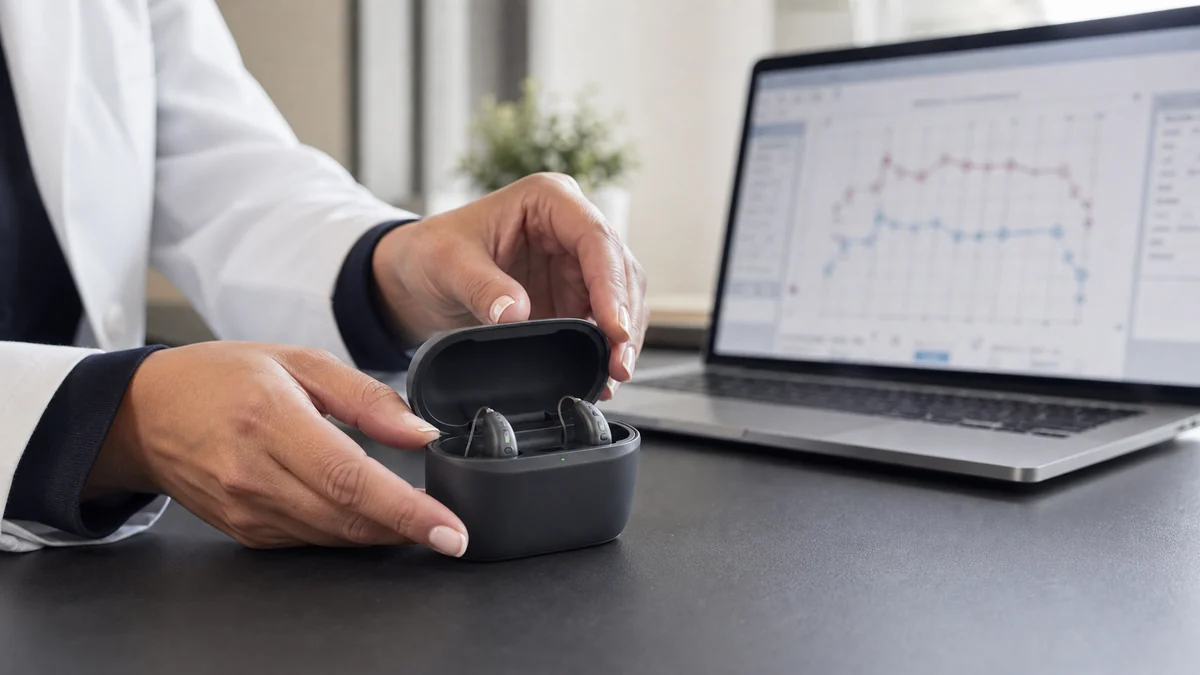
A UK buyer's guide
Buying hearing aids is not like buying headphones. The product matters, but so do the hearing test, the fitting and the help you receive after you leave the clinic.
Before you pay, you should know what your hearing test found and why a certain hearing aid has been advised. You should also know how the fitting will be checked and what care is in the price.
This guide covers the main choices in the UK. It explains NHS and private care, free and paid tests, hearing aid styles, technology levels and AI. It also covers fitting, aftercare and the questions to ask before you sign anything.
By Alto Hearing. Clinically reviewed by Adam Bostock, Audiologist. Last reviewed 26 August 2026.
The short answer
Start with the test
Do not choose a brand or price level before your ears and hearing have been checked. Wax, ear health, the shape of the loss and speech clarity can all change the advice.
Compare the care
A low price may include very little support. A high price does not prove that the care is good. Ask what happens before, during and after the fitting.
Get it in writing
Your quote should name the exact hearing aids and list the fitting, follow-up, warranty, repairs, trial terms and any costs that may come later.
In this guide
- NHS or private hearing aids?
- Free hearing test or paid assessment?
- What should a good hearing assessment include?
- How should you choose a hearing care provider?
- Which hearing aid style should you choose?
- What do hearing aid technology levels mean?
- What does AI mean in a hearing aid?
- Should you compare hearing aid brands?
- What should be in the quote?
- Why fitting and aftercare change the result
- Warning signs when buying hearing aids
- Questions to take to your appointment
NHS or private hearing aids?
The NHS is a good route for many people. NHS hearing aids are modern digital devices. They are supplied on long-term loan, and batteries, repairs and follow-up care are normally free. A charge may apply if an aid is lost or damaged.
Private care costs money. It tends to offer a wider choice of styles, brands and features. Appointments may be available sooner. You may also have more say over who looks after you and how often you are seen.
The NHS may give you all the help you need. Private care may suit you if you want more choice, longer appointments, a certain style or support from the same clinic over several years.
The NHS may suit you if
- You want good hearing care without private cost.
- You are happy to use the range offered by your local service.
- You do not need a small custom style or a certain brand.
- You are content with the local wait and appointment system.
Private care may suit you if
- You want a wider choice of styles, brands or features.
- You want more time to compare options.
- You value seeing the same clinician over time.
- You want a set plan for fitting, follow-up and repairs.
Our full guide to NHS and private hearing aids goes into the differences in more detail. The NHS hearing aids and implants page sets out what NHS care includes.
Free hearing test or paid assessment?
A free test is not poor because it is free. A paid assessment is not good because it has a fee.
Ask what the appointment includes. Some free checks are short screens. They can tell you whether a fuller test is wise. Others are full tests that lead into a hearing aid sale. A paid assessment should give you more than a graph and a price list.
An online hearing test can be useful too. It may show that you should book a face-to-face test. It cannot look for wax, check your eardrums or explain why one ear differs from the other. The NHS guide to hearing tests makes the same point: online tests are a screen, not a full assessment.
Ask one direct question: “What will I know at the end of this appointment?” The answer should be clear before you book.
What should a good hearing assessment include?
A good assessment starts with you, not the equipment.
The clinician should ask where you struggle, when the change began and what you want to improve. They should also ask about tinnitus, dizziness, pain, ear surgery, noise, medicine and any sudden or one-sided change.
- An ear check. Wax, infection or another ear problem may need to be dealt with first.
- A full hearing test. This should measure each ear and show the type and level of any loss.
- Extra tests when needed. These may check the middle ear, bone hearing or how well you follow speech in noise.
- A plain account of the results. You should know what the test found and how it fits the problems you notice.
- A clear next step. That may be no action, monitoring, wax removal, medical advice, hearing aids or another form of help.
- A copy of your results. Ask for the audiogram and the plan.
What happens at a Complete Hearing Assessment? shows how this works at Alto.

How should you choose a hearing care provider?
The name above the door tells you less than most people think. Large chains, small clinics, NHS services and home-visit firms can all provide good care. They can also work in very different ways.
NHS service
Free care and proven devices. Ask about local wait times, follow-up and the range used by that service.
National chain
Many branches and broad opening hours. Ask which brands are available, who will see you later and what happens if staff change.
Independent clinic
Often more choice and closer contact with one team. Ask which manufacturers they fit, how they check quality and what is included over time.
Online or home visit
Convenient for some people. Ask how ears are checked, how fitting is measured, who deals with faults and where you go if face-to-face help is needed.
In private care, check that the person assessing and fitting you is on the HCPC register. The HCPC regulates hearing aid dispensers who work in private practice.
Then ask about choice. Some firms mainly fit one manufacturer. That may be fine, but you should be told. An independent clinic should also be able to explain why it favours one model over another.
We have written separately about how to judge the care around hearing aids. It is worth reading when you compare clinics as well as products.
Which hearing aid style should you choose?
The smallest hearing aid is not always the easiest to live with. Size affects power, battery life, wireless features, handling and how often wax reaches the parts inside your ear.
Receiver in canal
Small, flexible and suitable for many hearing losses. The speaker sits in the ear canal. Wax and moisture can damage it, so cleaning and servicing matter.
Behind the ear
Strong, easy to service and able to cover a wide range of hearing losses. A tube or mould carries sound into the ear. It may be easier to handle than a tiny aid.
In the ear
Made to fit the ear. Larger custom models can be simple to handle. Very small ones are discreet, but may have fewer controls, shorter battery life or less wireless use.
Glasses, ear shape, wax, finger movement, eyesight, phone use and the level of hearing loss all affect the choice. Tell the clinician what might stop you wearing an aid. It may rule out a style that looks good on paper but would be awkward each day.
What do hearing aid technology levels mean?
Two hearing aids can look the same and carry very different prices. The change is often in the software.
Lower level
Often enough for quieter lives and simple one-to-one talk. It may offer fewer tools for busy rooms, moving sound and changing noise.
Mid level
Often enough for people who spend time at home but also visit shops, join family meals and meet in small groups.
Premium level
Built to do more in hard places such as restaurants, meetings and large groups. It can be worth the cost when those places form a large part of your week.
More costly does not mean more volume. Premium aids tend to offer more ways to steer sound, manage noise and change as the room changes.
Ask the clinician to tie the level to your life. “You go to restaurants twice a week and run group meetings” is a reason. “This is our best model” is not.
Read Are premium hearing aids worth it? for a fuller comparison.
What does AI mean in a hearing aid?
AI is now used as a broad label. It does not tell you how well an aid will suit you.
One hearing aid may use AI to tell speech from noise. Another may track the person you face. Another may let you train an app with your own choices. The methods differ, and so do the results.
Ask what the AI does. Then ask when you would use it. A feature that helps in a busy restaurant may be of little value to someone who spends most of the day in quiet rooms.
AI cannot inspect your ears, choose the right dome, set a safe fit or spot a change that needs medical advice. You still need a hearing test and a careful fitting.
Our guide to AI hearing aids compares the main ways current systems handle speech and noise.
Should you compare hearing aid brands?
Yes, but not first.
Start with the job. Where do you miss speech? Do you need strong phone links? Is music vital? Are small parts hard to handle? Do your ears make an open fit hard to keep in place?
Then compare brands. Makers differ in sound, apps, charging, phone use, remote microphones, custom shapes and the way they handle noisy rooms.
A provider who fits several brands should still have a view. “They are all much the same” is not a useful answer. Nor is choosing a brand because a friend likes it. Your friend does not have your ears, your test or your week.
Use our UK hearing aid brand comparison once you know what you need the hearing aids to do.
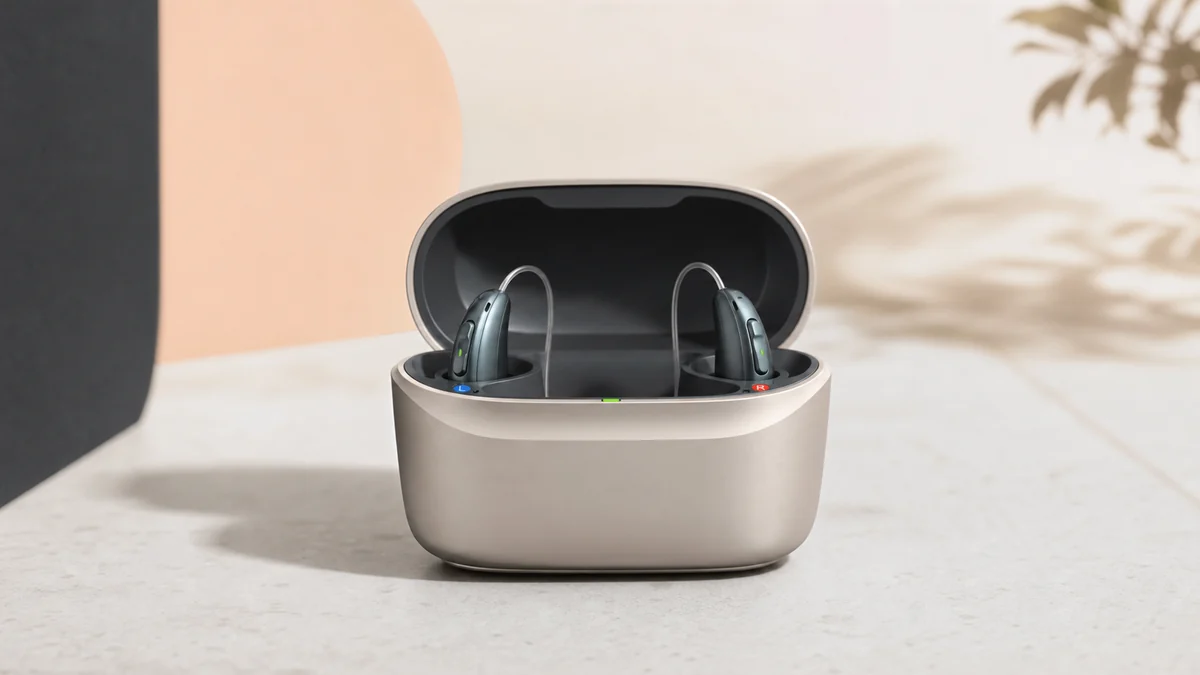
What should be in a hearing aid quote?
A quote should let you compare like with like. “Premium rechargeable hearing aids with aftercare” is too vague.
- Make, model and technology level
- One hearing aid or a pair
- Charger and other accessories
- Assessment and fitting
- How the fit will be checked
- Follow-up and review visits
- Warranty and repair cover
- Trial, return and refund terms
- Loss and damage terms
- Costs after the plan ends
Private prices vary widely. Our 2026 UK hearing aid price guide explains what you may pay and what often sits behind the figure.
Do not let a same-day discount rush you. Take the quote home. Ask another provider if you are unsure. A good clinic should be able to defend its advice without a countdown.
Why fitting and aftercare change the result
The manufacturer’s software gives the clinician a starting point. It does not know the exact shape of your ear canal or how much sound reaches your eardrum.
Real Ear Measurements place a thin tube in the ear while the hearing aid is worn. The clinician can then measure the sound in your ear and adjust the aid against a set target. The British Society of Audiology guidance describes this as the most direct way to check the output of a hearing aid in the ear.
Measurement does not replace your view. You still need to say when your own voice sounds too large, dishes are too sharp or speech remains dull. The best fit uses the test, the measurement and your report.
The first fitting will often need more work. Try the aids at home, in the car and with other people. At the follow-up, tell the clinician where they helped, where they did not and how long you wore them.
NICE recommends a follow-up 6 to 12 weeks after fitting. The visit should cover comfort, sound, cleaning, phone use and any changes you need.
Read about hearing aid fitting and verification and hearing aid aftercare.
Warning signs when buying hearing aids
- You are pushed to pay on the day of the test.
- Your ears are not examined.
- You are not given your test results.
- The same model is advised for almost everyone.
- The quote does not name the exact model.
- Follow-up is described only as “included”.
- No one explains how the fit will be checked.
- You are promised normal hearing or perfect results.
Also stop if the test finds a sudden, fast or one-sided change and the provider treats it as a routine sale. Sudden hearing loss, fast decline, pain, discharge or severe dizziness needs prompt medical advice. NHS 111 or your GP can direct you.
Questions to take to your appointment
Keep this list on your phone. You do not need to ask every question, but the answers should be easy to get.
- What did my hearing test find?
- Is there anything that needs medical advice first?
- Which three parts of my day are you trying to improve?
- Why have you chosen this style, brand and technology level?
- What would I lose by choosing the level below?
- How will you check the fitting in my ears?
- What happens after the first fitting?
- Who will see me if I need an adjustment?
- What is included in the price, and for how long?
- What happens if I cannot get on with the hearing aids?
Our article on five costly hearing aid buying mistakes is a useful final read before an appointment.
Our view
A hearing aid is a medical device that you may wear all day. A poor fitting can waste a very good hearing aid. Good follow-up can fix problems before the aids end up in a drawer.
At Alto, we package the hearing aids, fitting and long-term care into hearing aid treatment plans. That makes the quote easier to judge and keeps follow-up in the plan from the start.
We will also say when hearing aids are not the next step. Sometimes the answer is wax removal, medical advice, a different form of help or simply checking the hearing again later.
Talk it through before you choose
Start with a Complete Hearing Assessment
We will check your ears and hearing. Where useful, we will also test how you follow speech in noise. We will explain the results and your choices in plain English. You do not need to choose a brand before you come.
Want to see the prices first? View Alto’s hearing aid plans.
Buying hearing aids in the UK: FAQs
Should I try NHS hearing aids before buying privately?
Yes, if the NHS offer and local wait suit you. NHS hearing aids are modern digital devices and can work very well. Private care gives you more choice over style, brand, technology, timing and long-term support.
Should I pay for a hearing test?
The fee alone does not show the quality of the test. Ask what the appointment includes and how long it takes. Check who will carry it out and whether they will examine your ears. You should also receive a copy of the results and a clear plan.
How much should I pay for private hearing aids?
Private prices vary with the hearing aids and the care included. Alto’s 2026 UK price guide places most private pairs in a broad range of about £1,500 to £6,000, with many clinic packages around £3,500 to £4,500. Compare the exact model, fitting, follow-up, warranty and repair cover rather than the headline price alone.
Is the most expensive hearing aid the best?
No. Premium technology can help people who spend time in hard listening places, but it may add little for a quieter life. The level should be linked to the places where you need help, then fitted and checked well.
Do I need Real Ear Measurements?
Real Ear Measurements check what the hearing aid is delivering in your ear canal. They give the clinician a more accurate basis for adjustment than the fitting software alone. Your own report of comfort and clarity still forms part of the fitting.
Can I buy hearing aids online?
You can, but check how your ears and hearing will be assessed and how the fitting will be verified. Find out what happens if the aids are uncomfortable and who provides repairs and follow-up. Sudden, one-sided or rapidly changing hearing should be assessed rather than treated as an online purchase.
Sources
Sources checked 26 August 2026: NICE guideline NG98: Hearing loss in adults; NHS hearing aids and implants; NHS hearing tests; HCPC professions and protected titles; and the British Society of Audiology guidance on real-ear measurement. This article gives general information and is not a substitute for medical advice or an assessment.