

Updated October 2026
A pair of hearing aids can look convincing online and still be a poor choice for your hearing. The problem may be the device, the way it has been fitted or the help available afterwards.
Perhaps you are choosing your first pair. Or you have tried hearing aids and found them noisy, uncomfortable or difficult to use. Before spending money, find out what would suit your hearing and how the provider will help you get on with them. An existing pair is worth having checked before you give up on it.
Here are five purchases we would question, and the alternatives we would discuss with you.
1. Hearing glasses as a replacement for fitted aids
If hearing glasses get someone to try amplification, we see that as a good thing. Someone who has been putting off getting help may discover how much easier a conversation can be with hearing support.
The technology has moved on since our original discussion of spectacle hearing aids. The new Nuance Audio Plus range was announced in September 2026 and is now listed on the UK website. Microphones and speakers sit within the frames, leaving the ears open. Nuance describes directional amplification to help the wearer focus on speech in front of them.
Our advice is to treat hearing glasses as a possible gateway to hearing care. We would not recommend buying them expecting to reproduce the quality of professionally fitted hearing aids. Nuance is intended for adults with perceived mild to moderate hearing loss, with presets and adjustments through an app. With professionally fitted hearing aids, we choose the amplification for your measured hearing loss, check the sound reaching your eardrum and make adjustments when you are still missing words.
When your glasses are off, your hearing support is off too. That matters if you still want to talk to someone while resting or getting ready for bed. A repair to the frames also affects both hearing and vision.
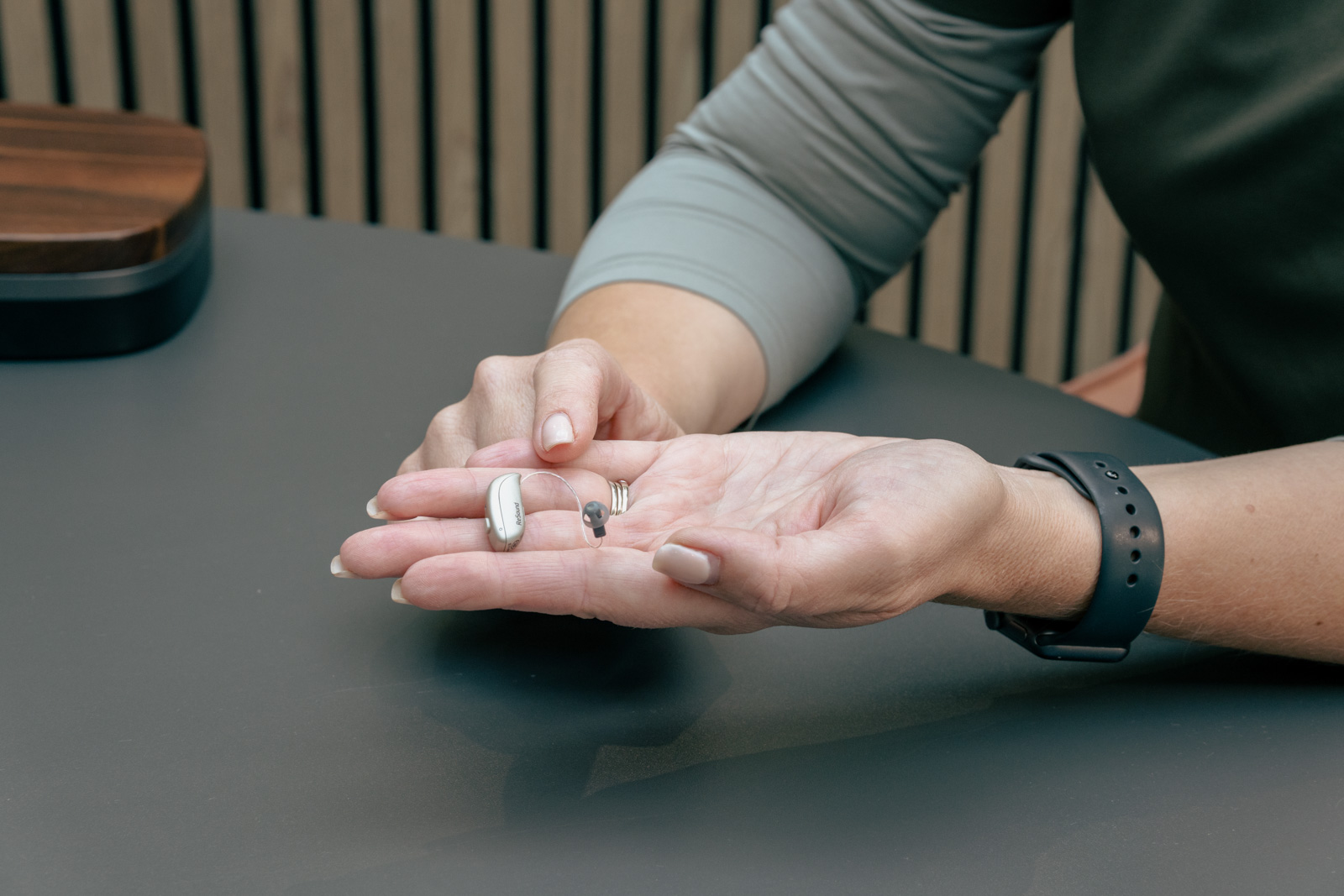
We fit receiver-in-the-canal hearing aids, or RICs, alongside glasses, checking the comfort and positioning of the small body behind the ear. A suitable custom in-the-ear aid leaves that space free altogether.
2. A cheap hearing amplifier you know nothing about
A cheap hearing amplifier on Amazon can look much like a hearing aid. The listing promises clearer sound and the reviews seem encouraging. It is easy to see why someone would try it.
We would advise against buying an unidentified amplifier to treat hearing loss. You need to know what it was made to do and how it can be adjusted for your hearing. If the seller cannot explain that, you are guessing.
A basic amplifier turns sound up. A hearing aid can provide different amounts of amplification at different pitches, with processing to help manage competing sounds. When speech is difficult to follow, turning up the whole room may leave you hearing more clattering plates without catching the words you wanted.
Recognised self-fitting hearing products are a different purchase. We broadly welcome access to amplification, including OTC products. Trying suitable hearing support is often a better first step than continuing to do nothing. It can encourage someone to seek professional care when they want to hear better still.
That does not make every product with an earpiece worth buying. Establish who makes it, how you adjust it and who helps when something goes wrong. American FDA clearance concerns the US market. It does not tell you whether a device suits your hearing. Our UK OTC hearing-aid guide explains the options.
For ongoing hearing difficulty, we would recommend an assessment and hearing aids fitted to your hearing loss. If cost is holding you back, tell your audiologist what you can spend. NHS hearing care is also an option. Compare what you will receive, including the fitting and help afterwards, before deciding.
3. Hearing aids without fitting or follow-up
An audiogram tells us the softest sounds you can hear at different pitches. Sending it to a supplier gives them information to programme an aid. It leaves the actual fitting to be checked.
The sound reaching your eardrum is affected by your ear and the earpiece. At Alto, real-ear measurements are part of our fitting and verification. A small microphone in the ear canal lets us measure the sound while you wear the aid and check it against the prescription. We use those measurements to guide the adjustments.
Then comes the part you discover at home. Your own voice sounds too loud. The television is clearer, but dinner with friends is still exhausting. You need someone who can investigate those difficulties and make changes.
For example, hearing more restaurant noise without following your partner any better calls for a review of the fitting and how the aids manage speech and noise. Being told to keep turning up the volume would be a poor answer.
Choose a provider who will check the fitting and help when something needs changing. Professional remote care can be appropriate, so ask an online supplier how they do this. Who will make the adjustments? What happens if you are still struggling? You should know before you pay.

4. A relative’s hearing aids without refitting
Don’t judge hearing aids by trying a relative’s pair on their settings. They were fitted for that person’s hearing. Their prescription may give you too much sound at some pitches and too little at others.
Before you wear them, an audiologist needs to establish whether they can be fitted for you. A suitable privately owned pair may be worth assessing. The device needs to cover your hearing loss, be in usable condition and allow the audiologist to change its programming. The earpiece also needs to fit your ear. A custom shell made for someone else should never be assumed to fit yours.
An older pair may still do a good job after refitting. It may also lack features that would help in the conversations you struggle with. Judge that against your needs, with the cost of fitting and future support included. Our hearing-aid upgrade guide explains when newer technology gives a reason to change.
Contact the provider with the make and model before spending money on a used pair. They need to confirm whether they can programme and support it. NHS hearing aids are supplied on loan. Contact the issuing service about returning those, rather than passing them on.
5. Invisible aids chosen for size alone
If your first requirement is “nobody can see it”, tell us. Then tell us what you are missing in conversation. We need to consider both.
An invisible-in-the-canal aid, or IIC, sits deep in the ear canal. There is limited space for components, so the microphone features, connectivity and battery options need comparing with other suitable styles. Small size can also make daily handling more demanding.
Tiny aids have improved. Oticon’s Own SI range includes an IIC with deep neural network processing, so assuming invisible aids cannot have AI would be out of date. Still, one impressive feature does not tell you everything about how an aid will handle a busy conversation.
We would advise against choosing an IIC before discussing what you need it to do. A discreet RIC may offer microphone control or noise processing that a particular IIC lacks. Those features are worth considering if competing voices leave you missing words. Our premium hearing-aid article explains what the extra technology can offer.
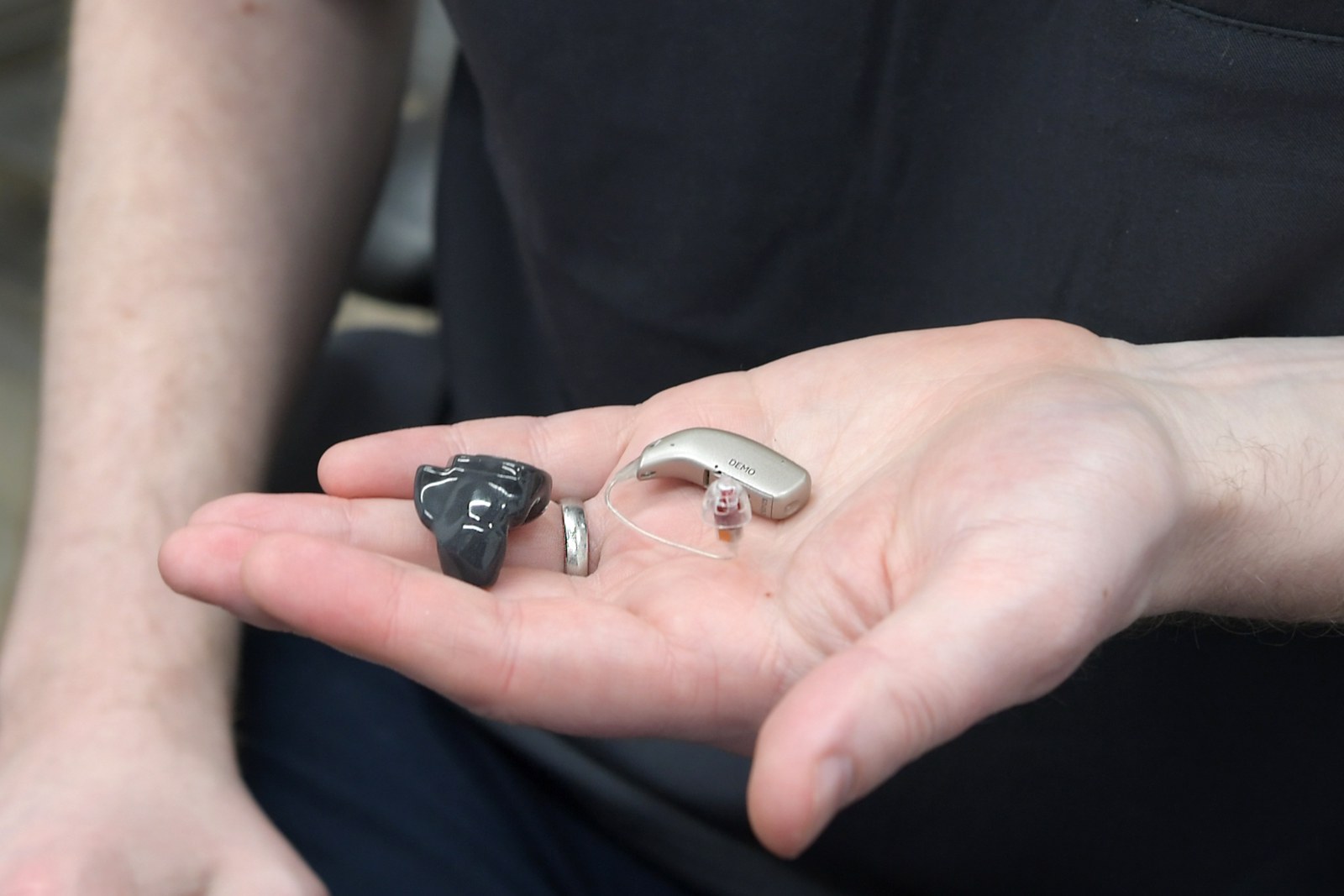
Your own voice can sound boomy or too loud with a custom aid. The shell, venting and depth of fit affect that. If your own voice sounds wrong, ask to have the fitting reviewed.
If handling tiny parts is difficult, we would also look at larger custom in-the-ear aids. For severe dexterity difficulties, we often favour a rechargeable in-the-ear model that is easier to handle and drop into its charger. Try putting the aid in, taking it out and using its charger during the appointment. That can tell you more about whether you can live with it than a photograph of its size.
Andrew’s original video
Andrew Holmes discussed the original five choices in February 2025. This article includes Nuance’s latest Audio Plus range and corrects the suggestion that invisible aids cannot have AI processing. Some of the advice in the original recording has therefore changed.
Watch Andrew’s original discussion on YouTube. Published 14 February 2025.
Before you commit to a pair
Describe the conversation you want to hear better. “I lose track when everyone talks around the dinner table” gives us something specific to work on.
Before paying, you should know:
- Why the recommended aids would help with the difficulties you described.
- How their fitting will be checked.
- Who will help if you still struggle.
- What the price includes after you take them home.
At Alto, that care is included in a hearing-aid treatment plan. The fitting and follow-up give us time to work on how you hear with your chosen aids.
Discuss your hearing-aid options
Tell us where you are struggling and whether you already wear hearing aids. We can explain what a Complete Hearing Assessment involves and discuss your options.