

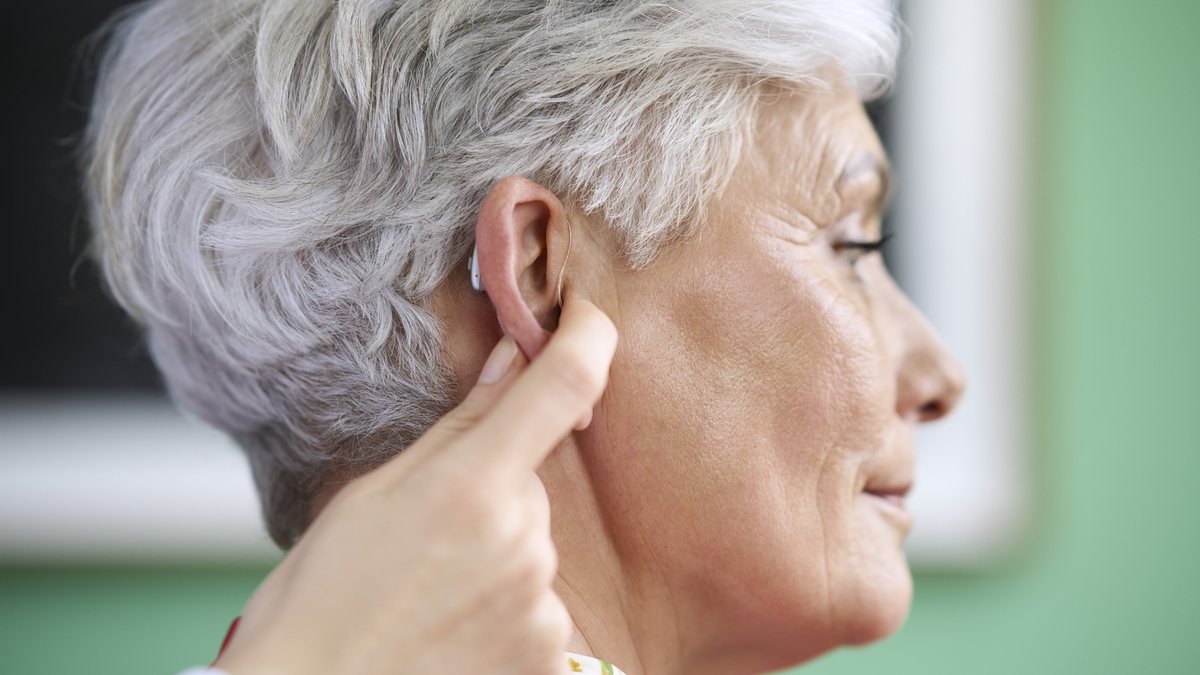
Some hearing losses are not as simple as fitting one hearing aid to each ear.
Sometimes one ear has little or no usable hearing, while the other ear may hear normally, almost normally, or may also need amplification. In everyday life, that can mean missing speech from one side, constantly turning your head, struggling in the car, losing track of group conversations, or feeling exposed in busy places because one side of the world seems quieter than the other.
For some people, the answer may be a CROS or BiCROS hearing aid system.
Here is what they do, where they can help, where they fall short, and why a proper hearing assessment is needed before deciding whether they are the right option.
The simple answer: CROS and BiCROS hearing aids are used when one ear cannot be usefully aided in the usual way. A CROS system sends sound from the poorer side to the better-hearing ear. A BiCROS system does the same, but also amplifies sound in the better ear when that ear has hearing loss too. They can improve awareness and make conversation from the poorer side easier to access, but they do not restore normal two-ear hearing.
A note from Alto Hearing
At Alto Hearing, we take one-sided and very asymmetric hearing loss seriously because the small details can change the recommendation.
We would not start with, “which CROS hearing aid is best?” We would first want to know whether the poorer ear is genuinely unaidable, whether the better ear also needs help, how well speech can be understood from each ear, what caused the difference between the ears, and which everyday situations matter most to the person wearing the system.
For some people, CROS or BiCROS can be very useful. For others, a conventional hearing aid, communication strategies, a remote microphone, bone conduction options, ENT input, or a cochlear implant pathway may need to be considered.
So the question is not whether CROS is impressive on paper. The question is whether it is the right route for the person in front of us.
Table of Contents
What are CROS and BiCROS hearing aids?
CROS stands for Contralateral Routing of Signal. In plain English, it means sound is picked up on one side of the head and sent across to the other side.
A CROS system usually has two parts:
- a transmitter worn on the poorer side, which acts like a microphone
- a hearing aid or receiver worn on the better-hearing side, which receives and plays the sound
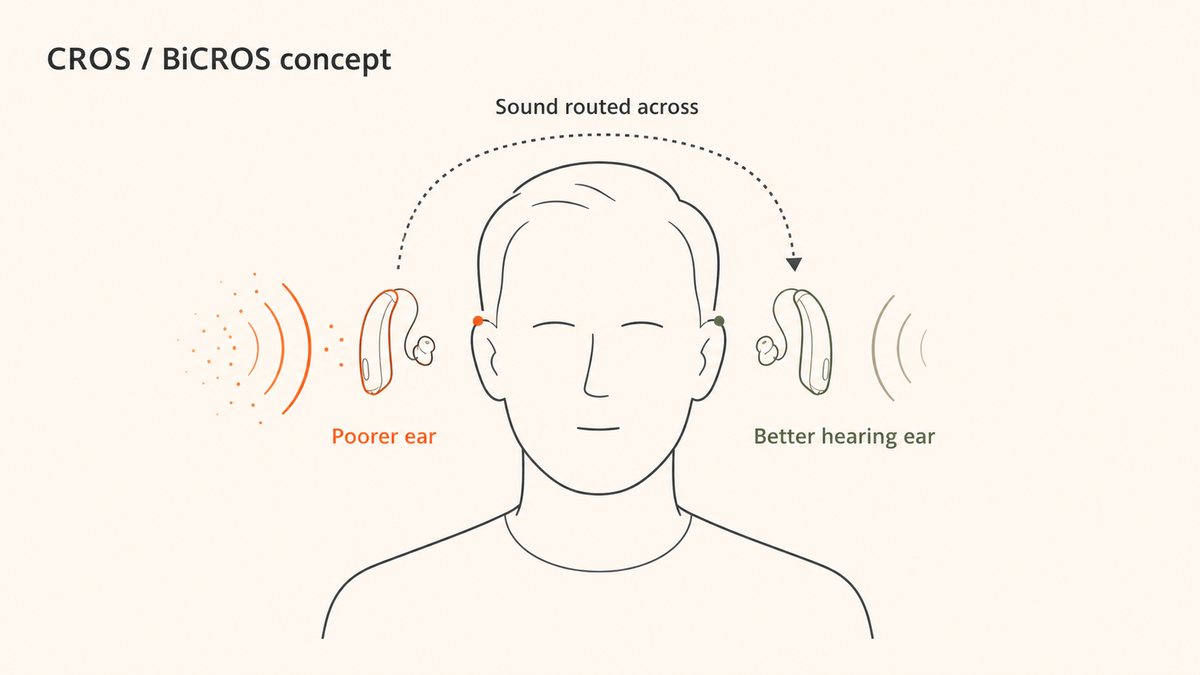
A CROS system does not make the poorer ear hear again. It works around the problem by making sound from the poorer side available to the better ear.
It helps because the head itself blocks some sound, especially higher-frequency speech sounds. This is often called the head-shadow effect. If someone speaks from your poorer side, their voice may not reach the better ear clearly. A CROS transmitter can pick up that voice and send it across.
Clinical fitting guidance from Interacoustics describes CROS in much the same way: a microphone on the worse ear sends sound information across to the better ear.
CROS vs BiCROS: the difference
CROS and BiCROS are closely related, but they are not the same fitting.
| System | Who it is for | What it does |
|---|---|---|
| CROS | One ear has little or no usable hearing. The other ear has normal or near-normal hearing. | Routes sound from the poorer side to the better-hearing ear, without adding significant amplification to the better ear. |
| BiCROS | One ear has little or no usable hearing. The better ear also has hearing loss that needs amplification. | Routes sound from the poorer side to the better ear, while also amplifying sound for the hearing loss in the better ear. |
You do not want to mix these two up.
If the better ear hears normally, a CROS system aims to keep that side as natural and open as possible. If the better ear also has hearing loss, the fitting usually changes to BiCROS because the better ear needs amplification as well as the routed signal from the poorer side.
A simple way to remember it: CROS helps when one ear cannot be usefully aided and the other ear hears well. BiCROS helps when one ear cannot be usefully aided and the better ear also needs a hearing aid.
Why one ordinary hearing aid may not be the answer
A natural question is: if one ear is poorer, why not just fit a normal hearing aid to that ear?
Sometimes that is the right thing to do. If the poorer ear still has useful hearing and good speech understanding, a conventional hearing aid may be appropriate.
In other cases, the poorer ear cannot make good use of amplified sound. The hearing loss may be too severe. Speech understanding may be very poor. Loud sounds may distort. The cochlea or auditory pathway may not provide a useful signal even when sound is made louder.
When that happens, putting more amplification into the poorer ear may not improve clarity. It may make sound louder without making speech more useful.
That is why Alto would look beyond the audiogram. Speech testing, case history, ear health, cause of hearing loss and real-world listening needs all feed into the recommendation.
Our guide to wearing one hearing aid or two explains when each option may be suitable.
Who might benefit from CROS or BiCROS?
CROS or BiCROS may be on the table if you:
- have one ear with little or no usable hearing
- have been told that one ear is unlikely to benefit from a conventional hearing aid
- miss speech when people sit or walk on your poorer side
- struggle in the car when the speaker is on the poorer side
- find restaurants, meetings or family tables more difficult because sound comes from different directions
- have a very large difference between the ears
- have hearing loss in both ears, but one ear is much poorer than the other
This does not mean everyone with hearing loss in one ear needs CROS. Some people can be helped with a normal hearing aid. Some may need medical assessment first. Some may benefit more from other options.
The first job is to understand what each ear can actually do.
What CROS and BiCROS can help with
The most useful benefit is usually awareness and speech access from the poorer side.
At a table
You may be less dependent on choosing the perfect seat or turning your whole body towards the speaker.
In the car
If the passenger or driver is on your poorer side, routing can make their voice easier to access.
In groups
Speech from the poorer side may no longer disappear as easily when several people are talking.
Out and about
You may feel more aware of sounds from the poorer side, which can reduce the sense of being cut off.
ReSound describes its Nexia CROS/BiCROS solution as helping people become more aware of sounds from the weaker side, supporting overall sound perception and environmental awareness. That captures the clinical point neatly: better access, not a restored ear.
What CROS and BiCROS cannot do
Expectations are part of the fitting.
CROS and BiCROS hearing aids cannot:
- restore hearing in the poorer ear
- fully recreate natural two-ear hearing
- give normal sound localisation
- remove background noise completely
- make every noisy room easy
- replace medical investigation where hearing loss is sudden, unexplained or asymmetric for a concerning reason
A 2024 study in Trends in Hearing compared different treatment routes for single-sided deafness and underlines a useful clinical point: CROS can improve subjective spatial hearing for some people, but it does not restore binaural hearing in the same way as giving useful input to both auditory pathways.
Put simply: CROS can help you hear something from the poorer side. It does not make the poorer ear hear again.
When sudden or asymmetric hearing loss needs urgent medical advice
If hearing in one ear has changed suddenly, do not wait to see whether a hearing aid might help.
Seek urgent medical advice if you suddenly lose hearing in one or both ears. Take extra care if it happens over hours or a few days, or if it comes with tinnitus, dizziness, imbalance, ear pain, discharge, facial weakness or other new neurological symptoms.
NHS guidance advises asking for an urgent GP appointment or getting help from NHS 111 if hearing loss happens suddenly, gets worse over days or weeks, or appears with symptoms such as earache or discharge. Do not wait for a hearing aid appointment if the hearing change is sudden.
You may still need a hearing assessment, but sudden hearing loss needs medical triage first. Once the cause has been investigated and the hearing position is stable, CROS, BiCROS or other hearing options can be discussed properly.
How we assess whether CROS or BiCROS is suitable
A CROS or BiCROS recommendation starts with both ears, not just the poorer one.
We would usually look at:
- the hearing thresholds in each ear
- speech understanding in the poorer ear and the better ear
- whether the poorer ear is genuinely unaidable in the usual way
- whether the better ear needs amplification
- ear health, wax, middle ear function and medical history
- speech-in-noise ability
- phone use, dexterity and charger handling
- the listening situations you actually want to improve
If BiCROS is being fitted, the hearing aid on the better ear still needs to be fitted properly. That means careful programming, appropriate coupling, and usually Real Ear Measurements to verify that the better ear is receiving the right level of amplification.
CROS and BiCROS systems can also be verified and balanced so the routed sound is useful without overwhelming the better ear. Without that work, the brand choice is doing too much of the heavy lifting.
Current CROS and BiCROS options
Most of the large hearing aid manufacturers offer CROS or BiCROS systems. The right option depends on compatibility, fitting needs, ear shape, battery preference, phone use and the hearing aid chosen for the better ear.
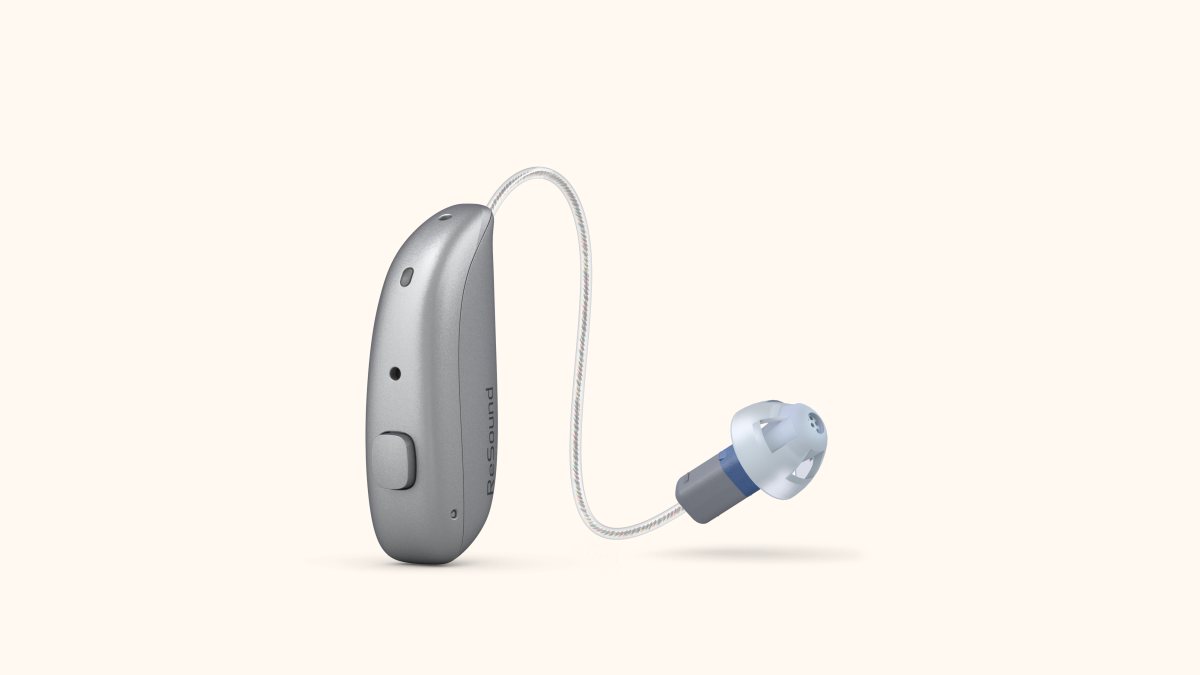
ReSound Nexia CROS/BiCROS
ReSound Nexia includes CROS transmitter options for matched receiver-in-ear or behind-the-ear fittings. It also sits within ReSound’s Smart 3D app and connected accessory ecosystem. You can read more about the wider range in our ReSound hearing aids guide.
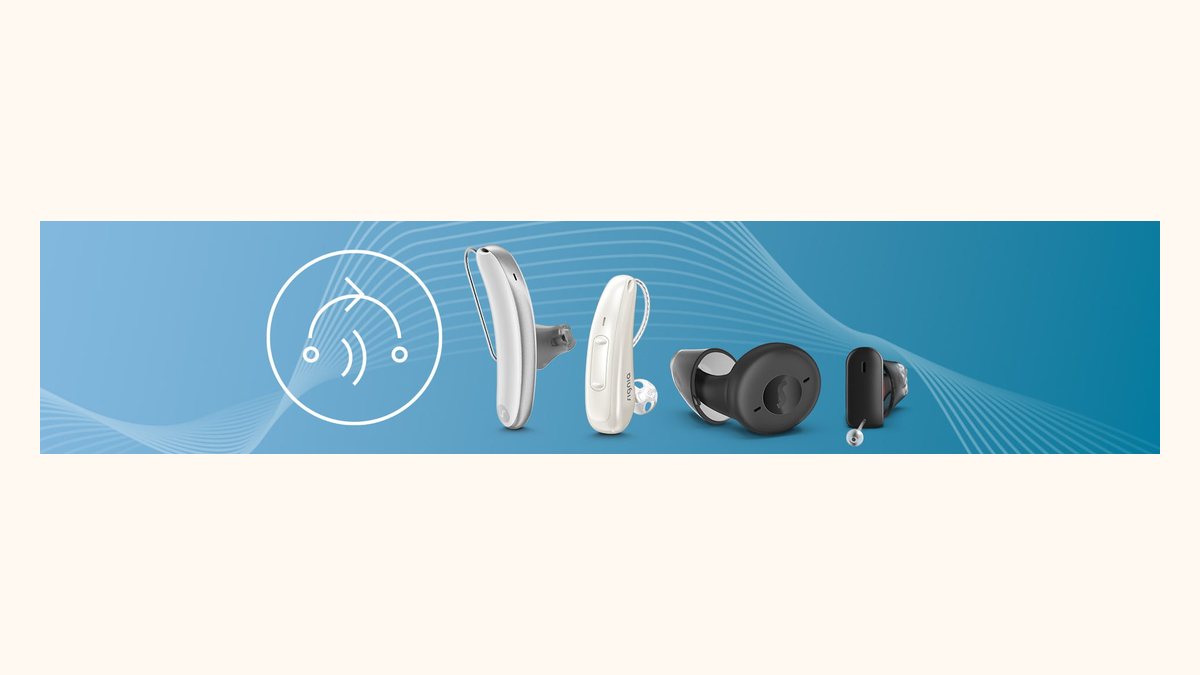
Signia CROS IX
Signia CROS IX includes options such as CROS Styletto IX, CROS Pure Charge&Go IX, CROS Active IX and CROS Silk IX. It is one to discuss when design, rechargeability or a more discreet style are high priorities. We cover the broader family in our Signia hearing aids guide.
Other current or recent CROS systems include Phonak CROS Infinio and Oticon CROS. These brands differ in connectivity, receiver compatibility, rechargeable options, accessories, app behaviour and fitting software. If you are comparing manufacturers more broadly, our Phonak hearing aids guide and Oticon hearing aids guide may help.
Brand still has a place. It just comes after the clinical fit. The first question is whether the hearing pattern calls for CROS, BiCROS or a different route altogether.
CROS vs bone conduction and cochlear implant pathways
CROS is not the only possible route when one ear has little or no usable hearing.
Other options may include bone conduction devices or, in selected cases, a cochlear implant assessment pathway. These are not interchangeable products. They work in different ways and are considered for different reasons.
| Option | Basic idea | Important caveat |
|---|---|---|
| CROS / BiCROS | Routes sound from the poorer side to the better ear through hearing aid technology. | Does not restore hearing in the poorer ear or fully restore localisation. |
| Bone conduction route | Sends sound from the poorer side to the better cochlea through vibration. | May involve a surgical implant pathway depending on the device and recommendation. |
| Cochlear implant pathway | Aims to provide input to the poorer ear’s auditory pathway in selected cases. | Requires specialist ENT/audiology assessment and is not suitable or available for everyone. |
The 2024 Trends in Hearing study mentioned above found that cochlear implant users in that study had better sound localisation outcomes than CROS, bone conduction and no-treatment groups after 24 months. That finding needs careful handling: a cochlear implant is not the answer for everyone. It does mean people with single-sided deafness deserve an honest conversation about what each route can and cannot provide.
For many private hearing care clients, CROS and BiCROS are the most practical non-surgical options to discuss. If the history, symptoms or hearing results suggest medical or implantable options should be considered, referral is part of good care.
CROS, BiCROS and background noise

CROS and BiCROS can help in some noisy situations, but they can also be challenging in others.
If the voice you want to hear is on your poorer side, CROS can help by sending that voice to the better ear. If the noise is on your poorer side, the system may also send more of that noise across. That is why the counselling has to be honest.
Background noise is already one of the hardest problems in audiology. With CROS and BiCROS, we also have to think about direction, seating, the better ear’s hearing, the acoustics of the room and whether an accessory such as a remote microphone may help in specific situations.
At Alto, speech-in-noise testing keeps this from becoming guesswork. It gives us a better idea of how much support you may need in restaurants, meetings and busy social settings.

How much do CROS and BiCROS hearing aids cost?
CROS and BiCROS prices vary depending on the manufacturer, model, technology level, rechargeable options, accessories and care package included.
Privately in the UK, hearing aid systems often range from around £1,500 to £6,000 per pair, with many well-supported private fittings around £3,500 to £4,500 depending on the technology and care included.
A CROS or BiCROS system is usually priced as a two-device system because you wear a transmitter on one side and a hearing aid on the other. BiCROS can differ from CROS because the better ear also needs proper amplification.
Read: How much do hearing aids cost in the UK?
When comparing prices, ask what is included: assessment, speech testing, fitting, verification, follow-up, warranty, charger, accessories and long-term support. The device is only part of the result.
What is the adjustment period like?
CROS and BiCROS can feel unusual at first because sound from one side is being heard through the other ear.
Some people adapt quickly. Others need more time to learn when the system helps, when it is less useful, and how to manage different listening environments. The first fitting is not the final result.
Follow-up is where the fitting often improves. It allows the audiologist to adjust balance, comfort, loudness, background noise behaviour and the fitting in the better ear. For BiCROS, the better ear amplification also needs to be reviewed as it would with any other hearing aid fitting.
You can read more about the general hearing aid adjustment period, but CROS has its own learning curve because the brain is being asked to interpret routed sound.
Questions to ask before choosing CROS
Before choosing a CROS or BiCROS system, useful questions include:
- Is my poorer ear genuinely unaidable in the usual way?
- Does my better ear need amplification?
- Is this a CROS or BiCROS recommendation?
- What should I expect in restaurants, meetings and cars?
- What will this system not help with?
- Will the better ear be verified with Real Ear Measurements?
- Is my phone compatible?
- Would a remote microphone or TV accessory be useful?
- What follow-up is included?
- Do I need ENT review or another medical pathway before deciding?
A good recommendation should answer those questions before anyone gets too attached to a brand or model.
Sources used for this guide
Sources used while writing this guide:
- Interacoustics: CROS/BiCROS hearing aid fitting guide
- Trends in Hearing 2024: treatment options and localisation outcomes in single-sided deafness
- NHS hearing test guidance, including urgent advice for sudden hearing loss
- NIDCD: cochlear implants overview
- ReSound Nexia official CROS information
- Signia CROS IX official information
So, should you consider CROS or BiCROS?
CROS and BiCROS hearing aids may be a sensible option when one ear has little or no usable hearing and everyday life is being affected by missing sound from that side.
They can be especially useful for awareness, speech access from the poorer side and reducing the constant need to reposition yourself. But they are not a cure for single-sided deafness, and they do not restore normal two-ear hearing.
The next step is a proper hearing assessment. That should establish whether the poorer ear is aidable, whether the better ear needs amplification, whether medical review is needed, and whether CROS, BiCROS or another route makes most sense.
At Alto Hearing, we can help you understand the options clearly and decide what is most appropriate for your hearing, your ears and your everyday listening needs.
Considering CROS or BiCROS hearing aids?
Request a call back and we can help you understand whether a full hearing assessment is the right next step.
Frequently Asked Questions
What are CROS hearing aids?
CROS hearing aids are used when one ear has little or no usable hearing and the other ear has normal or near-normal hearing. A transmitter on the poorer side picks up sound and sends it wirelessly to the better-hearing ear.
What are BiCROS hearing aids?
BiCROS hearing aids are used when one ear has little or no usable hearing and the better ear also has hearing loss. The system routes sound from the poorer side to the better ear, while also amplifying sound for the hearing loss in the better ear.
What is the difference between CROS and BiCROS?
CROS is used when the better ear hears normally or near normally. BiCROS is used when the better ear also needs amplification. Both route sound from the poorer side to the better side, but BiCROS also treats hearing loss in the better ear.
Do CROS hearing aids restore hearing in the deaf ear?
No. CROS hearing aids do not restore hearing in the poorer ear. They pick up sound from that side and send it to the better-hearing ear, which can improve awareness and access to speech from the poorer side.
Who is suitable for CROS hearing aids?
CROS may suit someone with little or no usable hearing in one ear and normal or near-normal hearing in the other ear. Suitability depends on the hearing test, speech understanding, ear health, cause of hearing loss and the situations the person wants to improve.
Can CROS hearing aids help with single-sided deafness?
Yes, CROS hearing aids can help some people with single-sided deafness by routing sound from the poorer side to the better-hearing ear. They can be useful for speech from the poorer side, but they do not fully restore localisation or normal two-ear hearing.
Are CROS hearing aids good in background noise?
They can help in some noisy situations, especially when the voice you want to hear is on the poorer side. However, they can also send noise from the poorer side across to the better ear. Background noise expectations need to be discussed carefully.
How much do CROS and BiCROS hearing aids cost?
Prices vary by brand, model, technology level, rechargeable options and care package. In the UK, private hearing aid systems often range from around £1,500 to £6,000 per pair, with many good private clinic fittings around £3,500 to £4,500 depending on technology and care included.
Are CROS hearing aids better than bone conduction hearing aids?
Not necessarily. CROS and bone conduction systems solve the problem differently. CROS routes sound through hearing aid technology to the better ear. Bone conduction routes sound through vibration. The better option depends on hearing results, anatomy, medical history and personal preference.
Do CROS hearing aids work with iPhone and Android?
Many modern CROS and BiCROS systems can work with compatible iPhone and Android devices, but compatibility depends on the exact brand, model and phone. This should be checked before choosing, especially if streaming or hands-free calls matter to you.
Do I need one hearing aid or two for hearing loss in one ear?
It depends on the hearing results. If the poorer ear can still be usefully aided, one conventional hearing aid may be considered. If one ear cannot be usefully aided, CROS or BiCROS usually involves wearing devices on both sides: a transmitter on the poorer side and a hearing aid on the better side.
What should I do if hearing loss in one ear happened suddenly?
Seek urgent medical advice. Sudden hearing loss in one or both ears can be a medical emergency, especially if it develops over hours or days or comes with tinnitus, dizziness, imbalance, ear pain, discharge or facial weakness. Contact NHS 111, your GP or emergency care without delay.
Can Alto Hearing assess me for CROS or BiCROS?
Yes. Alto Hearing can assess whether CROS, BiCROS, conventional hearing aids or another route may be appropriate. The recommendation should be based on both ears, speech understanding, real-life listening needs, medical history and fitting suitability.